Repeater with Jon Bocksel
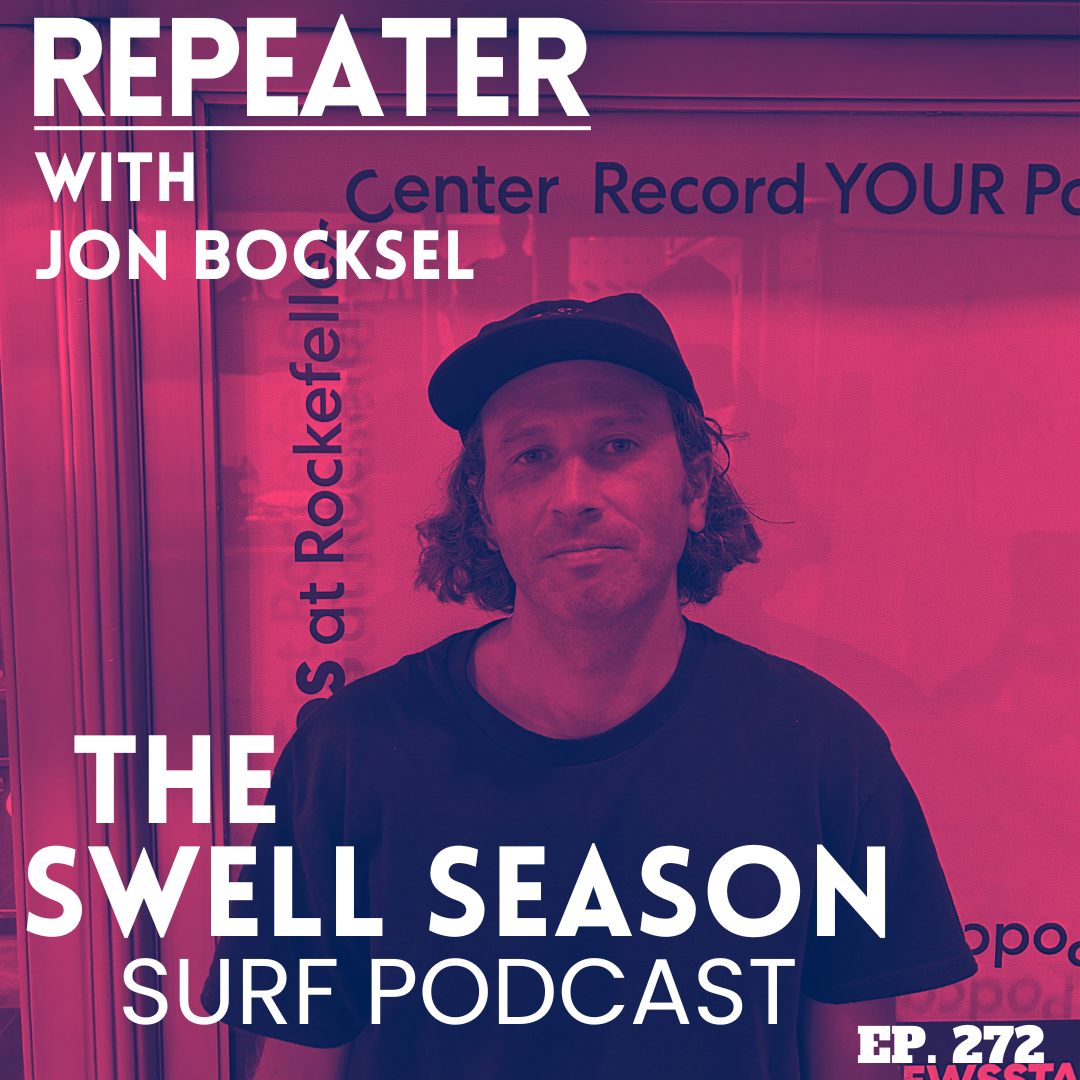
Repeater with Jon Bocksel
[00:00:00] The Swell Season Podcast is recorded by the Newsstand Studio at Rockefeller Center in the heart of Manhattan and is distributed by the Swell Season Surf Radio Network.
Tyler: [00:01:00] Hello and
welcome to the Swell Season Surf Podcast. I'm your host, Tyler Brewer. Our guest today is someone whose work quietly weaves its way into our visual landscape, whether we notice it or not, his art is part history, lesson part typographic meditation, and part love.
Letter to the handmade. John Boxell is a Brooklyn based artist sign painter. Anne Gilder, whose work explores the boundaries between language symbols and visual art. For nearly 20 years, John has been making his mark sometimes literally on walls, windows, and gallery spaces alike. His background in printmaking and his fascination with hand lettering, calligraphy, and ancient brush writing, all find their way into his work, blending old world craft with modern conceptual approach.
Whether it's a [00:02:00] storefront sign in the city or a painted glyph on a canvas, John invites us to slow down, look closer, and reconsider the meaning we assign to the written word. We'll be talking with John about his creative process, the disappearing art of hand painted signage, the evolution of written language, and of course, how all this ties into surf culture, design, and spaces we move through every day.
John is my guest. Welcome to the show, my man.
Jon: Thanks for having me, Tyler. Yeah, no worries. That was a nice intro. Thank you. Thank you.
Tyler: No worries. I mean, so we've been rolling in the similar circles. We have many similar friends, but we've never really properly hung out. No. Like just seen each other in the water here and there and like, so I was like.
Who should I bring on? Yeah.
Jon: Why not meet each other in front of a camera? Yeah, exactly.
Tyler: In front of a camera on the podcast. I was like, let's, let's do this. You know, thank, and I was also like, you, thanks
Jon: for having
Tyler: me. I really like your work. Like, I love, I mean, your sign sign work [00:03:00] is stunning. Thank you.
But your, your other artwork, your painting, your other stuff is incredible. And one of the things I noticed, like you, you recently had a show, uh, called Repeater. Mm-hmm. Uh, last month I believe. Mm-hmm. Or two months ago now. My
Jon: friend's therapy office. Yeah. He's also a surfer, if you know Matt, Mr.
Tyler: Matt Rohr, who is a former guest and also he did a co-host.
Yeah. So, uh, shouts out to Matt. Absolutely. But these were like the, the artwork that you had, there were this like beautiful repetition of calligraphy and, and go painting style. Mm-hmm. Mm-hmm. I thought was absolutely beautiful. And. Mm. Your work blends like calligraphy, sign painting, and ancient writing practices.
Was there a specific moment or influence that, that pushed you in this direction?
Jon: It's a good question. I mean, I'm always, uh, jumping back and forth between being a commercial artist and then doing more of a, or having more of a studio practice mm-hmm. In the background. And I think, you know, when we're there painting signs, you become so enmeshed in [00:04:00] just form.
And, uh, a lot of those calligraphy pieces are really just about that. But then repeating it in this way and starting to see things in nature where there's this repetition everywhere. Um, and it sort of just starts to create a vibration, if you will. Um, and, you know, akin to surfing in that way where there are these little nuances and these moments that start to happen.
Um, but it really just happened in the background. You know, I think kind of like the best things, you try to let those things happen naturally. Mm-hmm. Um, and there's a lot of failed work. People don't see, you know,
Tyler: well, you posted some of your like outtakes recently for the show. Yeah. And a lot of people like those almost better.
Yeah. Yeah. More of those pieces sold than the
Jon: really, um, yeah, they're, they're cheaper, but yeah, those are usually on the easel. Like, or I'll, I'll try, you know, 'cause for the people listening. Uh, I'm basically painting a repeated form or like a, a character, if you will. And they tend to be almost like, think of it like a motion in surfing.
It's just like a movement. Mm-hmm. And then you stop and then you connect it to the [00:05:00] next one. So you're just kind of doing these connections. So, uh, and they're stacked like lines almost in like a grid. And, uh, you make these movements, but if they don't line up right or things can happen, you know? 'cause I'm using like an old style dip pen.
Wow. So things can happen. Like you dip it and then you pull it in the other paper and you get a droplet and you're like, oh shit. Sometimes it's a happy moment. You're like, oh, that's, that's perfect. I mean, or really it's maybe just where your temperament's at at that point in time. Um, and then those practice sheets I started to realize like, oh, these are actually kind of interesting.
And then they'll sit on the side of the easel. I'll start a new one, and then maybe I'll draw, write down a note when I'm having a thought and I'm working. And then they kind of became this other thing.
Tyler: Um, well it feels like also like there's this layering to it. Like you have this repe repetitive. Kind of calligraphy going on, like Yeah, it's like a
Jon: muscle memory, you know?
It's a totally, it's a movement,
Tyler: but at the same time, there's like these, you change a certain color or shading mm-hmm. [00:06:00] In a certain bit and there's like a, a lettering or word or something that you have going on beneath it too, almost. Yeah. It almost reminds me of those paintings, the drawing, you know, the artwork that you had to like blur your eyes to see the rocket ship or something.
Yeah, totally. Yeah, I talked about that with a friend. The
Jon: magic eye. Yeah. There's some weird vibration that happens to your eye, and I guess I should explain, like, I'm using the dip pen and I'm doing this very calculated form, right? So one piece is usually a hundred or 200 or so of the same repeated forms, but holy shit being, it's a dip pen when I run out of ink, you only can get so many strokes.
Mm-hmm. Then I dip it back and it's actually not ink, it's paint. I dip it back in the gache mixture that I make and I start another one. So it's this kind of like. Positioning of something that's really calculated and a and a, you know, I don't like to call it a drawing 'cause it's something more you feel when you do.
Yeah. But then when I run out of ink, I switch to the next color. So you're getting this calculated form mixed with this kind of, I don't know, natural is the right word, but this, um, sort of element of chance of the [00:07:00] way the color then starts to form a pattern. Mm-hmm. That's really not up to my control. Wow.
And it changes when I work, like humidity's a factor, wind is even a factor. Like sometimes I have the studio door open, the wind changes and it's like, oh, I can only get two strokes outta this. So that I like to leave things up to chance. As much as I also like to be kind of a calculated person. It's that balance that I think is a place that I like to dance in, you know?
Sounds
Tyler: like a surfer's mindset.
Jon: Yeah. It, it is.
Tyler: You know, it is, yeah. You have a plan that you want to do on the wave, but the wave has other ideas. Yeah. And so you have to constantly adjust and uh, absolutely. You know, which is a really good skill to have.
Jon: Yeah. Awareness is important. How's your carpal tunnel
Tyler: work?
Holy shit, man. Like listeners, like it is repetitive and it's like the discipline that you have is incredible. Like
Jon: I can only do so many a day. Yeah. Um, and it depends on the forms again, but I really, I won't really let myself do more than three or four a day. And that's [00:08:00] even, that's a feat. 'cause I mean, making these new pieces, they really only take maybe an hour and a half.
But again, it's like I sit down to do one piece and it might take three hours. 'cause again, I might have those fudge ups. Yeah. Then that goes to the side and you start over or you start to see, ah, I should adjust this color a little bit to start over. Um, but yeah, I really, if I'm in a groove, there's some days where I can, I can just do one right off the bat.
But it's still, it's like no more than three or four a day. It's, it's too much, uh, for my hand. But I don't, luckily don't suffer from arthritis. Not yet. Yeah. I have all kinds of tinctures and things. Friend. Give me too, you know, I'm a big tiger bomb and, uh, arnica guy, so, you know, let's just go
Tyler: get a massage, man.
Jon: Yeah. So shout out to Andrew Storyteller. He's getting his, uh, massage therapy license. He gave me one. Oh, really? Recently after that show, actually I was cooked, so he gave me one. It was amazing. So MRD
Tyler: Cola?
Jon: Yeah, he's, he's great. But I, that was the second massage I ever had in my life. One was at a Bar mitzvah.[00:09:00]
Tyler: Oh, dude, you are missing out. You gotta go to Happy Feet out in Rockaway.
Jon: There's one
Tyler: in Rockaway,
Jon: huh? Shit,
Tyler: you know,
Jon: 60 bucks for an hour. I would never drive home. I go surf, get a massage, and just fall asleep right there on the peninsula, you know? That's okay. You know? Yeah. It's nothing you don't do in
Tyler: afternoon surf afterwards, you be loose, you know, you get a little nap in between.
Where did you grow up? You grew up in New Jersey?
Jon: For the most part. I mean, I moved around a lot as a kid. Really? Um, I was born in New York. Mm-hmm. And then when I was three, we moved to the border of, uh, New Jersey, Pennsylvania. So nowhere near the ocean. I lived there till I was six. And then I lived in the Chicago suburbs from when I was, uh, six to, uh, 13, 12 thir 12 actually.
And then moved back to New Jersey, like, uh, north New Jersey. Mm-hmm. Like, uh, Morris County. And, uh, then moved to Brooklyn in 2001 to go to art school. And just kind of like 2001, I was like, thank God I'm out of the suburbs. I can't, I can't do this anymore.
Tyler: Um, were you, did you grow up surfing
Jon: or No, [00:10:00] not at all.
Um, occasionally, like my grandfather had a little beach bungalow out in the North Fork. Mm-hmm. So even so you're not that close to the ocean, but like learn to body surf and boogie board out, like K road zones. Yeah. But for me, like I started street skating when I was about 10.
Yeah. And I
always emulated surfing.
Like this was back when you could go to the movie store, right? Yeah. The movie rental spot and get VHS tapes. And there was like only two or three skate videos, but there'd be like endless summer. Mm-hmm. And like five summer stories. And so like, after we got burnt out of those like skate videos, which were also, that was old school skating at the time.
That was people riding like
Tyler: clay wheels.
Jon: Not that old actually. There was an old, there was, they had skateboarding in there if anybody's seen that. But um, no, it was more like, so when I started skating in 93, it was more like, this is new school skating. We had a nose like yes, tricks got very technical.
Wheels were very small. Skateboarding was pretty ugly at the time, but it was, it needed to happen though. Mm-hmm. And so there was like this division, but at the movie [00:11:00] rental spot, right at the VHS store. I wish I could remember the, the name. Um. They had some of these surf movies. So once we got bored of those three skate videos, we were mostly like watching surf videos.
Wow. And like trying to emulate that stuff. And like, you know, we also had crappy skate spots that were more lean themselves to that. Like just weird sewer embankment. You're like, oh, I want to just go up and do a carve on that, or like try to do a tail slide on that. Um, so I didn't really start surfing until I was 26, 27.
Wow. Um, of course, did it a little bit in high school and had some skate buddies mm-hmm. In art school. Like, uh, one of my friends was out from Montauk. He was always like, dude, you gotta surf. Like the way you skate, the way you think about it. And I was always like, yeah, but like, don't have money for a surfboard and don't have a car.
And I remember going out to Rockaway with him in like 2003 and there was like a pretty good swell. And I was on the beach with my partner and we were just like, wow. Like this is pretty sick. Like Yeah. You know,
Tyler: this exists, this exists in New York City. Yeah. Yeah. You know, and that
Jon: was, I think that was like September or, um.
August [00:12:00] at the time, so yeah. Yeah, probably. And
Tyler: that was like your first like kind of surf proper then, would you say? Or?
Jon: No. I had surfed on a, in high school a couple times, like down the Jersey shore on a really small thruster and was just like, what? Like this is, and it was so slow. And now in hindsight you realize I was surfing like some horrible wind chop on a potato chip.
Of course I hated it. Um, yeah.
Tyler: I've heard you rip on a skateboard though.
Jon: Not really. Yeah, not really. Our mutual
Tyler: friend, Mike Matcher, uh, would, would claim differently. He said, yo, he's fucking rips on the skate.
Jon: It was, you know, I grew up with some friends that went pretty far in skateboarding, so I wasn't like that one.
You know? Yeah. But then you hang out with like surfers that don't skate that much and like, oh my God, like you can kick flip. Mm-hmm. Like, you can wall ride. I'm like, eh, you know, like it's not, I
Tyler: was, I was the bogus one of the crew, you know? You were the one documenting,
Jon: yeah. A lot of the time. Yeah, definitely.
Definitely.
Tyler: Let me ask then, like, how, where did art come into [00:13:00] play for you then, and where did you kind of start finding your way into that? Was it through skateboarding? Like it was in skate culture? It,
Jon: it definitely was. Yeah. I mean, um, I think there's like, of course, you know, maybe now I'm in my forties, you start to think about things.
There's some genetic disposition, like a lot of people in my family are creative. Mm-hmm. But they never really did anything with it, so to say. Yeah. Or wanted to pursue it as a career, if you will. Mm-hmm. Um, but yeah, I mean, just going to skate shops in the nineties, they were so inspiring. And, uh, there was this interesting twist of fate that happened like 10 years ago.
Um, I started studying under this sign painter from Iowa named John Downer. Mm-hmm. Incredible sign painter. He, his parents owned a grocery store growing up, so he painted all those like flashy grocery store signs. Now if you look up John, he went on, he designed, uh, Iowan Old Style, which is one of the Mac iOS interface typefaces.
Mm-hmm. He went on from just painting grocery store signs into that. Wow. Which is very inspiring to me. These people that look at letters and they're not just looking at it [00:14:00] as like, this is the interface for the job. It's like, but what is this? Within the whole continuum of human communication and things like that.
So, um, John though, I found out, started studying with him at Cooper Union, uh, doing continuing ed education and. Um, he designed a lot of stuff for fresh drive and like when I was a kid. Yes. This sounds corny to say now you're like, I wouldn't wear a fresh drive. But as a kid it was like, it was
Tyler: the shit
Jon: flashy lettering and like, what is this?
And it's all informed by hand lettering and sign painting. Mm-hmm. You know, that was stuff that was all done by hand and drawn by hand, like a lot of the old surf logos. So that definitely surf shop, skate shops have a presence in like my learning of art. And I have some friends I've nerded out with about this like in the nineties, you know, culture was something that was kind of hard to find, especially in the suburbs, but if you went to a skate shop, you were immediately in this world and this visual landscape of different odd logos Yeah.
And drawings. And it was like this really cool place to be, you know? Um,
Tyler: well, like, I mean, I [00:15:00] remember like the eighth street Yeah. You know, towards pocus. Pocus. Oh man. You know, it was just like this iconography of that period, you know, where it was this mix of, of pop art. With graffiti, which is just to me like, that's like, that's my jam right there.
Yeah. And punk and like hip hiphop, hiphop
Jon: and just like covered all these grounds. Um,
Tyler: it
Jon: was
Tyler: fascinating. It was, it was a good time to kind of, if, if you were creatively inclined, I think it's like, it was perfect for, for someone like you Yeah. To kinda kind of just pique your interest a little bit. Yeah.
Who, who were, who were, who were the artists or designers or skaters even that influenced like. What you do today? Like was there any Yeah. Any particular ones that you looked towards?
Jon: Um, yeah, and I mean, growing up skating in Chicago, you know, we kind of always looked more towards the East coast. Mm-hmm.
Because California was just like irrelevant to us. So we were like, those [00:16:00] guys are spoiled, you know, soft. They're soft man. So, and then also then having the opportunity to move back to the East Coast when I was 13 was like Zoo York was blowing up. Yes. And, uh, but I mean, not just, I'm not dogging the West Coast stereo.
Sounds like Jason Lee's company was amazing. Yeah. There's this beautiful super eight film, uh, called the Visual Sound that they made that was just like mind blowing at the time. Um. But yeah, I mean, skateboarders, Keith Huff Nagel was a big influence. Mm-hmm. Uh, I was lucky enough to meet him a few times and work with him.
Wow. Which was incredible. Um, just incredibly humble person too. It's, which is such a rare thing mm-hmm. In these times to be like that kind of cultural icon, if you will, but also be really humble and on the level. Um, he was a big inspiration, just his skating. Uh, any of the underachievers videos by Dan Wolf, uh, if anyone's familiar, that's kind of a deep cut.
But like his, his videos had, or one of 'em had no music in it. It was just sounds of the skateboard, but, you know. That's awesome. Yeah. It's actually beautiful. It's all [00:17:00] black and white, but like all the Philadelphia guys, uh, Ricky Loyola. Uh, Matt, Riesen, Serge, all those guys just, I love that style of skating and I, I almost try to surf like that now.
It's like, it's minimal, you know, like it's not super technical. It's more just like, alright, set it up. Right. Do it at the right moment in the wave, you know? Or do it at the right moment on the street. It's not all about this flash and panache, it's more about like, kind of
Tyler: minimalistic approach. Economy of movement.
Economy of movement. Yeah. Is dare kind once put
Jon: Yeah. That's, and that's what calligraphy is. Yeah. You know? Um, that's, that's interesting. I didn't know he said that. That's beautiful. Yeah.
Tyler: Well that's, I feel like calligraphy and surfing are. The same thing. They are, you're, you're just drawing continuous lines.
Yeah. Basically. Or as Matt Warshaw once said of Tom Kern surfing one curve, linear thrust.
Jon: Well, yeah, and I mean, that's, that's a, like a subjective perspective, but also from a physical perspective. Uh, the way that you push a [00:18:00] pen and it's a repeated motion is kind of the similar thing you're doing with say, like a roundhouse. You know, you're, you're practicing the same mo movement each time. You know, I wonder.
It's a body kinesthetic relationship of understanding how to move and try to copy that each time and work out the kinks.
Tyler: I've got an idea. See, we need to make a piece where you take, uh, a famous surfer's line and then you draw it and repeat it on paper. Um, so I,
Jon: I did a class with, uh, Laro Baya like a couple years ago now.
They asked me to do something before it. I made a little video. And, uh, I did a video, I think one of Dane Cus Is that how you pronounce his name? Mm-hmm. And one of Mikey February. And essentially a roundhouse is an s Yeah. It's not how we paint an S because we tend to do the spine first. It's getting technical.
I love it. We tend to do the spine first and then we do the tops and the bottoms. But essentially a roundhouse is an s so I, I overlaid me doing an s the hard way with his turn. And uh, yeah, it [00:19:00] was interesting. Some, it really hit, the kids understood. It really hit with the kids. Just trying to get them in a mindset of like, yeah, thinking about these things, you know, thinking about
Tyler: surfing as a, as a canvas as opposed to a athletic endeavor.
Even, you know, a competition. I
Jon: try to just, you know, I don't teach a lot, but I do from time to time and I really try to. Break, uh, people away from that. I don't wanna say kids 'cause I've also taught adults, but, you know, try to break people outta that mindset. I don't think this competitive mentality is, is really good for everyone.
Okay.
Tyler: Chandler Soul Surfer
Jon: had to zing me somewhere. No, but I mean, look at our, look at our politics. I mean, that's, that's the place we're headed in is is this competitive mind state and like, I'm not competitive in the water sometimes. Yeah, right. Like, you know, of course we all are, but that I don't think is the end goal, you know?
Tyler: No, and it, it shouldn't be the reason why you surf. I mean, well, I mean maybe for some, you know, it, it could be. But I, I just think [00:20:00] there's so much more, you know, you're missing out completely on, on other aspects of it than, uh, as opposed to if you're just a competitive surfer, you're just a shredder and that's all you want to do.
Like, you're gonna be disappointed at some point in your life 'cause your body's not gonna be able to handle that. And yeah. And I imagine like as you've gotten older, both with your surfing, skating and your art, you, I feel like we lose a certain athleticism as we get older and so we can't be like constantly Yeah.
Energized and double pump bo bottom turns or whatever, you know, like we learn to be more efficient with our body and our movements and especially in surfing, I feel like I am much more like I can draw out a line so much more smoothly than I used to. Yeah. And it's so much less frantic and you know, like when you're young you're like, you know, and I imagine like that's what happens though with your [00:21:00] artwork too.
Jon: That has definitely, yeah. Been a direction, uh, with these new pieces. Yeah, I would say that's so. Yeah.
Tyler: What, um, like, so then what, like, when did you really start to take the art seriously and something that you wanted to study? 'cause you went to Pratt mm-hmm. Which is like one of the greatest, you know, design schools in the world.
Um, what, where did that motivation come from? Oh, are you getting that to be like, it's not actually that good, it's kind of shit, but No, no, no, no. I'm not,
Jon: I'm not gonna say that, but I was a horrible student. Really. I mean, we're talking like, I was like a c and d student in high school. My parents are, or my dad's gonna listen to this, but don't say that.
But no, I was a horrible student. But I loved making art and I kind of realized at a certain point where I was just like, fuck it, I'm just gonna put this all into my art. Um, I just, I wasn't engaged in the academics in high school and it took a turn. 'cause then when I did go to Pratt and I started learning more about world history, I was like, oh wow, this is fascinating.
But that's 'cause this isn't some watered down version. Mm-hmm. [00:22:00] These are really good teachers and, uh, this is really good material and it's a narrative maybe I relate to a little bit more rather than like public school in New Jersey. It was, it was pretty watered down. You know, you could imagine.
Tyler: Um, and if you don't have the right teacher, you know.
Introducing you to those things. Yeah. You don't see the pragmatism of learning it, you know? Yeah.
Jon: Completely. So, I mean, much to the chagrin of my father, he was like, oh God, I don't want you to go to art school. Like, what are you gonna do for a living? And I was like, you don't realize this. This is all I have.
Like, this is, you know, even when I was in high school, I was painting and I was painting signs a little bit for my high school and I was just something I was enamored with. Um, I think there's some family history there too. Like my great grandfather came here from Rome. Mm-hmm. And he was a decorative painter and he didn't have a very easy life.
So there's always that in the background of everybody's like, don't do that, you know, don't do that. But, you know, he a dentist, dammit. Yeah, totally. And it was just like, that's not gonna happen with me. Yeah. You know, it's, it's not who I am. I was always like pretty fiercely creative. [00:23:00] Um. And so I chased it, you know?
Um, but I, I went there to study painting and I was like completely floored when I got there, by the way, that, you know, some kids could draw and, you know, it was like, I think my second day of class where they're drawing, uh, from life or a nude model, and I'd never done that before. And I was just like. This is so intimidating.
It's, that's very difficult to do. Like people don't realize, like the human body is so nuanced in, in things. It's not just like drawing a building, you know? I, so for me, I was like, this is so intimidating. Um, and it was good for me. I really got humble. Humble. Did it make you
Tyler: feel very insecure? Oh,
Jon: hell yeah.
Tyler: Bet down it. Was it very, was it, was it endowed? Is that why you felt intimidated? No. No, it wasn't, it wasn't that at
Jon: all.
Tyler: It was layman, non-art jokes. Sorry. It
Jon: was so difficult to see other people that excelled this and had studying that in high school. You know, these are kids that are coming from private schools where they, they had models come three times a day.
And, um, and also, you know, I'm very lucky. I had a great [00:24:00] photography pro program in my high school. Um, we had a dark room back when that was a thing, and that was just like such a great experience to have. But, um, I sort of realized at school and my mom. A very pragmatic person, uh, a little bit more blue collar, if you will.
She was a nurse for many years. She was like, you should really think about like, trying to get some kind of trade. So, uh, and I was like, yeah, you know, I actually relate to that. I've been taking these printmaking classes and I love how practical it is. And I could probably get a job in a print shop. So like that change my major, I was working in the print shop.
Wow. Uh, there were six printmaking majors. It was not a cool thing to do. The print was in the basement, it was smelly. There were chemicals. It was great. That sounds awesome actually. Yeah. I was like, this is awesome. Getting high on fumes and Yeah. You wanna learn how to screen print on skateboards and like make t-shirts and Exactly.
You know, which is not really very, was very well respected at Pratt, but I didn't, again, I didn't care. I wanted to do what I wanted to do, which I know I sound like such a selfish person, but I think you just, you have to follow, [00:25:00] you know who you are, you know, to get anywhere. So
Tyler: what led you to where you needed to be, you know?
Yeah, yeah. Exactly. And it's like. I'm curious, like, like I know a lot, I had a lot of friends. I went to the new school, so I had a lot of friends who went to Parsons and like, yeah, there was like, I remember them all complaining about like their first year, one of the things they had to draw like a circle, like nonstop, like a hundred times perfectly.
Did you have to do that? Like, was that how you, how did, how do you, did you train your hands to be so stable, uh, to be able to do some of these works?
Jon: Uh, that's a good question. I mean, yeah, that's it. It definitely helps working in the commercial field, keeping my hands and my eyes, uh, moving so to say.
Yeah.
Um, but no, we didn't have to draw a wheel. One of the crazier things from school that was just like so outlandish was they gave you a bick. Blue ballpoint pen, and you had to draw this ridiculous, uh, wood engraving. It was like this 15th century [00:26:00] Jesus on the cross with the apostles around him. So there's 13 people in the drawing if I'm doing my math right.
And it's all this drapery. And you had to bring, it was a fairly large drawing too. It was like, uh, say like 20 by 40 inches. Oh my gosh. And you had to bring it back with the pen, with no ink left in it. It was just this like, I mean, it, it was like torture. It was like, what? Um, yeah. And the teacher proceeded to throw somebody's drawing out the window.
No. Uh, during that, I remember telling my mentor John later about that, and he's like, that's horrible. You should never do that. I was like, yeah, that is kind of like, that's fucked up. It's kind of traumatizing. But, uh, my drawing was no good, but luckily it wasn't mine that went out the window.
Tyler: Um. It's 'cause you didn't leave a drop of ink.
Oh,
Jon: I didn't finish the pen. Oh, you didn't? I remember like having a piece of paper on the sides, like drain this fucking thing. You know what I mean? Drain this totally like sucking on it, you know? Yeah. It was, it was so whack. Um, the first year art school was, was rough. It was, it was weird. It was just like, [00:27:00] honestly, it was like bootcamp.
It was just the amount of workload they gave you was preposterous. And then once that was over again, I kind of realized I do have this other yearning and this need to learn about other things, other social things, other, you know, social sciences, et cetera. World history even. Yeah. That I really didn't pay attention to in high school.
So, um, it was a good experience for me. Like many of us, you know.
Tyler: Well, it it takes like a, the right setting sometimes to Yeah. To learn what, so then when did the, the sign making start to come into play for you? Uh, yeah. Good question. It's a great. Way to subsidize your, your art habit, if you will. Mm-hmm.
You know? Mm-hmm. Um, and it allows you obviously, to interact in this world, but it's also like a legitimate art form, you know? It's, yeah. It's a trade.
Jon: It's a legitimate trade. Yeah. I mean, it's a
Tyler: legitimate trade, but it's also a, a somewhat respected art form too. Yeah. You know, it's like, there are people like, you know, who, who do that, and it's almost like this, this pop art kind [00:28:00] of kind of thing.
I feel like, I don't know. Yeah.
Jon: It could be pop. Yeah. De Yeah. Depending on pop art or, uh, just even just really pragmatic uses, like designing typeface for a computer. Yeah. Uh, people spend decades on those. They don't realize, like decades go into, uh, designing that work. And now I don't design fonts per se, but I design lettering.
Mm-hmm. I won't bore people too. What's the
Tyler: difference?
Jon: That's a good question. Okay. So essentially a font is a system. So a font is like saying, uh, a whole
Tyler: alphabet of of, of, yeah.
Jon: And it's not just the alphabet though. It's the spacing between the characters that's so important. Wow. And you could imagine the math problem now.
So when you, when you space out, uh, a word, the way that an A sits next, or the way that an L sits next to an A is different than the way that an L sits next to a T because of spacing. So you have to do all those math problems. So for each letter you have to figure out the math for the proceeding and the, um, the proceeding and the letter after it as well, and then go through that math problem.
So it takes years. Now going [00:29:00] about designing a logo is a little easier 'cause I can just space it accordingly to that. Accordingly to that. And again, some people are listening to this. They're like, well, he's not even talking about the form. He's talking about spacing. But spacing is crucial to making something legible.
Interesting. Uh, and appealing.
Tyler: Well, you need. Negative space a hundred percent in order to have the positive space. Yes. Otherwise shit gets lost. Yes,
Jon: exactly.
Tyler: You know, it's,
Jon: the negative space is just as important as the, the positive space. Yes. It's not
Tyler: more in some ways I feel like. Yeah, absolutely. Yeah.
You know? Yeah, absolutely. But it's like music, the spacing between notes is Yeah. Extremely important. Yeah. And so there is no
Jon: silence. That's what John Cage says. Right. There is no silence. Exactly. I agree with that.
Tyler: It's super cool though, like, I mean, it's, it's interesting 'cause it's like, I feel like you have been coming up in, in a world where, where I feel like people have sh started to show more appreciation for this style of [00:30:00] work, this trade.
You know, you look at the success of like Jeff Canon, you know Yeah, sure, sure. Who, whose stuff is taken very seriously in the surf world at least and, and obviously the art world. You know, but that, that sort of stuff and the Barry McGee stuff even is a little bit kind of borders on that too. Yeah. He worked
Jon: as a printmaker.
He studied, he'd printmaking, uh, surf for them once. Man rips. Yeah. Man rips. Really. But, uh, to answer your question, like, you know, when I got outta art schools, I was, I gotta find a way to make a living. And I was working in print shops. Mm-hmm. Um, I was doing letterpress printing. And so I was around all these letter forms again, and at art school, they really kind of pushed that stuff down.
'cause I remember like my sophomore year of school, I was using some lettering in my screen prints. And a lot of teachers were like, don't do that. Like, that's, that's crap. Like that's, that's like even, I remember one teacher, like, that's blue collar, that's like a little too obvious. And I was just like, no.
The point is that it is obvious. The point is that it is something you have to read. Like, yeah, it's sort of what I'm going for. But you know, [00:31:00] you're like, all right, whatever, bury that. But when I was working in the print shops, I started to realize this love and this affection I had just for letter forms and how people spend hours and decades and whatever, building these, uh, forms that work together and are balanced.
And then I started, uh, I had a friend that said, Hey, I have a, my friend has a barbershop. He, he needs his truck painted. Yeah. So I was okay, painted his truck. It was an absolute disaster. Um, I really didn't know what I was doing. I didn't have the right brushes, the right paint. Uh, in fact, I gave, I was smart enough to make a sketch before I embarked on this.
Made a, made a sketch, showed it to him. It was in Spanish. I'm not, it's not my native language, but, and, uh, finished like three quarters of the truck and he shows up. And also like, it was one of those things supposed to paint in the garage. Then it's like 95 degrees out in the sun. You're there painting it and here you are, you're like at art school.
Like, how am I gonna make a living, like doing this, you know, I gotta figure out how to formalize this or whatever. And he is like, oh man, you spelled it wrong. And I was like, you approved a sketch. [00:32:00] Like, oh shit. Grab the paint thinner, start scrubbing it off, redo it. And I was just kind of like so burnt out after that that I was like, I don't know.
And that was in 2005. So 2005 to 2012 ish, I was working, doing carpentry for an artist, uh, building picture frames. And he kind of ran a similar business to like a sign shop. It was all custom work. Mm-hmm. You come in, you do a consultation, you know, consultations usually free. You give him some prices and you wait to hear back.
It's kind of similar as, as painting a sign in a way. And, uh, I kind of learned a lot from him just how to run a business and he was really sweet and also an amazing artist, and he was like, you're crazy. Don't start your own business. But I wanted to surf more.
Tyler: Yeah.
Jon: I, I wanted to have my own schedule.
Mm-hmm. I wanted to be more engaged with the public too. Yeah. I didn't wanna work in a print shop, just cranking out prints or just sawing frames all day and like Yeah. Not feeling connected to this, the public, if you will. Yeah. Um, and I knew that doing signs would provide that in a way. [00:33:00] So I just, you know, it slowly started to snowball, you know, you're doing part-time and then all of a sudden you're doing it full-time and then you're doing it overtime and your artwork really goes to the background and then, and then you get kind of comfortable and you got somebody helping you and you're able to kind of do both, uh, certain times, you know, or work six hour day, go to the studio, do two, three hours of drawing and just juggling it.
I'm kind of coming back to art right now, if you will. It's, it's been more in the foreground the last three years. What sparked that? That's a good question. Um, I'm full of them. Yeah, I, I think if I had to like pinpoint it, 'cause I've been thinking a lot about this lately. So, um, I've worked for this artist, Felix Gonzalez Torres, uh, done, I think I've painted four or five his pieces.
Really fascinating artist. Lived in New York, um, conceptual artists. Mm-hmm. But he had these, or he had these pieces called portraits that he made for people. So someone would commission him to make a portrait. Mm-hmm. [00:34:00] And these portraits were words and phrases, often, often with a date next to them. Mm-hmm.
So it would say D-Day 1952. I think the timeline's off on that stage 49, but you know what I'm saying? Or whatever it was. And, uh, Marilyn Monroe, uh, 1965. Mm-hmm. Seemingly random phrases. Now this was a portrait that made up, or this was a picture that's somewhat made up. Someone's portrait if will, and these portraits are mutable.
So he gave these to someone. They were often painted in their home and they were always painted by a sign painter. Interesting. He would hire a sign painter, so another set of hands could be involved in this. His work. Very much involved, uh, community, if you will, or other people just not himself. He didn't, he always kind of wanted to take it out of himself or to my understanding.
So I did three portraits for him, uh, in 2023 or 2023, I wanna say. And after I finished the foundation said, Hey, we want you to write, we want to commission you to [00:35:00] write a piece Yeah. About what it means to be a sign painter or a lettering artist, if you will, working under these tenets. When he passed away, he wrote these tenets to his work so that again, they could be mutable, they could be changed.
Yeah. They take on different depths. They go in a gallery and there's like changes that I can make with spacing and like, ah, I think we should move this word. It doesn't really work right there. Mm-hmm. Um, and so they asked me to write this piece and I was like, wow, this is an incredible honor. This is a very, uh, just super interesting artist.
Uh, very philosophical, really kind of. Above a lot of the things I was studying in art school. Um, and I couldn't write this piece 'cause I'd, I'd tap out three words and then I was just like, all right, phone rings. And they're like, yeah, we, we need a sign next week. And you're like, all right, yeah, this piece, I, we'll worry about that later.
You know? Yeah. Uh, life takes hold. And then it just came to a point where I was like, I really should do this, uh, both like for myself and you know, for them. I [00:36:00] think it would be a really good experience for me though, to really put this stuff down in words. So I just realized, I was like, I can't write this in New York.
So I had a friend down in the Caribbean, I like to go down there and surf, and I called him up. He lives in this neighborhood and he's like little, very small village, and he's like. I'm just like, can you get me a house rental for January? Nice. I was like, I got like 400 bucks. You know what I mean? Yeah.
Like not a lot of money. Yeah. And I know you can find that kind of stuff around there. So he calls me back and I find a place and I go down there site unseen, rent the place, hot, dusty, no air conditioning, no windows, screens and mosquitoes. And I'm like, perfect.
Tyler: Right. You're like, you're like, Rocky going to LA to train, man.
You know? It's like, I have the tiger. You gotta get the, I have the tiger back. I, I guess,
Jon: I mean, yeah, maybe I haven't seen that movie in years, but that's probably there in the back of my head, you know?
Tyler: So. Gotta start at the bottom again. You gotta go, go
Jon: back to the roots, just tapping out this essay. And of course, like, I mean, you know, trying to write for two, three hours a day and then go surf and, you know, jump back and forth.
But it [00:37:00] really allowed me to put a lot of these ideas together. And then at the same time, breaking from writing and working on these repeated patterns. 'cause I was just really getting down to the essence, you know, thinking about just these repeated forms that we see constantly, both in the visual, uh, facade of storefronts and things like that.
But then also in nature, you know, there's visual patterns around us constantly. You know, we're surfing little, little wind ripples, if you will, form a pattern on your eye. And I, I think there's something to that there. I, I can't explain that and I won't ever probably try, but, uh, it's something that fascinates me still.
Tyler: It's it, I mean, I thoroughly enjoy it. Like I really like the patterns that you've been doing. And I also like, it's funny because like, you know, I have a friend, my friend Jeremy Dean, even he does like this thing where he takes American flags, pulls him apart, string by string Oh, cool. And then ties them back onto a [00:38:00] needle.
Oh, wow. And does, and like puts it back onto foam core. And it's like this process, it's not so much about the end result, even. It's about the process. Like he could, yeah. It's meditative. And he could easily have like people do it, he can mechanize it, but it's about the fact that he did it by hand. Yeah. And I think the same with yours.
It's like this. Yeah. The fact that you did it all by hand, this repetition that they all look almost exactly alike, but they're not. Yeah, they're not,
Jon: they're a little fucked up.
Tyler: Exactly. Yeah. Because they're
Jon: human.
Tyler: Exactly, exactly. There's something about that. Mm-hmm. And, uh, I think there's an appreciation for that.
And I, I was curious like how you feel then as someone who's almost like gone, I don't wanna say backwards, in terms of technology mm-hmm. And doing it. Mm-hmm. Mm-hmm. But you, you've taken a step back as opposed to other people who've, you know, ai, everything's done with, you know, you know, now you just prompt it, you know?
Yeah. And I'm curious like, how you see that affecting your work [00:39:00] at all, or influencing it?
Jon: It's
Tyler: a good
Jon: question. I, I, it, I've never used ai. I, I think, actually that's a lie. I used it the other week 'cause I got like a prompt that said like, use AI to alter this photo. I was like, let me just try this. But it's so bad for the environment to, from what I understand, so I'm just like, nah, I'm not, I'm not doing that game.
Like that's just. I, I do enough with, uh, buying surfboards that I, I just try not to even tap into that. But no, I think that's actually why it's more interesting in, in these times is because, and in fact, I mean, calligraphy is almost like computer science in a way. Yeah. You know, you're using this like XY axis to create these forms and they're repeating, but yet you can't repeat it perfectly each time.
And I think that's the point. I, I think that's almost just the point of life is that nothing is ever gonna be the same as it ever was. It's always new and, uh, interesting for the first time every time, you know? Mm-hmm. That's like something that I think Baldwin said. Uh, that's what it is. That's what makes it special, is there's, there's [00:40:00] repeating and there there's, uh, there's repeating patterns and there's repetition, but it's still not the same every time.
Mm-hmm. Well that's, there's patterns,
but they're still not the same every time. That swelling angle you think is gonna be great next week, it doesn't mean it's gonna be, 'cause maybe the sand shifted. Yeah. Even in, maybe your mind shifted
Tyler: even in wave pools. Yeah. It's never exactly the same. Interesting.
There's always gonna be some little variation, some droplets, some bump that's gonna be Yeah. Different than the last time you'll, you know, or perfect reef breaks even. It's always, and that's why we keep coming back to it.
Jon: Yeah. That's what makes it special. Yeahs makes
Tyler: it special. And I think like your work, it's like I could keep going back to it and keep finding something slightly different.
Mm-hmm. You know, or, or noticing a slight subtle change or slight subtle pattern. You can even see like, oh, this is where he probably got tired. Or this is where he ran outta ink. This is like trying to dedo so most Yeah. What was happening in that process. Yeah. Absolutely. Yeah. What, what is [00:41:00] like your sign.
Making process like actually, like how do you take in a customer? How do you determine what sort of style, what sort of colors, what are, what are they looking for? How much of a say do you have in their logo and sign, uh, when someone comes to you?
Jon: It's a good question. Uh, and right now I'm not taking on too much work where I don't get to design the work as well.
'cause I think that's like, that's where the magic happens, right? Yeah. It's like going to a surfboard shaper and being like, you know, yeah. It's like going to, uh, mark Petrocelli shouts out to Mark and being like, surfboards, Hey, can you make me a channel Islands, uh, dumpster diver? It's like, that's so wack.
Yeah. You know what I mean? But people do that and that happens with me. People show me other people's work. If it's slow, you gotta do it. Yeah. But for the most part, I tend to, uh, do the whole design to then paint and implement the, you know, whether it be a storefront or sign for a vending machine or a truck.
I'm thinking in the last couple jobs I did, uh.
Tyler: Do you interview or investigate them? Yeah, [00:42:00] definitely.
Jon: You, well, I love to start out with a phone call and just see like, well, what are, what are you trying to do? Yeah. You know, what, what are, what is your ultimate goal? And then there are social implications to certain kinds of lettering and certain colors, of course.
Mm-hmm. So that's just, that's just persistent, you know, like Italian restaurants are gonna get certain colors. Yeah. And French restaurants are gonna get certain colors. Also then, you know, there's applications of gold leaf. I do a lot of glass gilding, and that's something where, uh, it works for certain places, but other places I'm like, I don't know, like, that might be like a little too ostentatious.
You know, you're selling $5 tacos, like, or whatever, $3 tacos. Like maybe you don't really need that. Like maybe you're gonna kind of scare people away a little bit. So what's glass
Tyler: gilding exactly?
Jon: It's a good question. Um. It is the process of adhering gold leaf to glass. Mm-hmm. It is a very old technique.
Uh, there's one way in which I do it called mirrored gilding, where you're laying the sheets of gold on the glass with, uh, water gelatin size that you make, you make the glue. The glue is like water. So [00:43:00] you paint water on the surface, uh, the, the glass, that is to say, and then as the gold gets close to the glass, there's a capillary action that happens.
I don't even know what that means, but that's just what we say. But no, there is this really odd action where you pick the, the, I guess I need to preface, the gold leaf is so thin. Yeah. If I pull, like when I work gilding, I can't have people within five to 10 feet of me. 'cause if you walk by just your body movement, the sheet will just fly away.
It's like very, very thin tin foil, if you will. So you pick up the gold leaf with a gilder's tip, which is charged by electrostatic. So you charge it on your arm or your head, whatever. You pick up the gold, it sticks to that. Now, when it gets close to the surface with the water
mm-hmm.
It shoots from the tip onto the glass.
And as it dries, as the water disappears, it dries, it dries a mirror finish. Wow. And then you go, after you get all the gold on, and it takes a couple layers. You then put, uh, your pattern up or your template, and then you have the letter forms. You paint the letter forms, you wait for the paint to dry, and then you [00:44:00] remove the excess.
And wherever you remove, uh, or the, the gold stays where you painted, essentially it's, it's almost like petite. It's like a resist. Wow. Um.
Tyler: Holy fucking patience.
Jon: I guess so. I mean, people say that about me, but I'm just like, no. Like I needed to make a living. Like, I mean, the, the first Gold Leaf job I did was an absolute nightmare.
And if you see there's not a repeating pattern here. Well, lesson, but it's lessons learned. You pushed through. Yeah. You know, and, uh, yeah, I did something for a publishing company. It was way outta my league, but I was like, I'm gonna figure this out. And it was perfect. They like, you could only do it during the weekend.
I was like, perfect. Lock me in there. But there I was at like 4:00 AM like, oh my God, like I'm screwed. Um, and I was able, you know, I probably went over budget with buying a bunch of extra gold, but I learned something super valuable. So God, it all, it all worked out and yeah.
Tyler: Fuck. I just, I don't know. I would have to take Ritalin to do that.
Jon: Yeah. I don't coffee, but [00:45:00] I know I don't mess with any of that stuff. That'll, I think
Tyler: up. That'll mess up. You have to be so.
Jon: In touch. I mean, I'm sure people would do that. Yeah. But not, not for me. I'd be too,
Tyler: no, you have to be focused. You have to be aware. Like it's just, it's, it sounds like you have to have that focus though for a prolonged period, which I think in today's world, our attention spans are so short.
Yeah, they are. I was curious, like what do you do to, to maintain that mental, mental mindset? I think
Jon: surfing, that's where surfing comes into play. That's like the, you know, not the middle ground, but that's the, the back to reality check, you know? Yeah. It's such a reality gauge.
Tyler: Do you still
Jon: skate at all as well?
No, hardly. Really? Hardly. So, you know, we were talking about progressing. I'm still progressing in my surfing, but my skating, I'm not. So, I, I just don't care for it, you know? And I mean, it, it also, it just hurts. And I, I. I mean, look, you can certainly get messed up. Yeah. You can mess your hands up surfing.
Right. But [00:46:00] not as much as you can skating. Yeah. So I get, I get a little like pet there where I'm like, ah, I don't really want to get effed up. But, uh, it's, there's that, and it's really just I'm not progressing skating, you know? Mm-hmm. Um, I'd rather go surf and, you know, still maybe learn something.
Tyler: Surfers are, are what skaters are supposed to evolve from, is that
Jon: Yeah.
Tyler: And then people who, who sail are like surfers. That evolved. Yeah.
Jon: Yeah. I, I, I've never sailed, but I totally see that. Yeah. Like all the Phil Edwards talk, how we got into that, I'm like, and then the Mickey Munoz talk about that
Tyler: Munoz, Mikey de Temple. Yeah. Who loves the sail? John. John who's into it, you know, Wayne Lynch,
Jon: unfortunately these storefronts aren't paying for a sale bar.
No, definitely not. But I'm working on it. Yeah. I mean, I mean, even a canoe actually, like my partner and I, sometimes we go up, we go to this little camp trip and get on a canoe, and to be in a canoe with another person and get in a rhythm is like, oh wow, this is beautiful. Yeah. You
Tyler: know, I mean, absolutely.
It, well, it's great couples building then, [00:47:00] you know, as well. Yeah. I suppose that first
Jon: half an hour is always work.
Tyler: You gotta learn to communicate. Yeah. You gotta get in the same mindset. You gotta realize that your stroke might be slightly different to theirs and you have to adjust.
Jon: Yeah.
Tyler: You know? Yeah.
Jon: But I, I would say just getting in the water, getting on nature is that, that reality check for me. You know
Tyler: what, you've also done some video or film work as well, right? Yeah, yeah. Totally. Yeah. You, you made a film that was on the Huff website. They, they posted it least a little about, uh, children of the Clay.
Children of Clay. Yeah. Yeah. Um, how did that come about? That was sick. I love that.
Jon: Yeah. Thank you. Thank you. How did that come about? Well, actually, so my senior thesis at Pratt, again, I was a printmaking major, but I was like, I'm making a super eight movie that's a print, you know, and they were not happy about that.
But, uh. I, yeah. And actually that's one of the first times I surfed on this trip. My friends and I, we went, we flew out to San Francisco and we drove to [00:48:00] LA and I got a lot of the footage that was actually for the film before Children and Clay was called Street Mattress. I really need to, I have this stuff on DVD, but I need to t digitize it.
And uh, those films were just, yeah, I didn't like, you know, you get outta art school and you're like, what are you gonna do? And I'm like, I'm gonna make skate videos and, but I'm gonna do it in Super eight. 'cause again, I was very inspired by that stereo film. Yeah. Uh, from the nineties and just the way that it looked.
It wasn't about just the tricks, it was about the whole thing, the whole picture. These people just cruising down the street. Maybe they just have one selective trick. Mm-hmm. Because again, the film's so expensive, so you have to really narrow the focus of like, all right, we're gonna do a 15 second line.
David, I want you to do a win off that like little hill spot. And you just hone it in and it becomes really fun and it becomes less of, like in that era, everyone had a DV cam. Mm-hmm. And it was just like, let's just film a hundred times and pick the best one. Exactly. And that was kind of boring to be around.
Yeah. Like I had a lot of friends that were, [00:49:00] were talented filmers, but the vibe of the session was like dead. And I found when I broke out the super eight cam, someone be like, oh, I got something for you. You know what I mean? Mm-hmm. Like, all right, well what is it like? Yeah. It's gotta be worth. And at the time it was, it was $10 a minute.
It was, wow. It was $30 for a roll. And again, I had no money when I was at a art school, but I still, like, I would do like one roll a month. Wow. So like, you know, you figure. You could still cram like, I don't know, 20 tricks onto a reel if you plan it. Well, little ten second lines. But, um, so yeah, I made those films for a little bit and I thought that was like gonna be a career or something, which was just absolutely insane.
But again, I didn't think it was be Yeah, growing.
Tyler: Everyone was following Spike Jones, you know? Yeah. It was like totally. He said a really, he set a template and, and a lot of filmmakers, you know, succeeded in that way going
Jon: commercial. Yeah. And I didn't actually think it was gonna be a career. Yeah. It was again, one of my hair brain ideas of just like, I'm just gonna do this 'cause I love it.
Yeah. And it really was something that I loved and I loved filming my friends. Uh,
Tyler: yeah. When are you doing a surf one?
Jon: So [00:50:00] there's, I'm still supposedly making one, but I'm sure some of my friends are just like,
yeah. Right, dude.
Um, I've had, I have some footage compiled over the years, but it's just difficult 'cause when the surf cranks, I wanna surf.
I don't want to film, you know, I really don't, I don't, I dunno if they do
Tyler: a solo shot for super eights. I know I, I found
Jon: a water housing too for a while, and I like rigged that up with like a cheaper camera, but it's also just gotten a little too expensive. So it was $30 or $10 a minute, uh, 15 years ago, and now it's even more.
So I'm just like, I don't know if I can do this. And you could film on your iPhone and, but again, you, but then you don't have that selective perspective. Mm-hmm. And that's what happens when things get so expensive. You're kind of like, you're very selective.
Tyler: I have an idea. Tell me, get an old iPhone and just fill it with filler memory.
And you're like, I only got two gigs, three minutes. I got two gigs. That's great. We gotta make it out. This's great. Yeah. And I think that's
Jon: a thing, you know, [00:51:00] I think that's a thing. Yeah. I've been really digging into, uh, KIRO salami's films. The, uh, Iranian filmmaker, I, I'm
Tyler: not familiar. Inform me Oh yeah.
Jon: God.
Just in Go watch Well, taste of Cher's Intense. Mm-hmm. It's, it's, uh, it's about suicide, but. He was limited to my understanding. Yeah. Because of, uh, the regime, right? Mm-hmm. There's only certain things he could do, and he in fact actually worked for like the children's Television Network, but. Being, he was limited.
He was able to get to this place. He really had to be philosophical. Yeah. And he really had to have these certain shots that just spoke volumes, like just to your soul. That sounds so cheesy to say, but watch some of the films. You're like, oh my god. Uh, and I think there's something that comes outta that.
It's like within limitation, you can actually have this very expansive experience for the, the public, the viewer, and also the person that's making it.
Tyler: Well, I, I often think that some of the, the greatest, most creative work comes [00:52:00] from all the restrictions and a hundred percent learning to, to utilize those restrictions.
And instead of looking at 'em as restrictions, they are things to bounce off of. There are things to utilize as a messaging or to criticize as well. And so it gives you some framework, whereas I actually find it harder when you have just expansive space and no defined limitations or borders, you know?
That's, I agree. That to me is actually worse sometimes. 'cause it's like, I don't know. Yeah. You know, as
Jon: I get older, I relate much more to the limitations. Yeah. 'cause it's still, there's still kind of no such thing as limitations. Like there's a framework, but then it's, it still can be so limitless within that, you know?
Well, it's like it becomes more of a focus. What do you focus in on?
Tyler: Well, it's like in, in surfing or in, in certain martial art. Like, there's this book that I love called Zen in the martial arts. And it's, you know, just all these little anecdotes and it's philosophical, but there's this whole thing about like, this one guy who [00:53:00] tries, keeps losing these, uh, you know, these spa matches because he keeps trying to do a high kick, but his body can't do that anymore.
It's limited. And so his teacher said, well, if you focused on other things that you can do and do 'em really well. You can win, you know? Yeah. You can win your sparing match because those are the things, those are your limitations. You have to work within. You can't. And it's like, it's true. And then if you can master the things within those limitations, you can really push the boundaries actually.
Yeah. I agree.
Jon: I agree. And I mean, I've been watching more competitive surfing. Yeah. I, I love the slow, I don't love the WSL, but I love the Slowmo. Yeah. And seeing the way that some of those guys, uh, attach themselves to a certain amount of limitation. I mean, I don't need to see another 360 by, you know, who, um, or sorry, air, reverse Air.
Um, so for them by e though, um, yes, he's so good at him, but it's just, then it becomes a little too much. But to see the way other people use their limitations and add a little spice to it mm-hmm. It's like, [00:54:00] oh, okay. This is somebody that's really aware of who they are, where they fit into this bigger picture, and.
It's how they're able to exploit it, you know, and play to
Tyler: their strengths, you know, play to their, to exploit it. Yeah. There things that they can do. Like, you know, Ethan Ewing, oh my God, he can do airs, but his strength is on the face. Yeah. Like his strength. And no one can do turns like that. Yeah. You know, I'm such
Jon: a fan actually of his surfing.
I think that's why I've been watching him more. He's just like, you know, as a regular footer.
Tyler: Well his is like one of the most continuous lines, you know? Yeah. His lines are so perfectly connected that they just flow into one another. Whereas, you know, Olo again, phenomenal surfer.
Jon: Yeah.
Tyler: But everything of his looks chopped.
Yeah. It looks broken up. There's no, it's jerky continuity to, it's no continuity. Yeah. You know, there's no, it's just maneuver in between. Maneuver in between. Whereas Ethan, it's like. Dropping in bottom turn. Even going up into the lip is almost a maneuver into [00:55:00] itself. You know, it's something you can appreciate hundred
Jon: percent.
And even, you know, no shade on slo. Yeah. 'cause I've seen him on some like free surf clips where, or even on a twin fan, you're just like, oh my God, he surfs so goodness. But he's mentality's different. So like, he's just, he's making a living. So I don't even, you know, no shade. I love him.
Tyler: No, it's, it's, look, I'm not judging, but my brother and I have this whole argument.
I'm like, I've never seen Olo do a full roundhouse cutback. Yeah. I don't think I either. I've never seen him do a proper figure eight cutback in my life. I've seen him do. 'cause he surfs so tight to the curl, but it's not a burn. It's just saying he surfs so critically he never goes out onto the shoulder really To completely agree.
Do a proper Cutty. Yeah. You know, it's always a slash instead. Yep. So that it's interesting. Yeah. That's, that's like, and that's like, same with like Felipe, even to a certain extent. Yeah. Like he, he's too, he's been surfing
Jon: good though, man. He's maybe
Tyler: snap burley contest. I was like,
Jon: shit,
Tyler: he surfs amazing. But my thing is he double pumps his bottom turns.
Mm-hmm. He, he doesn't he [00:56:00] hold the line always? Yep. Off the bottom. Like it's a, it's a in between, in between, in between maneuver, in between, in between maneuver type of thing again, where I want to see like the, the continuity of the turns. Yeah.
Jon: That economy of movement again. Exactly. Yeah.
Tyler: Exactly. You know, what artists are you looking towards now or look to, to inspire you?
That's a good
Jon: question.
Tyler: Geez,
Jon: I don't really look at a lot of art really. Um, yeah. I, I don't in these times. Um, of course I do a little bit on Instagram things I see. But, uh. I'm actually not looking at a lot of art right now. Yeah. I'm just kind of working on my own thing and sometimes I think that's a good thing for me to sort of have the blinders on.
Mm-hmm.
Just to, yeah. Just to be myself, if you will. Um, and even within that is like, that's such a joke, right? 'cause we're all in this continuum. We're all walking on the backs of giants, but I sometimes find it's a bit of blinder. So the art that I look at is usually my friends. Mm-hmm. You know? [00:57:00] Um, I just saw one show that he had at this bodega the other day, and that was just beautiful.
I love that. I love the space. How it was a store. Yeah. That people are then confronted and confounded by art where they might not, uh, expect that. And I, I love that. Love your experience. That's your, a little bit, that's your, with signage. Yeah. That's totally
Tyler: like unexpected in a way.
Jon: Yeah. Yeah. A little bit.
Yeah.
Tyler: We were also talking before the show, and I, I wanted to dive into this actually, like how I. Y you sound like someone who ne like likes to create in a vacuum almost. Mm. You know, with, with not as many, not a lot of distractions.
Jon: Definitely true.
Tyler: Which, but being a sign painter requires you almost to be performative.
Jon: Yeah. And that's the thing is signs are not art. Yeah. They, they're, they point direction. Yeah. And art asks questions. Mm. That's, that's how I've always seen it. So, uh, now I've, of course [00:58:00] I've split the medium. I did a performance piece in 2013, maybe it was 2012, uh, in San Francisco where I was painting signs on the street for free for, for people in the Tenderloin in San Francisco, if you're familiar with the Tenderloin.
Yeah. Uh, it was quite an experience. Um, so I do like to kind of dance between the two. I don't always wanna be so like definitive, like this needs to be in that box. Yeah. That needs to be in that box. But, um. Yeah. Does that answer your question?
Tyler: Yeah, I mean like that's, I just, I mean, it's a conversation, you know, I'm just, I'm just posing it out there, but no, it's like, that's fascinating.
What was that like being in Tenderloin doing this per performative art, basically. Crazy. Like, I mean, I'm where people like tell you like what they wanted or were you just doing the signs and like, here you go.
Jon: Well, it was, I made this. Tr like it wasn't a truck. I made a push cart. Yeah. And it said B cause uh, I'm really racking my brain here.
I don't even remember what B cause meant. So it was B-C-A-U-S-E and it was [00:59:00] the broadcast center for archival usage. And, oh God, I can't even remember what it stands for, but it was some kind of acronym that you walked past and you're just like, what? Like what is this about? And you know, in the Tenderloin, there are a lot of people with, uh, time on their hands, if you will.
Yeah. And so people would just be like, what? Like, because, because what? Like, what are you talking about? And like, you'd just be like, I'd be like, come on over. I'm, I'm making a sign. They're like, you're making a sign. And then automatically you see people get all warm and go and they're like, oh wow. Like I've made signs before.
And that's the thing about signs. You know, I didn't, I didn't come up with this quote, but someone said this once, um, some amazing sign, banner, I can't remember their name. Everyone's made a sign in their life. You know, everyone. So I think a lot of people are attracted to it in a way. 'cause we've all tried, we've all made a lemonade stand sign.
We've all made a sign, no parking or whatever, or Happy Birthday dad, or happy Birthday mom. Uh, we've all done that. So people are intrigued by that. You know, it's kind of a, a humble art form, if you will. And, uh, people just come up and then it just became about a conversation, you know? Uh, and you're sitting [01:00:00] there and you had people make me one that says, no peeing in the stairwell.
These people keep and you're just like, oh God. Like rough. You know? You really get to hear people's and then other people come up, Hey, I got a bike shop down the street. Can you make me a sign that says free air? And then you're like, free air. That's kind of
Tyler: interesting. That's a fun, huh? That's a fun to say.
Jon: Yeah. And you're just, just getting through all those motions and painting those, I would say the signs were really not that great, but it wasn't about that. It was really hard to focus. And I have people coming up behind me and, and everything like that. But, um, quite an experience. I, I think performance art.
Yeah. I mean, painting a sign in a window is, is very performative. I know to not paint signs on a Friday night in the Lower East Side. I've had to do that before. Who,
Tyler: who would go to the Lower East Side on a Friday?
Jon: Anywhere these days? God, I was ready to just jump off a bridge during that job and people banging on the window, you know, what are you doing?
Tyler: What are you making?
Jon: Yeah. Oh God. But, but I do love it when, when kids walk by, those are the ones I try to impress the most. I don't care about [01:01:00] the Wall Street guy or the, even maybe the famous restaurateur that stops and looks and pulls his glasses down. No, I'm, I'm looking at that kid to walk by and yeah, be like, wow, what is he doing?
And maybe instill something in them that they might wanna paint signs. 'cause you hear about that all the time. Kids seeing, and I didn't have that experience unfortunately, but hear a lot about like. Oh, I got into science because when I was 14 I saw, you know, Chuck, whoever painting a liquor store and I was just blown away.
And then he pulled out some brushes and he gave me a brush and the rest was history. And I think that's what it's about. You know?
Tyler: Do you, do you research like the different styles of signage that that has Oh, yeah. In the past and like, oh yeah. Is there a certain era that, that really, uh, appeals to you in terms of sign making and style?
Jon: Uh, lower East side, 1930s to 1940s is amazing 'cause there's all these signs in Hebrew, uh, Spanish, uh, Italian, just all. And you could see how they were bringing their different, um, cultural iconography mm-hmm. To New York. [01:02:00] And a lot of these photos are in black and white. So then it's also fun to be like, oh, I bet think they use like yellow with like a white shadow.
You know, you just kind of go through your head. Yeah. And you can see like, oh, that's a gold leaf sign. But just, there was such incredible signage at that point in time. And then in the Lower East side in general, it was just, I'll try to send you some images and stuff. Yeah. Just stacks of sides in every, not in every different language, but a lot.
And then signs of Corin, um, I think it's Mandarin, but I'm not sure Mandarin or Chinese wonder where all of them went. And why the sign painters. Yeah. Yeah. Well a lot of them switched over to vinyl you. Mm-hmm. When that, when that stuff started happening. Um, and I think my generation is lucky because, you know, my trade really blew up around like, like 10, 15 years ago.
It was when we were all on our phones a lot. Yeah. And I think a lot of people were coming to me 'cause they were sick of that. Yeah. They wanted this antithesis, they wanted this, uh, to the fast quick technology. They wanted something custom, they wanted something handmade. They wanted something tailored that wasn't a font from the internet.
Tyler: Well, it's all about like, I feel like. [01:03:00] There's this desire to return to analog amongst certain people. You know, whether it's records or, uh, typewriters even, or calligraphy handwriting. Like, it, it, or even like, just going back to a flip phone, you know, like there's, I feel like there's an urge for many people to kind of go more analog again.
'cause there's something unique. There's something special, there's something timely about it. Um, you know, and it's a, it's a very specialized craft where also you're somewhat unique. There's not a lot of sign. At least, I don't know of how many like hand-painted sign makers are out there.
Jon: There's not a lot.
And I mean, I, I, I saw that and was like, yeah. I mean, it's, it's wasn't like a career move as much for me. Mm-hmm. As much I realized, you know, my hands are kind of my temperament and my hands are kind of made towards something more handcraft based. Mm-hmm. Doing that work in my twenties in print shops and framing, I was like, yeah.
[01:04:00] I think I'm really just more of kind of a, a crafts person
Yeah.
Um, for a living than working in an office. Yeah.
You know?
Um, but it's certainly a direction we're taking, you know, even, even under ai. We'll see, I'm actually convinced that. I mean, I'm seeing it. My work is not dying. Um, there are these new machines that can like print on glass and things like that, like Right.
You know, lickety split. But, uh, it's not really the best quality. Yeah. They look pretty shitty. Mm-hmm. I mean, sure you can get a pop out board, but is it the same thing as when your friend makes it for you, you're gonna have the same experience on that board? Definitely not. No. You know, and I think that's what it's about is in life, at least for me, it's about experience and experiences with people is what make things special, you know?
Tyler: Well, it's, it's the human value that is put into it, you know? Yeah. And someone makes it, especially with care and quality and it's not mass produced, I feel like people just intrinsically put [01:05:00] more value onto it.
Jon: Yeah. I, I think we do. And you know, certainly humans have made computers and AI systems, but there is something intrinsic and something just so magical too.
Uh. It's just part of the human continuum. When someone makes it by hand, when you get a surfboard shaped, especially like say by like a second or third generation shaper, you're just, there's something special about it where you're like, wow, this is something they learned from their father and their grandfather, and you're just like, wow.
You
Tyler: know? Have you ever tried shaping a board?
Jon: Yeah, I have, yeah, you have, um, Andrew and I shaped six three single fin flex tail.
Tyler: Ooh. Just, just going right to the deep end, huh? That's some
Jon: Andrew and I again, shouts out to Andrew, the storyteller. Yeah. I mean, that was, uh, yeah, that's us right there. That's, you know, it was during COVID and, and then of course, like I lettered the whole bottom and went like, ape shit on it.
I didn't need to do that, but, you know, that's, that's how we do it. Sometimes you get an idea and you can't run from it. But, uh, I [01:06:00] absolutely loved it for like three months and then kind of like had a few days where I'm like, damn, this thing's a dog, dude. Like, these rails are horrible, you know what I mean?
Um, but I did get to ride in some bigger surf and you can, the tail hums a little bit, which is pretty wild. Yeah. To experience like that. That flexible, uh, tail panel. Um, what
Tyler: did you do? What'd you make out of that? The tail panel. Then
Jon: it's fiberglass. So you shape the whole board. Mm-hmm. And then you dig out like all the foam, about 10 inches from the tail, and you leave just the fiberglass, but the foam's gone.
Then we just put like EVA foam or yoga mat on top. Yeah. Yeah. Um, like style.
Tyler: Yeah.
Jon: Yeah. But I, I've, I'm actually dying to just, I mean, I never would. I, I love his boards. Uh, but to my understanding, like there's still quite a bit of foam or by foam, I mean like pu foam. They're, they're not, they're not,
Tyler: they're not completely fiberglass, but,
Jon: but I still think it's like, I mean, how thick [01:07:00] is the, the p the remaining pu That's my question.
Tyler: Well, I think it's, it's not super thick, but it, the rails are, the rails are still, his rails are very thick. Yeah. You know, the rails are still thick even around it. Yeah. You know, so there's a little bit of that. And that's
Jon: also, 'cause you can't dome out EVA like that, you can't dome out. It's really hard on the shortboard.
You know, like,
Tyler: like, I mean, you know, Mick Mackey kind of does it. Yeah. I guess, you know. Totally. It can be done, but it's, you know, there's also like the whole thing around flex and whether how valuable it is or not, you know, and how much, I think it's
Jon: incredibly valuable. Oh, it's valuable,
Tyler: but like how much is too much?
Yes. You know? Yes. There's a threshold. 100%.
Jon: Like
Tyler: you,
Jon: I feel like, is a threshold
Tyler: flex on surfboards. You shouldn't necessarily fully feel it, you know, like it shouldn't feel like a, a spring. It should, you should just notice extra energy. Yeah, I agree. A little bit extra out of it. I, I use, I agree. The, um, SSW fins.
Mm-hmm. I surf. Mm-hmm. And that is wild. 'cause you, you can feel a bit of a [01:08:00] snap, but it's not like crazy spring. Yeah, yeah. You're not, you, you're not like being thrown off by the twang, you know? Yeah. Yeah. And
Jon: I mean, I'm a big, or, or not really anymore, but I used to surf a lot of single fins, but I've never been a fan of, uh, flex Fins just not for me.
I'm a scrawny guy and there's just too much bounce. Yeah. Uh, I was actually riding a glider this weekend that had like a flex fin in it. I was like, you gotta get rid of this thing. Like, you, you can't do any footwork with a flex fin. Like it just bounces around too much. It's not, um, but yeah. And I've messed with some of those green infants too.
They have a little spring, but, uh, yeah, flex is an interesting path and Andrew and I were just going down that during COVID and we were still have not seen a photo, but, and I think that's, again, talking about limitations. Sometimes you're so limited. We're dying to see a photo. Of the board that Chris Brock rode.
Yeah. In Morning of the Earth because his surfing at Lennox is insane. Yeah. And it's ahead of its time. I mean, he was also an incredible surfer. So of course we, we can't separate that from the equation of the board, but [01:09:00] we know he was on a, a quite a large, uh, flex panel on the tail. But I don't know, like I haven't seen this photo.
Now I did get to see it at the Rockaway Surf Film Festival, remastered, and you could see the boards a little better, but still he's going, he's cooking down the line. You can't see the panel, although that would
Tyler: be cool Yeah. To get a, get a blueprint almost, if you will, to be able to see that.
Jon: Yeah, totally.
What are you riding,
Tyler: what are you riding right now? What did you ride this morning?
Jon: I rode a seven three, uh, hull that Joe Falcon made me. And I How,
Tyler: how, how were the waves?
Jon: The waves were, shit. They were shit like it, I, I kind of tend to not. Surf below, like an eight second interval. Yeah, I know that's pretty nerdy, but I just realized like you kinda can't really push off the wave at that point.
Um, I had fun. I, I, I got a wave towards the end I was excited by, but I've been riding thrusters. Um, really
Tyler: interesting.
Jon: Yeah. My friend Bo was in town last year and he made me, he stayed with me and made me like a six oh thruster. And I've just been really into [01:10:00] like 5 11, 6 oh. Thrusters a little longer than me.
Um, yeah, I just took it on a surf trip, increased it, so I'm heartbroken. But, um. It was a good surf trip. That's learned. It was a good surf trip, you know, like it was, it was heartbreaking, honestly. Just heartbreaking. But, um, yeah, I've been, I've been really into thrusters actually. I was a big single fin guy for a while and then we got into the flex tail thing.
'cause I was like, it's a certain limitation with single fins where they don't have like enough hold and they get weird when you put too much tail rocker on 'em. So then, I don't know, then it was like I was riding twins, then it was twin with a trailer and now I'm just like, fuck it. I'm riding thrusters.
Tyler: I'm all about the quads. Interesting quads for New York. 'cause it's all down the line. So you just need that speed. That speed. Yeah. You know. But you're a skater. I'm,
Jon: I'm also a backhand surfer at Rockaway, so that's a whole different, and I, I do love the twin trailer in that setup, but, but you're
Tyler: also a skater.
Yeah. And skateboarders. Use their back foot more. Yeah. And, and also that's why you liked single fins and I think also why you like [01:11:00] thrusters, whereas I've always been more heavy on my front foot. Mm-hmm. And so the quads and twins kind of lend itself really nice. 'cause you're using a bit of the forward rail as opposed to the tail.
And sometimes, sometimes that works for you, sometimes it doesn't. Yeah. But I think that's like also the differentiation of style and like growing up skating. Yeah, totally. I think that a lot of people who skate are more back footed.
Jon: Yeah. I would say that. So. And, and narrow stance too. Yeah. Which does not work on a thruster, but that's been helping me really just widen my stance more and,
mm-hmm.
Yeah, it's, it's helping me progress more. I felt kind of like, you know, single fins is like, it's limiting. It's only, yeah, it's limiting. And our waves too, like boldly junkie, closeouts, it's like, come on.
Tyler: The singles are great for teaching style. Yeah. Making you smooth and learning how to read the wave and where the energy is.
Um, the thruster is gonna allow you to learn the acrobatics more, you know? Yeah. And I think that's kind of, you know, yeah. Like single fins around here are very limited. So limiting. Yeah. Very
Jon: [01:12:00] limited. I'm kind of at the point now where I'm just like trying to ride a log 'cause it's pretty, pretty crappy.
Yes. But I, I enjoy riding a log, you know?
Tyler: Gliders. I want, I wish I could store a one. Yeah. I just want a glider. Yeah. And then just surf. Surf that, you know. Uh, but I have no storage space for that.
Jon: Yeah.
Tyler: You know, need a, need a, a nature shapes to do a bisect, you know? Yeah. A little two piece. Yeah, exactly. The carbon compact they call it.
Oh man. Hey, I wanna bring up just briefly before we go, like, you're also, you got a el uh, Albers Foundation residency coming up in 2027. Can you just, uh, tell, tell us the listeners a little bit about that and toot your own horn?
Jon: Yeah. I mean, it, it's, it's special for me because I didn't think I was gonna get it, like I didn't think at all.
But I was like, ah, you know, you miss every tube you don't pull into. Mm-hmm. Or you miss every shot. You don't go for whatever they say. And, uh, I was supposed to find out by X date and I didn't, and I was just like, ah, yeah, I didn't get [01:13:00] it. Oh well. Damn. Yeah. You know, um, and this was at a time again, like, I think we touched on it earlier and I probably didn't answer your question so well, but writing that essay really pulled me back into art making.
Tyler: Right.
Jon: It really just made me realize the value of being involved in the world around you and, and signs is certainly part of that. But again, those, those just point direction. Yeah. But I think being able to ask questions to people and have them participate is so important to me. Mm-hmm. So I applied for that residency and somehow, miraculously got it.
And it's, it's just a really special thing for me. 'cause uh, emotionally I've been coming really back to center as an artist, not just as a sign maker. Mm-hmm. And, uh, yeah, I'm just really looking forward to having two months to just make my own work. That's awesome. And, and turn the sign work off. Um, I'll probably be doing, or yeah, I'll be doing it in the winter of 2027.
So, uh, yeah. It's just gonna be a very focused time. I haven't done that in years. Wow. So I'm, I'm really honored. To, uh, [01:14:00] take part in it.
Tyler: Dude, that's amazing. Congratulations. Oh, thanks. I'm stoked. Are you, you're gonna, you're gonna be like, I have all this time. What do I do? Yeah, it, I think it's gonna hit me like a ton of bricks.
I'm already looking at, uh, you know,
Jon: where's the closest surf break? I can, you know, break out of the zone of being in the studio for like 48 hours.
Definitely. Yeah.
Or like thinking of getting some snow shoes, you know, just to break it up, you know.
Tyler: Yeah. You don't get it again, goes snowboarding too, you know.
Yeah. Just like bring it backpack, you know? Yeah. And, uh, do the, some hikes. Yeah. Back country style. You never know. So John, man, I am so stoked that you came in. I really appreciate, thanks for having me, man. It was a pleasure to chat with you. Awesome. Yeah, it was so nice. Uh, where can our listeners find you if they want to either procure a sign or artwork.
Jon: Uh, the name of my sign company is Hand Signs. The website is hand signs info. Uh, if you wanna see some artwork, you can go to John Box L, do info. Uh, good luck [01:15:00] spelling that last one. We'll put it in the link.
Tyler: We'll put it in the link. Don't worry below.
Jon: Yeah,
Tyler: dude, really, really appreciate it. Um, gotta give a quick shout out to Joe here and, uh, thanks Joe, the newsstand studio, our engineer here at the newsstand studio and of course gotta thank Rockefeller Center for hosting us and of course, uh, swell season.
Uh, you can find us at, uh, on Instagram at Swell season Surfer Radio, and of course you can go to swell season surf radio.com and we'll all check you all down the line soon. You Thanks Tyler. Thank you.