Surfrider Update with Dr. Chad Nelson
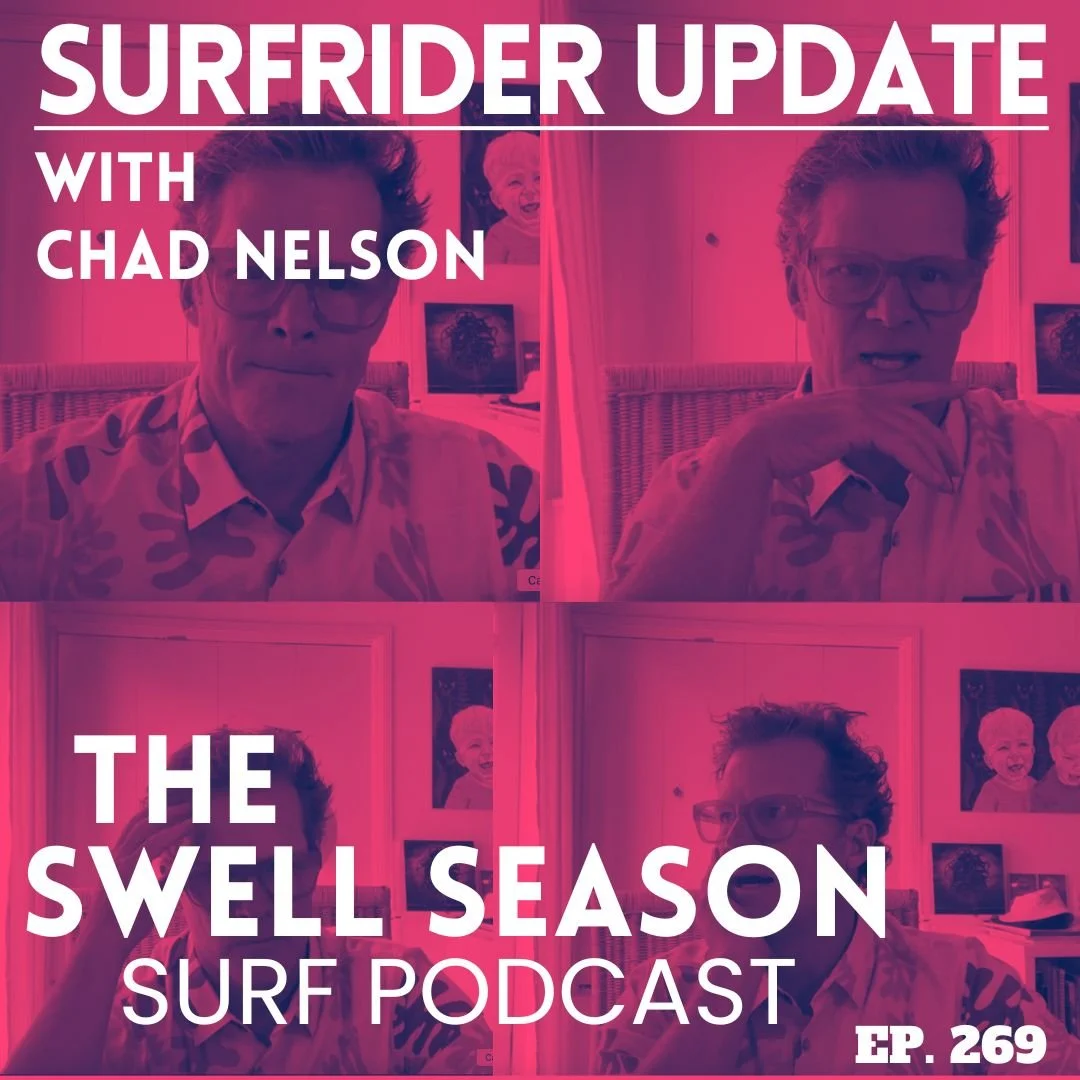
Surfrider Update with Dr. Chad Nelson
[00:00:00]
Tyler Breuer: [00:01:00] Hello and welcome to the Swell Season Surf Podcast. I'm your host, Tyler Brewer. On January 20th, 2025, president Donald Trump took office and on day one took aim at Bedrock Environmental Protections, rolling back, policies that safeguard our oceans, beaches, and climate for environmental groups such as the Surf Rider Foundation.
The challenge Ahead has never been more real and urgent. Joining me on this episode is former guest Dr. Chad Nelson, CEO of the Surf Rider Foundation. Chad has been on the forefront, uh, of ocean advocacy for over 25 years, leading one of the most recognized grassroots organizations working to protect our coasts.
From legal battles over public beach, access to campaigns against offshore drilling [00:02:00] and plastic pollution, surf Rider has been a constant force. But even their work is being tested in new ways under the current political climate. We're going to get into how this administration's policies are reshaping the environmental landscape and what everyday people, surfers, beachgoers, and anyone who cares about clean water and healthy beaches can do to push back.
Dr. Chad Nelson, welcome to the show, sir.
Chad Nelson: Hey, thanks for having me. It's great,
Tyler Breuer: to have you back.
Chad Nelson: yeah, to be back.
Tyler Breuer: Yeah. You know, like, nice, uh, we have some wonderful stuff to discuss. I imagine it's been a pretty busy year for you, huh?
Chad Nelson: It, it has, it really has.
Tyler Breuer: I, I, I wanna start then, and like with how you thought things would go before Trump, the Trump administration took office, and what has been your experience since, and how drastic were your expectations from reality?
Chad Nelson: [00:03:00] Um, I thought it was gonna be bad and it's been worse. Um, you know, it's pretty interesting 'cause you know, there's a lot of buzz leading up to the election about project 2025. Uh, the conservative blueprint to dismantle government and environmental regulations and exploit land and sea was right there on paper.
Um, you know, people were quickly including many of my conservative friends saying, oh, that's just fear mongering. That's not real. Um, and it's turned out that they're just, it's like a checklist. And, uh, and our issues, when we look at the issues that affect the coast and ocean, they're just walking through the list.
Tyler Breuer: it, it, it feels like they're not only just walking through the list, they're just pushing things through, like nothing. Like there's no, it feels like I. Politically, at least there hasn't been a lot of [00:04:00] pushback.
Chad Nelson: Well,
Tyler Breuer: you know, from, from like the, the, the, the Democratic party particularly. That's my critique, but I don't mean to put that on you.
Chad Nelson: No, no, no. I mean, look, we have three branches of government, right? Uh, we have the executive branch, the president, uh, we have Congress, and we have the courts, right? The judicial branch. This is, you know, uh, civics 1 0 1. Um, and they're supposed to be co-equal
Tyler Breuer: Mm-hmm.
Chad Nelson: and, um. Congress, which is now dominated by Republicans in the House, and the Senate is completely abdicated to the President.
Tyler Breuer: Yeah.
Chad Nelson: Um, historically, even if you had a Republican Congress and a Republican president, the the congressional members said, Hey, we're, you know, for example, like we, we hold the strings to the purse. So we control the budget. You execute the budget. And so even if they [00:05:00] were the same party, can Congress had a sense that like they had a specific responsibility and power and if they agreed on nothing, usually it was that they were important.
Uh, and in this case, Congress is just subservient to the president. So we don't really have three co-equal branches of government anymore. We sort of have two.
Tyler Breuer: Uh, and that's, uh, even debatable right now.
Chad Nelson: We have conservative courts. Um.
Tyler Breuer: I was actually even just gonna bring up like, how, you know today, I was gonna say this for later, but we can just get into this. The Supreme Court just ruled to limit nationwide injunctions and limit federal judges' powers. Uh, I'm like curious like how you see that working out now.
'cause that, that really for organizations like you that would. Sue the government and you would have like a federal judge and they would put an injunction that would be nationwide. Now that's not recognized.
Chad Nelson: [00:06:00] Yeah, I know it's gonna be really interesting. I'm, no, I am no legal scholar, but I will, um, be curious to see how this played out. 'cause another, uh, decision that the Supreme Court made in recent years was about something called the Chevron case. And, and that was about agency deference. And so basically the courts historically said, we're gonna defer to the experts.
Tyler Breuer: Right.
Chad Nelson: There's a great irony in that story, which is that, uh, which I think you know where I'm going on this, which is, um, now I'm forgetting which, which justice it was, I think it was, oh, it was Gorsuch. He wrote the opinion on Chevron and he, he wrote an example in there and he said, for example, and he, he talked about nitrous oxide, not nitrogen
Tyler Breuer: Yeah,
Chad Nelson: in terms of a climate thing.
So he was talking about laughing gas,
Tyler Breuer: I just gonna say, I'm like,
Chad Nelson: he got the, he got the science wrong [00:07:00] in the example that he was writing that was supposed to show that we didn't need scientists, that the course could make these decisions. So, so there's a great irony there. But, uh, I bring that up because that had broad ramifications on like every single subsequent environmental case, and I think this decision will be similar.
Tyler Breuer: yeah.
Chad Nelson: You know, some things are local and we'll get into this 'cause we're, there's actually a lot of good news happening at the local level. I don't want your audience to think it's all bad news. Um, you know, but there are other issues that need to be addressed nationally.
Tyler Breuer: Yeah.
Chad Nelson: And ironically, these are the same people that are trying to like strip California of its own stricter standards for fuel efficiency.
So, you know, the, the hypocrisy, uh, of this, it's national when they want it, national Guard they took over in California, but it states when it comes to other issues. And so they're, they're, they seem to be picking and [00:08:00] choosing based on their preference, not on any consistent, uh, philosophy or belief.
Tyler Breuer: How do we like, I don't know how to navigate that anymore. I don't know about you, but like when I talk to someone and you, you point out the blatant hypocrisy of what someone is saying and yet there's just no shame to it. There's no, um, oh, you got me. I'm wrong. It's more like, yeah, well this is what it's, I have the power and I'm gonna do what I want.
Chad Nelson: I'll just blame the media. It's Tyler's podcast.
Tyler Breuer: Yeah.
Chad Nelson: the problem.
Tyler Breuer: Seriously, man. Main lame stream media.
Chad Nelson: Hey, you know, I, uh, I, you know, this might a little bit cut to the chase, but you know, there's, they had to be held like accountable at the voting box at the end of the day. Um, you know, the largest voting block in the presidential election was, did not vote.
Tyler Breuer: Yeah.
Chad Nelson: Uh, and so [00:09:00] if we don't hold our elected officials at every level, local, state, and federal level accountable to their decision making, what do we expect? Right. And, uh, I think I. Jeremy Jones, the famous snowboarder and founder of Protect Our Winners. You know, he, he sort of says, Hey, democracy is a contact sport.
What he means by that is you gotta get in there and like participate.
Tyler Breuer: Yeah.
Chad Nelson: And uh, we, we, we have a system that's pretty extraordinary democracy and local government and, um, but it only works if you actually engage it. So, you know, civic participation is low, voting levels are low. So we're not active in the participation and then we complain about the outcomes of the system. I think, you know, so I think that the, the, the way the, the big broad solve is more active civic participation and more voting. And I [00:10:00] think if we did those things, we would have a representative government that's more representative of what we want.
Tyler Breuer: Yeah, it's, it's, it's frustrating 'cause I feel like, um, I feel like a lot of people have thrown their hands up in the air, uh, you know, in some ways because, not, not just in voting, but just information I think has become so muddled and so clouded and. I was curious, like, how, how does Surf Rider cut through that?
How, what, what sort of strategies are you guys employing or trying to employ to, to cut through the, the, the bullshit that's out there and the misinformation. 'cause it's, it's crazy. Like you even mentioned Jeremy, you know Jeremy Jones, right? Like he had a whole post and then he got into a whole thing with Kelly Slater about it.
You know, who
Chad Nelson: Yeah.
Tyler Breuer: has a, a clothing line that's supposed to be for the environment and all these things. And then you're like, wait, what? You don't believe in climate [00:11:00] change? You don't believe these things. And it's a weird, uh, it's hard for me to square in my head. And I'm curious like how you cut through that and how do you get, get the word out besides coming on the greatest podcast ever.
Of
Chad Nelson: yeah, yeah, I absolutely, um, yeah, you know, a hundred percent facts like Joe Rogan. Um, I, you know, it is interesting because there's no question that, um, we live in information bubbles now, right? Um, some people call it like the post truth era. Uh, and so depending on where you consume your media, uh, you might hear different things, or certainly a different slant, if not outright falsehoods lies.
Uh, including coming out of the president's mouth or his staff all the time. You know, I didn't text the bombing instructions and the guy from the Atlantic said, alright, I guess I'll post the screenshots here. They're, [00:12:00] yes, you did. Uh, um, but, uh, you know, I think. We're still firm believers in science. I, I, uh, am trained as a scientist and, um, it's, I, if you are looking at peer reviewed science, it, it's in a community that's engaged in trying to like, interpret facts.
And it's robust and it works. It's been around for a long time. Uh, it's, it's why we can fly in airplanes and text on little computer boxes in our hands. Um, and, uh, and so I think, you know, we look to the science, uh, we try to, you know, and there are issues that are, are, are in some cases are vague, but others are not.
Right? Uh, climate change is happening and it's real sea levels are rising. Uh, our oceans are becoming more, uh, acidic. These are all like facts born by science and data. Uh, so we tend to, you know, focus on the science and trust the [00:13:00] scientific community. Um, I think we try to look for. Multiple sources of information. Um, and if things don't seem to make sense, we double down and double check, you know, confirmation bias. This concept that you look, you're attracted to facts that appeal to your predisposed opinion
Tyler Breuer: Mm-hmm.
Chad Nelson: is a reality. It's true for everyone. Like we all have that to some degree. Um, you know, so we try to make sure that we're being thorough.
You know, we pride ourselves in sort of being a fact-based science-based organization when we, uh, focus on decisions. And I mean, an interesting one, you and I think talked about this one I was on last it, the offshore wind issue.
Tyler Breuer: Yeah.
Chad Nelson: And it's been really interesting. I, I, I've thought about this a lot. It's sort of an asymmetrical fight because, uh, whale dies and washes up on the beach and the anti wind guys within an hour of that whale showing up at the beach, say it was the [00:14:00] wind turbines.
Tyler Breuer: Yep.
Chad Nelson: And the environmental community says, why don't we wait eight weeks for the neck crop? Do we see what, so we can see what really happened? And eight weeks later we find out it was a ship strike,
Tyler Breuer: Yeah,
Chad Nelson: but we already lost the argument, right? 'cause it was eight weeks ago. So now everyone's like, oh, the whales. I just saw someone post something about sturgeon washing up on the beach in New Jersey,
Tyler Breuer: Yeah.
Chad Nelson: and the biology experts suggested that fishermen are catching them, uh, and throwing the back.
'cause they're a protected species. But when you pull 'em up from the deep kills 'em sometimes, uh,
Tyler Breuer: Yeah. They get the bends, you
Chad Nelson: yeah. Essentially, right? And so the sturgeon washing up the beach are probably, we don't know, but probably caught incidentally tossed back. And some make and some don't. Uh, and when she posted the picture of the sturgeon, everyone was like, oh, it's the wind.
It's the wind. All the comments, you know? And I was like, oh man. You know, people have been programmed without data.
Tyler Breuer: [00:15:00] yeah.
Chad Nelson: Or science. And so it's hard 'cause science is slow and science is boring. And so it doesn't always win the social media battle.
Tyler Breuer: I, I feel like, well, I think that's so interesting because I'm pretty sure we stopped doing everything for the wind farm off the coast here like a while ago because of Trump. I think it, we stopped a while
Chad Nelson: No, I mean, and all they
Tyler Breuer: washing up,
Chad Nelson: yeah. I mean all they were doing, even, they were doing, the other thing people conflated is they were doing seismic surveys to find like the sandy patches. Well, the seismic surveys they do for oil drilling, the explosions are meant, meant to penetrate like two miles of earth,
Tyler Breuer: yeah,
Chad Nelson: not 10 feet of sand.
So the, the, uh, the seismic testing for wind was more akin to fish finders, which every fisherman in the entire Atlantic is using.
Tyler Breuer: Yes,
Chad Nelson: Uh.
Tyler Breuer: Yeah.
Chad Nelson: Not the oil drilling, but you know, it [00:16:00] was, that was what they were trying to blame. But yeah, that, that was barely happening anyway,
Tyler Breuer: Do, do you ever, do you ever get frustrated, like in the sense that you see that, but then when we see like, uh, Trump, you know, remove protection for offshore, uh, you know, ocean and, you know, opening up for drilling and you wanna be like, well, where are you now? Where, you know, like, this is probably worse for the whale, you know, and I'm like, where, where's your outrage now?
Chad Nelson: I mean, that, that's how far the propaganda went. When we posted on the, you know, we sued the Trump administration, I can tell you the story behind that, around the, um, offshore drilling
Tyler Breuer: Yes.
Chad Nelson: And we posted about it and there were people also on the east coast that said, well, I'd rather have rigs than wind. Wow, okay. Um, but yeah, so, so back to the oil drilling thing. So, you know, I. Quick history. Um, [00:17:00] in 1989, you and I are probably old enough to remember this somewhat. There's a giant oil spill in Alaska, Exxon Valdez, uh, and it decimated this pretty magical, uh, part of Alaskan's coastline and marine species and everything else.
And, uh, in 1990, the next year, uh, I'm pretty sure it was the first bush was in office,
Tyler Breuer: it was,
Chad Nelson: uh, we established a presidential and congressional moratorium on offshore drilling.
Tyler Breuer: yeah.
Chad Nelson: And, um, so we said no more offshore drilling. We learned from Alaska and spills in Santa Barbara on other places. And they said, enough's enough.
And that was kind of right when I was getting my start at Surf Rider, uh, or a little bit before. And, uh, getting my start as an environmental sort of ocean conservation person and.
Tyler Breuer: I.
Chad Nelson: I thought this was an issue that my forefathers in the ocean conservation community [00:18:00] solve. We stopped this. We had moratoriums great.
They got renewed every year automatically by Republicans and Democrats, the Bushes, the Clintons, and um, and then in 2008 Bush, Jr. That was the summer of the first summer of drill baby, drill
Tyler Breuer: Yep.
Chad Nelson: oil, got expensive, gas got expensive, and Congress and Bush on his way out the door, uh, got rid of the moratoriums.
So a new era of potential offshore drilling. And we've been fighting that since then. Obama tried to open up the Atlantic to drilling. We were losing that fight until the BP spill happened, which was horrific. Mm-hmm. 87 days to, you know, get rid, stop the spill.
Tyler Breuer: People's livelihoods fully just ruined as well. You know, mind, you know, mind you, like whole industry turned upside down.
Chad Nelson: 11 people [00:19:00] were killed on the platform when it blew up. Uh, caught fire. And, um, and so since 2008, we've been opposing plans to drill successfully. I might add, uh, no new areas have been opened up since then. And then this year in January, one of Biden's last acts was to protect all of the sort of remaining waters from offshore drilling in perpetuity using something called the Outer Continental Shelf Lands Act.
Tyler Breuer: Mm-hmm.
Chad Nelson: So we're like, hooray. We, we've, we've won, right? This like, what is that? Uh, almost 30 20 year battle, 17 year battle. Um. And that's good news. And then, you know, a week later, a couple weeks later, Trump wrote an executive order, which is sort of what you referenced in your intro, to undo that,
Tyler Breuer: Mm-hmm.
Chad Nelson: um, that protection.
Now we don't believe he has the [00:20:00] authority. Uh, and that's why we sued him. Uh, we think that that, if that's, if they want to undo biden's protections, it's requires an act of Congress.
Tyler Breuer: But now with this new Supreme Court ruling, you know that if a federal judge in California says, yeah, you're, you're right. We're gonna do an injunction. They can't, that every state that's along the coastline would have to sue or you'd have to sue in every
Chad Nelson: I, I, yeah, I think that's, that's what I don't understand. So like this, our, our lawsuits actually in Alaska, I.
Tyler Breuer: Yeah.
Chad Nelson: Is where the, where the suit is taking place. I mean, this is kind of like, this is, this is where I, you know, you need to have a legal expert come on next and tell you. 'cause I can't. But, uh, so, you know, if this judge in Alaska says no federal court, I might add.
I, I, I, I, it doesn't, it's not clear to me now what that means. Um, and do, do we need to fight them in every [00:21:00] court place, or do they need to get permission in every place? I don't know. Or does it only go one way?
Tyler Breuer: From, from what I, I've read about this case, it seems like the, the real, like the real goal and problem was, uh, the goal is to make it so that you have to, uh, basically sue in every state almost. And that makes it infinitely more expensive and more time consuming and more difficult to fight, which I know that was like the big concern.
Like, this is gonna change how groups can now, you know, now they need more money to f to fund the fighting, which is unbelievable.
Chad Nelson: Well, can we set new state standards that are different than the federal standards? It could work both ways. I don't
Tyler Breuer: True. That is true. That is true. But we'll see. Right? Like
Chad Nelson: Well, like, uh, I'm being facetious, but we'll just ban cars in New York state and then Detroit. We'll have to try to sue the state. I mean, I don't know. Or this, you know, this thing I mentioned with the, uh, fuel [00:22:00] standards in California, the mileage standards,
Tyler Breuer: It's, it's, it, it feels like, to me it feels like there are people in the Supreme Court trying to just take apart the government step by step, you know, and make it,
Chad Nelson: I, yeah, it's wild. I mean, the other thing that's interesting, and I, you know, I think it's worth talking about, is one of the, I don't know if you're paying attention to this public lands fight that's happening right now.
Tyler Breuer: uh, a little bit, you know, as much as I can digest,
Chad Nelson: It's, well, it's fascinating because, uh, it, it, it's a case study in my opinion for like how the system is supposed to work.
Tyler Breuer: Yeah.
Chad Nelson: So, um, in the big bill, big ugly bill that's gonna do all kinds of bad things. Um,
Tyler Breuer: Yes.
Chad Nelson: there, part of that was an effort to sell off public lands in the United States to offset the cost of the big tax break we're gonna give folks, which is kind of [00:23:00] on the face of it, absurd. 'cause there's not that much money in our public lands.
But, um, and so there was, you know, three point, or I can't remember exactly, there was like over 3 million acres of land that was eligible. Might have even been 35 million. It's strong. I think it was 35 million. Um. They were only gonna pick 1% of it, but that was like the eligible land. Uh, and so this was a big, you know, basic giveaway of land that's yours and mine and all Americans.
Um, and the outdoor recreation community
Tyler Breuer: Yeah.
Chad Nelson: with like, heck no. We're part of the group called the Outdoor Alliance that's been in the, at the center of this great organization. And, um, it was in the house Bill, there was enough, um, noise made that, uh, it got peeled out of there. And then in the Senate, which it, where it's currently at, it was put back in a guy named Mike Lee, Senator from [00:24:00] Utah.
And, um, the Outdoor Alliance got 680,000 action alert signatures in 10, 10 or 12 days.
Tyler Breuer: Wow. Wow.
Chad Nelson: Uh, millions and millions of phone calls into Congress.
Tyler Breuer: Mm-hmm.
Chad Nelson: Uh, my Instagram feed, I feel like it's about 50%. Don't sell public lands right now.
Tyler Breuer: Yeah.
Chad Nelson: Pretty much every major outdoor brand has weighed in and said, don't do this. Uh, back country hunters and anglers, the conservative, typically conservative hunting community and fishing communities.
So pretty much anyone who's out there, uh, left or right, who uses public lands, which is all of us, um, has, has really decided that this is like a line in the sand to, that they don't wanna cross. And, um, it's working. This morning, five republicans from the House of Representatives representing Western states, sent a letter to Congress saying, [00:25:00] uh, we're gonna vote against if this, if there's any private lands in there or public land sales in there.
Um, and you've got cons, you know, senators from Montana, Idaho, and uh, I'm trying to think if there's one other western state saying no in the Senate. So, um. It's great to see 80% of Americans don't want public lands sold.
Tyler Breuer: Yeah.
Chad Nelson: Uh, and so it's representative government working in the way it's supposed to. Right.
The, I mean, it'd be nice if these guys understood that before they put it in the bill, but, but the reaction has been so strong that they're backing off. And I think, you know, it's far from over, but it's looking good. And I actually find it to be really, um, hopeful because this is back to the civic participation I was talking about.
This is it, and it's, and it's working
Tyler Breuer: Well, [00:26:00] it, I mean, I think, I feel like there are some awakenings starting to happen. I think more people, I mean, regardless of what some listeners may feel, uh, you know, with Zoran, uh, AMI, uh, winning the Democratic primary, you know, that was. You know, the media tries to play, say, oh, he was so savvy with social media, but it's like, no, he was organizing, he got people actively engaged and volunteered.
50,000 volunteers is no joke. And knocking on almost 2 million doors, one and a half million doors is huge. And I think that's, we're just, I, I don't know about you, but like, I just feel like the opposition, whatever that is to this administration is, is severely lacking in a lot of parts, uh, nationally at least.
And it feels like, like you said, the grassroots and the local areas are where we're starting to see more of that movement. [00:27:00] I was hoping you might be able to then share some of the positive news that you have been having with on the local level, some of the wins that Surf Rider has been having,
Chad Nelson: Yeah,
Tyler Breuer: we can find some hope and, you
Chad Nelson: No, no, absolutely. Yeah, absolutely. Um, you know, the, um, you know, we have a, a multi-layered decision making framework in the United States, right? And so we have like our, uh, local, local government, state government counties and the feds and different decisions made at different levels all the time.
And you can get a lot done at the local level, um, and have a big impact at, uh, a, a, a wild statistic for you, which is that LA County
Tyler Breuer: Mm-hmm.
Chad Nelson: has more people in it than 40 states.
Tyler Breuer: Yeah. Isn't that crazy?
Chad Nelson: you know, if you ban. If you ban plastic bags in LA County, it's like equivalent to 40, banning 'em [00:28:00] statewide in 40, not collectively, but in 40 different states.
Um, and so, so you know, we can get a, we can have a lot of impact. You know, you, you reduce emissions in, in, in LA County, you have an you, it's, it's more than if you reduce 'em in the whole state of Arizona. Um, and so, you know, we, we, in the last like couple months, um, we passed a like circular economy plastics bill, extended producer responsibility bill in Washington state.
This means that any producer plastic in Washington state has to figure out how to like close the loop.
Tyler Breuer: Ah, it's huge.
Chad Nelson: huge. Uh. Um, we passed a pretty comprehensive plastic single like film they call it, but all those different plastic bag types in, in Oregon in the last, in the last, um, couple months too. Um, we ha passed a sewage right to no bill in Washington also.
Um, we [00:29:00] passed a bill in Hawaii to improve sort of how we think about coastal erosion issues. So we're, we're passing these statewide bills around the country that, uh, are gonna definitely protect our coast oceans. Uh, and so there's a lot we can do, uh, outside of just focus being focused on DC
Tyler Breuer: Well, it was interesting, like, uh, I thought it was really interesting the victory in Florida that you had with the permanent protections and keep state parks wild. Um,
Chad Nelson: Yes, that's another one I should have mentioned. It's, um,
Tyler Breuer: well garnered the garnered slater's attention apparently.
Chad Nelson: Oh, really? I,
Tyler Breuer: Yeah. And
Chad Nelson: I missed that. Uh,
Tyler Breuer: Yeah.
Chad Nelson: well, you know, it's a really good story. So in the fall, last fall, um, or I guess it was last summer, uh, DeSantis governor of Florida tried to kind of very quietly sell off a bunch of coastal state parks for golf courses in hotel and condo development. [00:30:00] Uh, he was trying to kind of sneak this through, and an employer at, uh, at one of the state agencies in Florida was like a whistleblower. He leaked it
Tyler Breuer: Yeah,
Chad Nelson: and the community went crazy. There was like a, I think there was supposed to be like a public hearing on, you know, like the Friday before Labor Day. It was like they were really trying to sneak it through and people rallied, surf rider included.
Uh, and there were such an outpouring, like the public lands. It's a small version of the same fight. Um, he backed off. Because it was so unpopular. And it turns out that not surprisingly, Republicans also love Florida State parks, you know, fishing, surfing.
Tyler Breuer: Who've thought, you know?
Chad Nelson: These are all things we all do, right? It doesn't matter what party you are.
Uh, and, and so it's super unpopular. Uh, and so fast forward to this spring
Tyler Breuer: Mm-hmm.
Chad Nelson: and, you know, uh, we helped pass a [00:31:00] bill in Florida to permanently protect as much as you can do that exist that exists. Allstate Parks and DeSantis signed it. So, you know, we went from, I'm gonna get rid of these things and give them to my developer buddies to permanent protection in less than a year.
And again, it took the threat to awaken the community. But once they were awake, they got active. And now we have a bill that's really representative of what the public in Florida wants.
Tyler Breuer: Act local, think global. Right. I mean, that's really, it feels like that is though, potentially the answer. Um, you know, I feel like there's this, um, I feel like yes, we, I would, we would love to have federal, you know, bans on certain things where we'd like to have that, that top down approach on, on certain things to protect the environment.
But it feels like the most. [00:32:00] Not the easiest, but the, the probably the most effective ways at the, the local level to create those changes at least. And also to create the culture, uh, of getting people civic-minded. I think that's really, when you see something done right and properly and you see it like enacted, I imagine that that creates momentum for other people to wanna keep moving forward and keep acting.
Chad Nelson: I, I couldn't agree more. I mean, um. You know, I think the, the, the like more local government gets, the more pragmatic and less ideological it gets, you know, city councilors are trying to fix potholes 'cause that's what they're like, the people who vote them and their neighbors are complaining about. And so, you know, and I think decisions at the local level tend to be more practical because they're just trying to solve problems.
Um, you usually know who your elected officials are, you see 'em around town and they're accessible and you can [00:33:00] see the problems and solutions. It's all very tangible. Um, and so I do think like, and you can do it, you know, go into DC and lobbying your congressman or you can meet 'em in their local offices, but it's a somewhat abstract and then they pass a bill and you're like, okay, what does that, how does that affect my town or my place?
Um, whereas, you know, if they. Band, single use plastic bags, and you go into the grocery store and there aren't any more of those, then you see it. And in fact, an article came out just, uh, this la not, it's not too surprising, but, uh, in the last week that shows that, you know, all these bands are working, like we're finding less plastic on the beach.
Uh,
Tyler Breuer: It absolutely helps. It's it,
Chad Nelson: and we can scale those up to the state and to the federal level. You know, we need a little bit of both. 'cause it would take a long time to build everything from the bottom. And some things are, you know, like if you, some issues are interconnected, so we gotta think about 'em more broadly than locally.
But, um, [00:34:00] but in general, I think you're right. Yep.
Tyler Breuer: It. Well, it's also a test case, you know, you can prove, you can prove, oh, this worked here. This actually we had success. We can grow this. You know, and that's, that's where I think, uh, you can also make a more persuasive argument too, at a bigger, higher level basically.
Chad Nelson: I mean, that's how all innovation happens, right? They didn't just, they didn't one day wake up and do, like, we're gonna build a hundred million iPhones. Like, they built a prototype
Tyler Breuer: exactly.
Chad Nelson: and then they started selling them, and then they fixed it and proved it, and, you know, so it, it should be the same with how we manage these issues.
Tyler Breuer: What are your thoughts on the budget cuts that we're seeing, uh, in the big bill? Particularly? What's gonna happen to, like, I. Noah and the EPA and what are your concerns there? Particularly Noah, I think is, it's something that I think everyone takes for granted and everyone forgets about because it's not very flashy.
[00:35:00] Um, and it's, it's very science driven. And now something that, that really impacts all of us. I mean, everything from our wave, you knows, like being able to see, predict waves even, you know, forecasting
Chad Nelson: what's the first question? You typically ask or talk about with your surfing buddies, it usually starts with this phrase, this is what the buoys say.
Tyler Breuer: exactly.
Chad Nelson: And uh, those buoys are Noah buoys.
Tyler Breuer: Yeah.
Chad Nelson: Uh, and, uh, yeah, no, it, it's really bad. Uh, I think, you know, we already kind of did the whole got through the Doge thing, which was devastating in its own right.
And so ham handed, like, you know, they just were recklessly cutting without any understanding consequence. And um, you know, and now we have these cuts in the bill and you know, Noah is [00:36:00] America's Ocean agency. Uh, they do a lot. They have the National Weather Service. So all the satellites, they have the buoys that we just talked about.
They have all the models that we use for our weather. Um, which by the way, the weather. It's gotten great. It's really good. I mean, you know, people love to grumble about surf forecasts, but you know, you're, I was old enough, I used to have to call the lifeguard tower and get the, like, recording from the, the
Tyler Breuer: Well, you,
Chad Nelson: lifeguard and
Tyler Breuer: or you had that RO Robotic radio that you would listen
Chad Nelson: you would listen to the like, maritime
Tyler Breuer: Yeah.
Chad Nelson: Like it was so crude. Uh, you know, now you're like, I'm gonna go surfing on Thursday from 10 to noon, because that's gonna be the peak of the swell. We're pretty spoiled. You know, some people don't like that 'cause of the crowds, but, um, and then, um, tsunami warnings,
Tyler Breuer: Yeah.
Chad Nelson: Noah, hurricane warnings. Big, big deal. Uh, I, you know, we're, we've gotten [00:37:00] so good at that, that like lots of lives have been saved.
Um, and then the Coastal Zone Management Act, which is what manages our coastlines and our beaches and our beach access, uh, that's all, uh, run by Noah Wetlands protection. Um, and so, you know, if you care about the health of our coast oceans, you know, and I, I got my start through a fellowship with Noah when I was at, right outta grad school and at Surf Rider we work with folks, Noah, staff members across a huge spectrum.
And I have for decades. And I have to say, you know, the folks that I've interacted with are doing that because they're public servants.
Tyler Breuer: Yeah.
Chad Nelson: They're. You know, they're, they're stable jobs. They're not super high paying jobs. They're doing it because they care. They, they're public servants. They really want to do good for the world, [00:38:00] incredible professionals, PhDs, all kinds of smart people, uh, who, who work hard and really care,
Tyler Breuer: Yeah,
Chad Nelson: uh, about our coasts and our oceans and our resources, fisheries, all of this.
Um, and, uh, you know, there's a business saying, right, you can't manage what you can't measure. And, you know, and these are the people who measure and manage our, our coast and our oceans. So I think it's gonna be unfortunate. It's already you're, if you follow meteorologists, they're losing services that provide accurate weather forecasting.
Um.
Tyler Breuer: yeah. That one from Florida, like freak out on air
Chad Nelson: Yeah, and I, you know, I, on on Blue Sky, the sort of alternative to Twitter, which the science community is, uh, gravitated towards. I follow a lot of, you know, oceanographers and weather junkies and, um, they're, they're complaining about models and, and data coming offline. You know, climate.gov doesn't exist anymore.
Um, so it is, it's unfortunate and I think, [00:39:00] you know, the other thing about it is I will not get this number correct. I should have it at the tip of my fingers. But, you know, essentially every dollar invested in noaa, you know, supports seven bucks in, in sort of outcomes. And so it's not a cost savings, it's gonna cost us money. You know, I think we had $20 billion climate disasters in the United States last year. So. We're shooting ourselves in the foot and the budget's not even that big. So it's, it's, it's a tragedy. And then, you know, quickly on the EPA, the Environmental Protection Agency was set up so we wouldn't get poisoned.
Tyler Breuer: Yeah.
Chad Nelson: Rivers were on fire, our drinking water was polluted.
Tyler Breuer: Acid
Chad Nelson: Uh, the Hudson River was a toxic waste dump, as was Santa Monica Bay acid, rain. I mean, when I was a kid, when I, I, I grew up in Southern California. On the coast, the air quality was generally pretty good. But [00:40:00] in the summer, my brother and I would lay in bed and have an asthmatic cough.
'cause the air quality in the seventies was so bad.
Tyler Breuer: Yeah.
Chad Nelson: And, uh, there was a, like, I can't, you know, it was almost like up, up to half the days in LA were unhealthful. Now there's.
Tyler Breuer: I, I mean, I remember la like the smog that you could see around the city, and now it
Chad Nelson: Land through it on the airplane
Tyler Breuer: I remember seeing it coming in and being like, holy
Chad Nelson: and it's gone. So, so the EPA was established to ensure that we weren't poisoned
Tyler Breuer: Yeah.
Chad Nelson: and uh, and now we're getting rid of that. So guess what? We're gonna start getting poisoned.
Tyler Breuer: And, and, and not to mention FEMA too, now being, uh, potentially, you know, uh, canceled at the end of this, uh, hurricane season.
Chad Nelson: Yeah. Well, how about the guy, the head of FEMA didn't know there was a hurricane season.
Tyler Breuer: It's,
Chad Nelson: Did you hear that?
Tyler Breuer: Yeah. Yeah. I [00:41:00] didn't know how true that
Chad Nelson: the plan for hurricane season? And the answer was, what's hurricane season? And then the subsequent was, um, I'm gonna, well, we'll just use last year's plan. But yeah, I mean, you know, a lot of red states in the southeast are being impacted by floods and tornadoes and, you know, they're, we're supposed to have a pretty, um, significant hurricane season this, this year.
So, um, these are, again, these are, these are programs and agencies that benefit all Americans,
Tyler Breuer: And, and they pay for themselves. They, they end up paying for themselves. A lot of these programs, you know, fema, like, you know, if you just left that to rot instead of have FEMA come in, like you lose money, you lose productivity, you lose bit local businesses. But FEMA comes in, they save all of that. A lot of it, I mean, obviously it has, it has its cri you can ha you can critique it for sure, but on certain things.
But for the most [00:42:00] part, like God, like businesses and towns and cities would not get up and running as quickly. And you lose money then that way too. So it's,
Chad Nelson: No, that's, I mean, you know, it's interesting because, you know, most, most people have homeowners insurance
Tyler Breuer: mm-hmm. Well, you can't get it.
Chad Nelson: Yeah. It's harder and harder, but you know, a renter's insurance and the idea there, right, is that you want to hedge your future risk on disaster by paying a little bit all the time. And so if your house gets flooded or your, whatever happens, you can get this insurance, right?
And so that's the system. Well, well that's essentially government, right? It's like we're paying, it's our taxes. And, uh, we're, we're, we're, it's sort of an insurance program, 9 9 1 1, and the fire department, the police department, fema, this is all, um. Us paying so that there's a collective safety net for these issues.
You know, beyond the social ones, these are the ones that are [00:43:00] kind of like surfing environment, weather related. And so yeah, we're, we're kinda unfortunately gonna, at risk of losing those and I think we'll probably suffer a bunch of disasters. I know Josh Hawley, you know, the Republican from Missouri is his state got hammered by tornadoes and flooding and he's like, where's fema?
And it's like, Hey dude. Well maybe you should, maybe you should be voting for fema. FEMA funding.
Tyler Breuer: Well, what was it in, uh, Arkansas with, um, the governor there could it Trump wouldn't give disaster relief, you know, after they got major flooding and had huge issues there. And that was his, um, former press secretary was the governor and she couldn't hug of he Yeah. You know.
Chad Nelson: Yeah, I mean he, you know, he, he, they, they were playing that game after the California fires too. And I mean, and again, I think like, this is kind of a, it's unfortunate that our politics have gotten so divisive because, you know, it used to be like, Hey, [00:44:00] you may not love California, but you're gonna give them the national disaster relief money, because guess what, someday it's gonna come to your state and you'd hope that they do the same for you.
So it's kind of like a, a do unto others thing at the end of the day.
Tyler Breuer: Well, yeah, and it, I mean, look, uh, it's not a zero sum game. It's all, we're all in it together. We're all tied, like so can interconnected and I think, I feel like post COVID, a lot of people don't feel that way, you know, or don't feel connected. And that's, and so it's been more nihilistic and more self-indulgent maybe.
Chad Nelson: You know, this is kind of a, you know, it's sort of a, a, a narrow group, but I, I actually hope this, like, the fact that the, um, various stakeholders in this public lands thing, sort of the more conservative groups, uh, you know, you kind of got like the, I would classify as like, you got the hunters and anglers.
You got sort of the Motorhead types, and then you have the, like, human rec guys. [00:45:00] And those communities have kind of broken and been kind of isolated. They do sh but they share a lot more in common than they, they don't, and I'll be curious, I feel like this, uh, public lands threat has brought them together
Tyler Breuer: That's great.
Chad Nelson: I'm kind of hopeful.
I mean, it's too bad it takes the threat, but sometimes that's what it is. But I'll be curious. I'm hopeful that that may provide a platform for some more. Common dialogue like, Hey, we just did this together. Let's, maybe we can stop just hating each other and come, come together and find some other things to work on and recognize that, like you're saying, we are all in this together.
Tyler Breuer: Well, it's interesting, like I do feel like, actually I do feel that there is, um, some sort of un loosening or loose or not un loosening, loosening of, uh, political grips in the parties. I do feel like there are certain things happening in the world right now that's creating strange bedfellows and you're seeing. [00:46:00] You know, uh, you know, I'm seeing, uh, an interview with Marjorie Taylor Greene, you know, not wanting to fund, you know, wars. And I'm like, I agree with her actually, which is, you know, kind of like, oh, okay. I just saw Tucker Carlson take down Ted Cruz about the war in rent. I'm like, oh gosh, I've all of a sudden, why is he making me have to like him a little bit now?
You know? So like, damn it, but it's, it is like, I think we're starting to, I think the, I, I wonder, and, and this could be a slow progression, uh, that maybe these parties are not, you know, not holding knit together anymore. Maybe people will be more free. Yeah. Maybe things will be more free to engage potentially that I'm an optimist, so that's what I.
Chad Nelson: Yeah, me too. No, I mean, yeah, I mean, and you know, that's, uh, I, that's, that's kind of why I'm on this whole like, voting and civic engagement kick because I think that's, that's the [00:47:00] sort of anecdote and um, I think, you know, we all stand to gain a lot if we get more involved and, you know, and like, back, back to Surfrider like our whole sort of, um, theory of change or whatever you wanna call it, the way of doing is, um, we make civic engagement fun.
Tyler Breuer: Mm-hmm.
Chad Nelson: Possible community oriented. Um, and so, you know, we encourage people to get involved because we're grassroots based. So you can get involved with our local chapters. You can have an influence. If you have an opinion about an issue,
Tyler Breuer: Yeah.
Chad Nelson: you can share it. Uh, we can discuss opportunities and outcomes and ways to make change and then get together and do it.
You know, and I, I've said this before, you know, going to a city council meeting is not the funnest Tuesday night you can have. But if you come up with a plan, you meet some people, [00:48:00] you go together, you advocate for your issue, you kind of, you win it, or you make some progress and you feel like you're, uh, as an active participant and then you go get a beer afterwards with your pals, all of a sudden you've turned something that was otherwise pretty boring into something satisfying and fun.
Tyler Breuer: it's also nice to vent a little bit too.
Chad Nelson: We could always do that.
Tyler Breuer: Go speak and vent and get, you know, just at least have your say, you know, and feel like you were heard. To a certain extent
Chad Nelson: that's right. And, and it works. I mean, you know, we, uh, you know, I think we've, we, we, we at, we kind of count victories as our like broad metric for um, sort of how many laws and policies we've passed, you know, and we're at 28 halfway through the year.
Tyler Breuer: Wow.
Chad Nelson: So that means, you know, 28 laws or policies to protect your oceans coast, local, and state level have have passed.
And that's because locals in Florida, for example, are calling their reps and saying, Hey, let's [00:49:00] protect these parks. And now parks are protected. It's good stuff.
Tyler Breuer: I wanted to, to touch on something that is almost a little unrelated, but related to Surf Rider in the sense that we, we just saw Ice National Guard and the Marines come to LA like, you know, kind of near your area, um, to police the protests. And I'm curious, like, has that clamp down on protesting, uh, affected how you guys approach things at all or make you think differently?
And also, I'm trying to see if there is a line with environmentalism and having compassion for immigration and human rights.
Chad Nelson: Yeah, there is. And we put out a statement on, on this, um,
Tyler Breuer: this, that's why I wanted to bring it up.
Chad Nelson: a couple weeks back. Um, you know, for one thing, you know, everything we do is [00:50:00] based on like a functioning democracy, right? So all the stuff we, I was just preaching on about is about like. Public participation in decision making. And so this, you know, this idea of like free speech, which means you can share your opinion and not be put in jail for it.
Uh, freedom of assembly, you know, these are first amendment rights, meaning you, um, can gather,
Tyler Breuer: Mm-hmm.
Chad Nelson: which is what we do when we go do a beach cleanup. Um, and, uh, this, you know, this idea of due process, meaning that like the legal system's fair and functioning, it's why you can have like a civic engagement and activist base in United States.
Other countries, people do this and they worry about getting killed.
Tyler Breuer: Yeah.
Chad Nelson: Uh, and so, you know, it's a great luxury, but the, we're starting to see those things erode. Um, I have staff and volunteers who aren't comfortable going to events or city council meetings or [00:51:00] other type, uh, gatherings for fear of being.
Unfairly, you know, detained by ice because of their skin color, whether or not they're a US citizen. Uh, and they seem to be dragging people off and asking questions later. And so we put that statement out partly 'cause it's having a chilling effect on our ability to do what we do.
Tyler Breuer: Yeah.
Chad Nelson: We're training our volunteers and our coordinators on what to do if, uh, a, a beach cleanup or an activity we're doing is, is, you know, targeted.
Tyler Breuer: Yeah. Targeted.
Chad Nelson: and, and you know, getting people engaged in all the things we're talking about is hard enough as it is 'cause it's competing with all the other things in our lives. To have this on top of it is, you know, unfortunate. It's just inhumane and it's, uh, you know, like Doge not being done. You know, presumably we were told that it was gonna be focused on.[00:52:00]
Criminals and you know, and it's categorically not. And um, it certainly seems like it's being done to drive fear and, uh, meet some quotas or optics or who knows. But, um, so that's why we put the statement out because it is having a material impact. You know, we, we try to really, at Sword Fighter, we're Ocean and Coastal Conservation
Tyler Breuer: Mm-hmm.
Chad Nelson: but we're community based and we rely on democracy.
And so we're trying to, and we're trying to have a big tent. I want everyone,
Tyler Breuer: Yeah.
Chad Nelson: uh, race, ethnicity, political party. Like if you love the ocean, you want clean waves to surf in a beach for your kids, like, which I think most people do. We want you to be involved and we'll find a way to work together on those common issues.
And, um, and so, you know, if things are happening that are gonna interfere with that, we're gonna try to come out and, and we wanna support our people.
Tyler Breuer: Yeah. What was the response [00:53:00] to that? Uh, that post like,
Chad Nelson: You know what's interesting? You, you, you, you step out a little bit right past, like, Hey, uh, the water's polluted. And, uh, you, you, you step into these issues that are political and we're cautious about that. 'cause we wanna stay focused on the mission. Uh, and then you brace yourself for, uh, the backlash. And in that case, there wasn't one.
We got, you know, a couple people snarky comments on social media. Uh, but for the most part it was, uh, very well received. And I think most importantly, and I try to do this the right, like I'm a 50-year-old white dude, right? So I've got all the privilege that exists and I try to put my, uh, feet in the place of the most vulnerable inside my network.
And say, Hey, what would those people want me as, as a leader or us as a organization? What do they want from me? They're out there doing the hard yards to protect our coasts. And so I feel like it's my obligation to stand up for them [00:54:00] as an organization and say, Hey, we got your back.
Tyler Breuer: exactly. Uh, it was, to me it was heartening to see and,
Chad Nelson: got a ton of positive feedback from
Tyler Breuer: yeah, the comments even I went through and I was like, oh, I was pleasantly surprised, but I was like, I, I wonder if they're de deleting or not. So I didn't
Chad Nelson: Nope. No. You know, we, we, we, our, we, we try our, our sort of general policy is we'll have a healthy debate.
Tyler Breuer: mm-hmm.
Chad Nelson: Uh, we're open to different opinions, but we're not gonna tolerate hate speech. Uh, and we're not gonna tolerate just the like, fuck you. Uh, like, I don't know if I can curse on your podcast, but,
Tyler Breuer: Fuck shit. Cock balls, whatever you wanna say, man.
Chad Nelson: Uh, you know, but like, we, we wanna, like, if someone's like, Hey, I have a legitimate gripe with your position. Sure. So, um, yeah, so anyway, that was, that was our, our take on that. Uh, by the way, speaking of which, you know, I, I was, I was driving home from LAX yesterday from the airport, and, uh, saw a bunch of tanks driving down the [00:55:00] freeway on the 4 0 5 at all.
It's the first time I've seen that. 'cause like I live an hour south of there and I was like, that's so weird.
Tyler Breuer: It is. It's super weird and it's so unnecessary. It's such a waste of money. You talk about wanting to save money, that money there could have gone to probably fill Noah's holes right there, you know, like,
Chad Nelson: agree. I mean, it was a, a total overreaction to, you know, some relatively minor disruption and, um,
Tyler Breuer: or manufactured. It was manufactured to be, to make it into something bigger
Chad Nelson: yeah. Let's provoke and then get a reaction and, and then respond to the reaction.
Tyler Breuer: You know, I've seen Andor. I know how these things work. You know,
Chad Nelson: Hey.
Tyler Breuer: I, I want to follow up now on, uh, a topic that we discussed at the last, uh, episode that you're on. Uh, you were on to discuss the landmark lawsuit against Exxon, and I just wanted to follow up and see where things were on that, that story as [00:56:00] well.
Chad Nelson: Yeah. Uh, it's been challenging. Uh, Exxon countersuit us.
Tyler Breuer: Oh, God.
Chad Nelson: It, it is typically called a slap lawsuit, a strategic lawsuit against public participation. Um, and there are laws in most states, um, that allow courts to very quickly, um, dismiss those slap lawsuits because obviously Exxon sort of has infinite resources and we have limited resources.
And so, um. You know, their easiest defense is just try to bury you in a counter lawsuit. Um, and so that's happening now. Uh, it's in Texas and we're kind of working our way through that. Um, and so that's unfortunate. It's kind of, you know, part of the game. So, you know, uh, so we're playing a little bit [00:57:00] of defense right now while we kind of wait and see what happens on the, the other side.
So slow moving, my guess is it'll be years, um, before we see any output. But, you know, it's, it is interesting because you are seeing particularly, particularly on sort of climate issues, some of these corporate accountability lawsuits that are succeeding. And, um, you know, again, like, uh, it seems there, there are many ways to try to affect change and this is just one of 'em.
So we'll see. Not a lot of new news, but other than that fact that now we're. Defense in Texas.
Tyler Breuer: Man, I just like, I just wanna like, like this is, this is me just venting and imagining. I would never act on these things, but I just wanna like, go and find these executives, find dirt on them, and then just expose, like, get back retribution. I know. It's just like,
Chad Nelson: You know,
Tyler Breuer: uh, I know. It's just like, it's so hard to not like, like [00:58:00] fall into that, um, retribution mindset.
Chad Nelson: I know. You know what I mean? Part of the problem in some ways is, you know, is uh, corporations don't have morals, right? It's like, and then they, you know, and if they do, they say, oh, you know, we have responsibility to our shareholders to maximize profits. And so that some somehow gives them car carte blanche to, you know, do whatever they need to do to spoil the planet, poison us to, to get there.
And it's unfortunate.
Tyler Breuer: It is crazy. It's like, you know, like that, that lawyer who, uh, sued, uh, was it Shell in Ecuador and then they just made his life miserable after that. You know, it's like, it's crazy. Like it's scary to take on these big corporations and, and I, I, I applaud you 'cause you guys put yourselves out there. Um, you know, I, I don't know, like, I imagine like, there must be some harassment you get from these guys as well, these companies, you
Chad Nelson: Yeah, I mean, [00:59:00] yeah, fortunately to this point there hasn't really been that. It's kind of been, you know, just, just battling in the courts, their lawyers and our lawyers, um, which, you know, that's why we have a legal system, so,
Tyler Breuer: For now,
Chad Nelson: yeah. Hopefully we'll keep it.
Tyler Breuer: what, what is your thoughts then on like the surf community as a whole and how they're responding to, to this administration and to some of the policies? Are you finding more hope amongst the surfers? Are you able to, are you able to make some headway with more professional surfers in getting them to be more vocal about this stuff?
Because that, it feels super absent to me. Like any, and I know a lot of them, they, they make their money now just on being social media and being liked, but it feels like a lot of them have not stepped up. And I'm curious if there's an initiative to try to onboard more people.
Chad Nelson: Yeah. You know, it's interesting 'cause I, I, I mean I, uh, not surprisingly I think about [01:00:00] this a fair amount. Um, surfing as you well know, is no, by no means a like monolith. There's all kinds of subsets inside surfing and um, you know, we have, uh, at Surf Rider we have a pretty extraordinary network of really active surfers.
I have a ton of admiration for, right? 'cause these are people who get up on their own time and are, are. Doing all kinds of work to make our communities and our coast and our beaches cleaner. They're testing water, they're picking up trash, they're restoring coastal ecosystems, uh, attending city council meetings, reading reports, and, uh, and so there is a vibrant and active surfing and ocean recreation community making a difference, which is who, who, who are the tens of thousands of volunteers that make up surf rider.
Um, and you know, and then you have other, other perspectives out there too. And, um, you [01:01:00] know, the pro surfing community, we've got a handful of 'em, you know, that are, are active and, uh, are on our team and, and make a difference. Greg, long Cliff capo, Blair Conlin, the incredible skim boarder. Uh, you know, and, and so.
Tyler Breuer: Blair Clown. I mean, dude, that guy has to surf in some pretty dark, dangerous water with the, you know, where he surfs, like the Aliso Creek, you
Chad Nelson: he, uh,
Tyler Breuer: all those
Chad Nelson: I dunno if you saw it, but he actually did a stunt for us where he skim boarded across the Tijuana slew from one side to the other, which is like about as nasty as water gets, you know, he was willing to like, do it, to like raise some awareness. So, uh, appreciate that. Uh, so, you know, and I do, I wish the surfing community and the pro surfing community was more active, of course.
Um, but I actually spend, I try to spend more of my time thinking about people who are involved than those that aren't. [01:02:00] Um, it is interesting, I, I, I might have said this to you before, but you know, we basically, there's somewhere between three and more, three and 4 million surfers in the United States, depending on, uh, how you count.
Um. Which is interesting. It's 1% of the population, maybe. So you, first of all, you can't get anything done with 1%. That's why we're, you know, but everyone loves the beach. So we focus on a much broader audience than just the surfing community. Um, and, uh, you know, but if we could get 10%, we'd have three or 400,000 members, we would be a huge, we have 50,000 today.
We'd be a huge force to be reckoned with. And, uh, you know, so we have like single digit, uh, one or 2% penetration of the surfing world. So I'm always like, I look at a crowded lineup, like I, I'll look down at Lowers and there'll be 70 guys in the water, and I'd be like, God, I only need seven of 'em.
Tyler Breuer: Yeah.
Chad Nelson: But what I actually have is one. And, uh, so I, I, I would love [01:03:00] it if more everyday surfers would join as members
Tyler Breuer: Mm-hmm.
Chad Nelson: five bucks a year.
Tyler Breuer: It's, it's nothing
Chad Nelson: morning coffee for some people. I.
Tyler Breuer: we need to create. I'm gonna start throwing some random ideas out at you here. Just feel free to shoot 'em down. You know, I figure, I'm like, I got the CEO here. I'm just gonna throw out some crazy stuff. You don't like it, just send it right back. Okay. I think we set up. A surfing website that sells gear and only members of Surf Rider can buy into it.
And you collectively bargain with every company a really good discount. And so if people wanna get boards, wanna get wetsuits, they have to go through the Surf Rider website. They have to be a member to get it because you have access to 50,000 customers who all these brands would love access to and 'cause these are engaged people, most likely, uh, I would say probably, I'm gonna guess a little bit higher up on the socioeconomic [01:04:00] platform as well.
Um, smart, you know, savvy and Loyal because they, if they, if you are someone who's supporting Surf Rider, they'll be probably, I would imagine these people will be loyal to those brands. So I think you start a marketplace there that will. People wanna do it because they get a discount on all the gear boards and everything.
These companies can use that as a bit of a write off as well. And, uh, you've now just grown your base because you're just, just getting a deal. But now they're also gonna be getting all your information as well and be able to activate them. That's, that's one of my ideas.
Chad Nelson: a terrible idea.
Tyler Breuer: Not a terrible idea. I think it's totally doable too.
And I bet even like the surf shops, right? Like you can get the surf shops involved and then they can have their, they could post the products on that page and then they can fulfill locally to people. Kinda, there was this thing called Shopatron we used to be part of as my dad's surf shop and ski shop, where if, uh, someone bought from the vendor's, uh, website, uh, we would get a portion of that sale if they were in [01:05:00] our zip
Chad Nelson: A way of it's, it's a nice way of kind of like beating the Amazon effect and supporting local business.
Tyler Breuer: Yeah. I've been really trying not to buy on Amazon and like I've been using shop app a little bit. That's the Shopify one, because. A lot of times either you buy straight from the vendor or from a store instead of, uh, like Amazon or some, you know, third party warehouse. The other idea I have is, I don't know if you watch YouTube a lot, but there are these commentators who watch videos and then they commentate kind of Sterling Spencer esque, I guess just do a fact check one where you sit down with another scientist and maybe someone who's really funny and you guys just watch videos and see comments and then totally debunk what they're saying and, and, and take the piss out of them at the same time to have a little fun.
Chad Nelson: I, yeah, I like that idea too. I just need a little more time in my life.
Tyler Breuer: Well, you know, I'll talk to Trey and we'll set that up.
Chad Nelson: I like it. I like it.
Tyler Breuer: Those, those are my ideas to, to, to help make a [01:06:00] surf rider effective. And
Chad Nelson: Well, you know, you keep inviting me back, so that's helpful too. I appreciate that.
Tyler Breuer: how, how involved are you with the board riders, clubs that are popping up? Also, I see opportunity there as
Chad Nelson: know, uh, we haven't been as involved as we should or could be. Um, I agree with you. 'cause, you know, I think that I really love that model. Right? It's super cool. Uh. You know, at Laguna Beach, my hometown has a board writers club, and I'm not good enough to be on it, but
Tyler Breuer: Well, anyone can be on the
Chad Nelson: No, no, I'm on the, I mean, I'm the, I can't make cut the, uh, you know, the, the, the guys in my town that are my age are like Jeff Booth.
Uh,
Tyler Breuer: yeah. Well, Boothy, but you know, he's got a bad back, you know, you might be able to sub for him.
Chad Nelson: but yeah, no, there's a lot of good surfers. Uh, but, uh, but I love the, I love the community element of it. Uh, I love the, like, multi-age, so it's bringing the [01:07:00] different, like generations of surfers together. So it's creating continuity across the, the town in terms of age. And, uh, you know, I, my, my kids have surfed in the past, had surfed in some of them, and, uh.
When you surf next to your, against your like neighboring town, it's cool rivalry, but it's also friendships, right? Because you mo you usually, it's a small enough world. You usually know those guys for some reason. So it's a little bit, so I, I feel like, uh, that whole board writer club thing is like one of the coolest things that's happened in, uh, sort of surf communities in a while.
But I agree with you. It like, like our chapters that are kind of building a parallel universe,
Tyler Breuer: Yeah.
Chad Nelson: I, I think there is opportunity there be cool.
Tyler Breuer: Yeah. I, I, I'm, I'm working on trying to, with some people, trying to get that up and running here in New York, and I, the competition side doesn't interest me as much as the just. The community side and the familiarizing [01:08:00] yourself with everyone in that community. And when you know everyone and you know, their names in the lineup will probably be much nicer to each other.
And there'll be more of an organization out in the lineup and less of the attitude and issues that we experience, you know?
Chad Nelson: I think you're right. And I mean, they hit like the contest too. I mean, I don't think, I mean people take 'em seriously 'cause it's pride, but uh, but they're also just an excuse to spend a, a day on the beach with a bunch of other folks, you know? So that's, you know, it's a cool element too,
Tyler Breuer: And it, and it gives retired pro surfers. Something to do.
Chad Nelson: Relive some of their
Tyler Breuer: I know exactly. Well, um. Chad, I really appreciate you coming on and just, um, you know, giving a good update. I, I, I hope we can keep doing this, so like, regular updates, you know, keep people engaged, uh, and I always enjoy chatting with you as well. It's super fun and, you know, keep, keep fighting the good fight.
Uh, it is [01:09:00] appreciated and I think everyone, you know, all you listeners like get involved with Surf Rider and do you know, really this is the best thing we can do to protect our beaches, to create our access and to stop all the, the, the, the shit that's going on, you know, or, or to feel like you know what it is.
It's just feeling like you're doing something is super empowering and a way to fight off feeling hopeless. I think small wins go far.
Chad Nelson: Absolutely. I mean, hey look, it's all a numbers game. This public landslide is an example of that. Like anything we want to achieve on our coast and oceans is possible. If enough people wanna weigh in on it, it's, it's like really that simple.
Tyler Breuer: So listeners, go to surf rider.org and go sign up, find information there. They also, their blog is awesome, so always great. You guys have a great blog. You keep it up to date. You also have a good podcast as well, so, um, give that a plug as [01:10:00] well. Um, yeah and, uh, any, anything else you need, you want people to go to, here's your chance to plug at the moment.
Chad Nelson: Click join or donate and sign up.
Tyler Breuer: You got it, listeners, go check it out. And of course, thank you for listening and, uh, don't forget to hit like, and subscribe and, uh, we'll check you on down the line soon. You.