On the Water I Disappear with Rabbi Chel Mandell
[00:00:00]
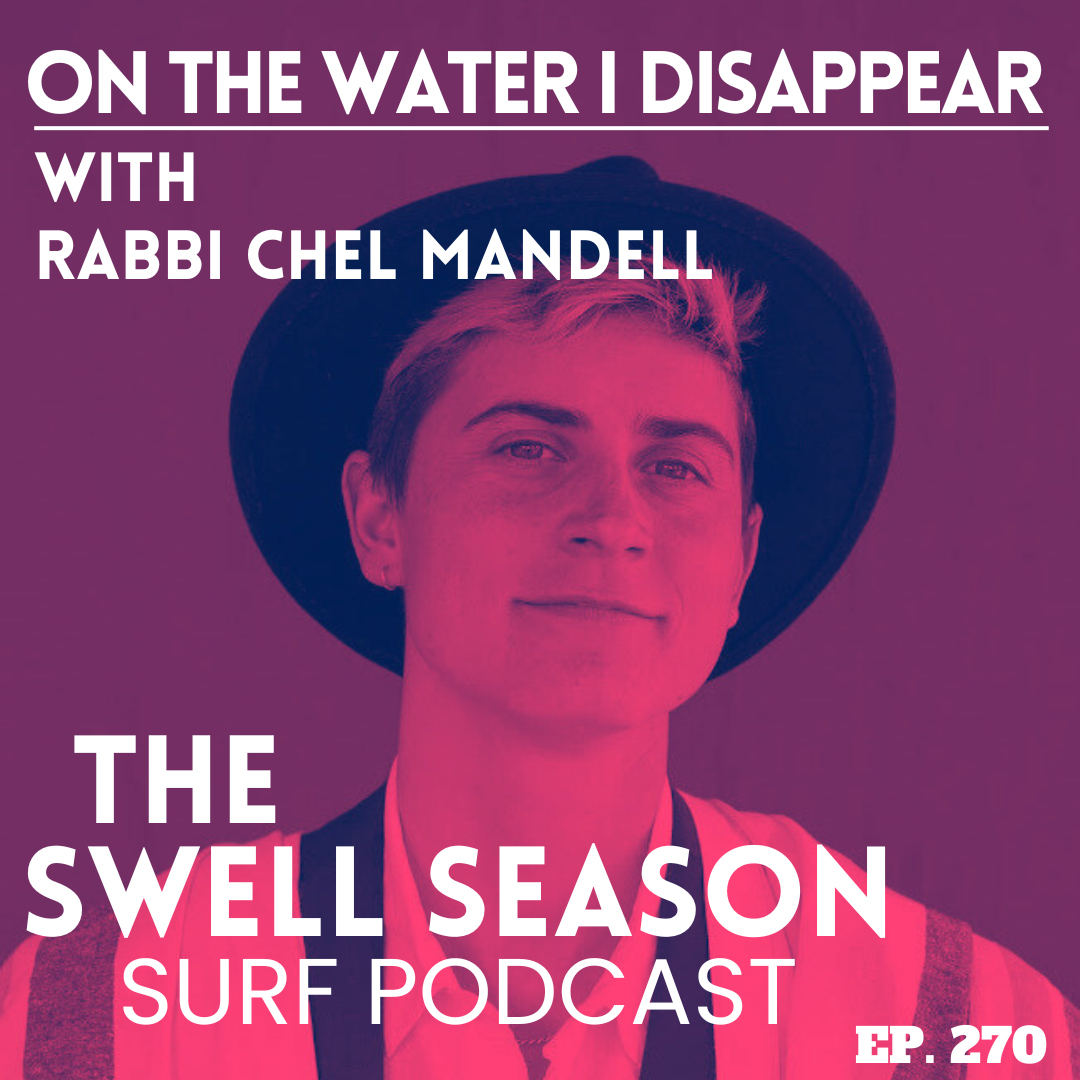
Tyler Breuer: [00:01:00] Hello and welcome to the Swell Season Surf Podcast. I'm your host, Tyler Brewer. Rabbi she Mendel is a queer gender expansive Jew from the San Francisco Bay Area. They are fifth year rabbinical student at the A A RC, A dedicated and soulful Jewish educator director. With 12 years of experience teaching, they're deeply committed to reimagining Jewish community landscapes through creative Jewish practice.
Chel is also founder and spiritual leader of the Zim Zoom Collective, a queer Jewish community that gathers in Santa Cruz, California. Chel works at the University of San Francisco and is a. Avid surfer and ocean lover ceramicists as well, which is very cool. I can't wait to dive into that. And activists with visions of [00:02:00] bringing all of these interests and intersections to enrich their rabbi in it on the water I disappear by Rabbi she Mendel and Lo Friends is one of the many incredible films that we'll be screening at Shredding A new lens in surf filmmaking, a powerful short film, surf film program that challenges outdated stereotypes about who belongs in surf culture, from Morocco to Palestine to the California coast.
These films, spotlight Surfers whose presence on the water redefines what it means to shred and. Uh, on the water I disappear traces a tender intersection of religion, spirituality, and surfing. The film explores these seemingly opposing identities through vulnerable storytelling of their experiences on the water.
They offer reflections filled with nuance, complexity, and love. The visuals unfold along their home coastline in Northern California on the unseated territory [00:03:00] of the Ipi tribe. shredding. The new lens in Sir filmmaking is presented by OTC Brooks at the Brooks and will screen on Friday, July 25th at 8:00 PM at the Historic Sunshine Brooks Theater in Oceanside, California.
And they will be doing other screenings throughout July and August. So go check them out. You can find their links in the show notes below, and I highly recommend anyone in SoCal go get a ticket. This is gonna be awesome. I've saw, I've seen some of the films. They're amazing. And more importantly, I really wanna welcome to the show Rabbi Chel Mendel, thank you for coming on.
I'm so stoked to have you on.
Chel Mandell: Thank you. I'm really excited to be here. Excited to jump into all the content.
Tyler Breuer: I loved your movie. I absolutely adored it. It is this wonderful, beautiful meditation on surfing and spirituality, and I just love the insight. I love the [00:04:00] interpretations of religious language with the act of surfing, and I was curious like how this project came about and what, what brought it about
Chel Mandell: Yeah. Well, I'm gonna throw you another curve ball too, right now to say that. Um, so that project was born out of my rabbinic thesis, so I got ordained last year. I've been a rabbi officially for a year. Thank you. And, um, I studied water surfing in God and that like in these beautiful texts, I uncovered that God meets all these people at the water, um, throughout like biblical history.
And there's so much interpretation, like judaism's packed with water references. And as a water lover, as a surfer, I was like, oh, I have to study this. So I write this 90 page thesis on this. And then I was like, I need a visual. You know, I'm gonna present this to the rabbinic community. And a lot of these rabbis that don't.
Know about surfing or the water. So we put this film together. Now over the last year, lo and I, uh, my director lo we've been [00:05:00] editing and reworking it. So actually at the film festival, we're gonna kind of be putting out a second edition of it that gets more personal, um, and more particular around like my gender being trans, being in a queer body and what that's like to be a surfer.
Um, and also with the layer of religion and spirituality and me being a rabbi. So we kinda have like a part two in the works and I think it'll be, um, uh, more personal and more close to the heart. So I'm happy You like the first one, and I think that one is a really beautiful, poetic version of what we're gonna show.
Yeah.
Tyler Breuer: I just, I really, I enjoyed the layers of, you know, spirituality with surfing and ocean going, it, it, it reminded me actually of like another film I saw, uh, like one of my favorite surf films of all time, uh, called, uh, lapsed Catholics, what the Surf Magazines Don't Tell You about Surfing. And it's, it's a similar, [00:06:00] it, it's, it's not similar in, in terms of topic, but it, it, it's this, like, the visuals are beautiful, but it, you're almost like captivated more by the spirituality that is being spoken and, and um, you know, obviously I'm reading the captions as well because everyone does that these days, but it's like, I don't know, it was very meditative and relaxing and beautiful and.
As a Jewish person, you know, I never grew up, I never grew up really associating our religion and culture, even with surfing at all. Like, and to see, like you pulling texts and applying it into, you know, uh, this, this beautiful poem with, you know, talking about the Sabbath and how important that is and how when you go surfing, that's kind of a form of Sabbath and I was hoping you could kind of explain that, that kind of expand on that, that uh, that idea.
Chel Mandell: [00:07:00] I'm happy that hit for you. So I'll just like back up and say, I interviewed about 20 Jewish surfers and these are people who loosely identify as Jewish. Maybe they've never practiced, maybe they are practicing. And I tried to study and understand like what are their experiences while surfing and all of them pointed to ideas and experiences of the divine, or one may call it God, but a lot of surfers don't use the language God.
Um, and that's fine, but that was what they pointed these, these profound experiences of awe. While surfing. And one of those gateways and ways in which we can experience awe or the divine is through Shabbat. Jews have Shabbat, it starts Friday night to Sun, uh, to Saturday night. It's 25 hours of rest. Total rest and renew.
That's, that's what we do for Shabbat rest and renew. And we're supposed to like, you know, disconnect from our electronics from the world in a sense. It's actually, I'll say Shabbat's, quite, um, anti-capitalist. Um, and anyway, I love it. I think it's actually the most radical thing we can do is to [00:08:00] shut down for one day a week.
And what's the other most radical thing we could do? Be surfers, right? Because surfing takes us outta capitalist time. And I write about this like surfing. We go when the waves are good, when the tide is good, right? Like sometimes I just put it in my calendar when I see a good, you know, good day coming up and I'm like working my day around the surf clock.
And Shabbat mirrors that, right? Like Shabbat's. Shabbat comes where we're, whether we're ready or not, every Friday to Saturday. And it's a time where we're supposed to rest, relax, connect with self, the divine. And I think about surfing's like a little flavor, a little taste of that. And it's only for those few seconds sometimes, right?
It's when you catch that perfect sunset on a board and you just feel that deep connection or you catch one of the best wave you've caught all season. You know, it's just like that elation you feel within your body. Um, we, we can feel during Shabbat too, through song, through prayer, through community. Um, and so that's kind of why I use that.
Um, and a famous rabbi, um, Abraham [00:09:00] Joshua Heschel, uh, talked about the palace time and that that Shabbat of Palace time and that language was like, oh my gosh, that's surfing.
Tyler Breuer: Well, that, that's, uh, was, that's what inspired, uh, this whole thing. Correct. Like his, his book The Sabbath as well, which has really, you know, gone on to be such a. A well, well regarded book in, in, in Jewish culture, in theology. Um, you know, it, I found that really interesting in doing the research for this.
It, unfortunately on the East coast, Shabbat, uh, you know, really does come when you're not ready. Whether you are not,
Chel Mandell: Absolutely.
Tyler Breuer: plan so much, but
Chel Mandell: Yeah, absolutely. I mean, I think, um, we need more mechanisms in society and at this time to like release. We live in intense time and intense world and as like, you know, religious, spiritual person, I have these beautiful mechanisms built into the fabric of [00:10:00] Judaism. Uh, and I think, you know, a whole other group of people who know that are surfers, like we watch the ocean, we're in connection with it.
We find time and make time to be at the ocean. Uh, and that to me is a sacred experience.
Tyler Breuer: I really, um. I really feel like what surfing does is it forces you, of course, to totally detach. Like you can't bring the mechanisms really out there. I mean, you can, but you know, you really shouldn't. Locals should tell you not to wear headphones when surfing or even like, you know, our watches sometimes, you know?
Definitely there.
Chel Mandell: Um, there is this, there was an article, um, in Surfers Journal, I forget the author. I can find it, but it was Melt, melt Your Clock or something. And it was an article years ago that I wrote about in my thesis and it was just like, you know, do you wear your watch in the water or do you let time move away?
And it's like that question that we have, [00:11:00] um, because we really work in capitalist time and surfing really is, is outside of that. Like it breaks the mold. And I think, you know, surfing's countercultural really being Jewish at this point in time is counter-cultural and keeping Shabbat and I love those intersections.
It's kinda like this radical thing I think about.
Tyler Breuer: Do you, do you feel like, I mean, it feels like Judaism is radical in some ways. If you're lefty, I feel like you know, more so potentially.
Chel Mandell: yeah. No, that's a great question. So, I mean, first off, the question is how do we practice it? Any religion, how do you practice it? How do you approach it? Are you integrated into the world or is it more insular? Um, I think Judaism has the potential to be radical and has the potential to change lives and give us this roadmap for this beautiful world of justice.
It depends what we choose and how we orient towards it. Um, for me, I'm hoping that that's, that's my orientation. Um, and that it's, it's about serving and it's about [00:12:00] deeply connecting to other humans and about seeing people all made in divine image. Um, but that's a choice. Um, and I think sometimes religion can do the opposite, right?
It could be that, oh, I'm just here to take care of my people. I'm only out for, for us, and I need to protect my own. And it's all about me and us. And, um, so I just, you know, any religion could be co-opted for, for harm, sadly.
Tyler Breuer: Where, where did you get your spirituality? Was it something you grew up with? Was it like something you came to a, a revelation about?
Chel Mandell: Yeah. No, um, I think it's, I think it's in all of us, but, you know, I think I've been, I've been gifted the opportunities to tap into it. Uh, I felt from a very, very young age, I wanted to be a rabbi because I was interested in religion and spirituality and what it could provide, and interested in ethic driving us.
And this is a set of ethics, I think is beautiful. I was lucky to have experiences in nature as a kid, spent lots of time at the [00:13:00] ocean and felt like. Divine presence a lot. Like I felt that presence and I was like, what is this? You know? And I'm like, maybe a seeker. You know? I just started like uncovering and digging into it, uh, and then finding different things in my life that tapped into that feeling.
Um, and then I got interested in studying it, uh, and just, yeah, it's continued to blossom for me.
Tyler Breuer: And then how did you discover surfing then?
Chel Mandell: Yeah. I,
Tyler Breuer: that was always there too?
Chel Mandell: yeah, so I grew up skateboarding, uh, and in this little film, hopefully people will make it out to see this, uh, you know, on the water. I disappear film. I mentioned a little bit about my origins in that. Um, I grew up skating, like I just have to say, shout out to the skateboarding community today because it's so freaking cool today.
Uh, I was skating in the early nineties, mid nineties, early two thousands. It was still special. It's how I found myself if it wasn't for skateboarding. I don't know if I'd be here. I mean, I, I was depressed as a kid. Skateboarding gave me an identity. It gave me a [00:14:00] community. I skated with all the boys. I definitely at that age looked like a little gender queer trans kid.
You know, I, I didn't know who I was, but I found so much security in skateboarding and in that community, they didn't care what I looked like. We just would like hit the concrete, you know? And it was so fun. I grew up in Campbell, California and the skate scene like throughout San Jose at that time was just awesome.
You know, you can catch me in my, like osirus, my world industry shirt, my think skateboard, cruising the park. Uh, and then, so as I got older, I was in that community and then high school hit and it was just like I would skate here and there, a little less college, a little less. And then I was like, oh, I've always wanted to surf.
I grew up snowboarding. I'm a board person, so I was like, at 18, 19, I got on a surfboard and never looked back. Like I've, I love surfing, I love the water, I love the adrenaline, I love the elements. Um, I still pick up a skateboard and skate around for fun. Uh,
Tyler Breuer: It [00:15:00] hurts a
Chel Mandell: cruise it, it hurts. And I'm not willing to try the shit I was willing to try.
But, but you know, like Unity, skate, queer skateboarding, uh, community in San Francisco, I skated with them a handful of years ago. I feel like what the skate industry's doing around opening it up to queer, queerness, people of color, it's just, it's blown up in this beautiful way. And I think we're headed towards that in surfing.
It's a little behind, but we're moving there. We're moving a little, I mean, no, it's a little behind. Okay. A little behind skateboarding. Skateboarding was slow, but it's coming. So to answer that, I started skating and then I moved into surfing. And I live in Santa Cruz, California. So I live, I think by like the best surf in the world.
Tyler Breuer: You're there. You're there.
Chel Mandell: yeah. Um, yeah, so I'm very fortunate to live here and surf, you know, pretty
Tyler Breuer: you, when you started surfing, did you start. Like when you started, were you making the connections to your spirituality as you were doing it at first, or was it something that came later [00:16:00] where you were like, oh, this is, these two are very compatible?
Chel Mandell: Yeah, I think, you know, I think about like, like skateboarding and surfing and, you know, I do ceramics. I think about cs. I think these are all as all vehicles, vehicles con to connection first to myself. When I feel most connected to myself in alignment with myself, that gives me the pathway to divine connection and connection to the greater world or to God, or whatever the languages one might use.
So for me, that connection to spirituality comes second. The first is me and the thing. So when I started surfing, I was like, oh, wow. This is really grounding. I'm like in the cold ocean, I have moments of, well, you're never alone in the surf line, but, you know, moments of aloneness and groundedness sometimes.
Um, and I could smell the ocean breeze. And I, I just started tapping into this and being like, wow, not only do I get to like move my body and catch these ways, but I get to like, see, smell, and take in the senses. And that to me is [00:17:00] divine. And as a blessing, I say when I get onto the water, um, kind of like a gratitude prayer of creating creation, you know?
'cause it's always been created. So yeah, it, it's turned more and more into a spiritual, uh, experience for me. And I could tell you I have two other friends that are surfing rabbis, you know, we're not rare. Uh, and both of them have said, both of them have said to me, you know, as rabbis, you think the holiest time is when we're.
Leading, you know, a service and praying and, and with our community, but actually it's like on the water. And I feel like, you know, people who surf really, whether they use that language or not. Right. Sacred, holy, um, spiritual, I think we, we have this experience.
Tyler Breuer: I mean, it's, I always find surfing to be such a wonderful mirror, you know, it's this great reflection. It could be whatever you want it to be. You know, like I always, as I've gotten older, I've gotten less dogmatic about surfing. I, and I've realized [00:18:00] like, oh, it's, it's whatever anyone wants it to be, but there, but that's what's so beautiful about it, is the fact that you can make it into something.
And for you that's special. And that I think is really important, um, that we see ourselves in it to a certain extent, but also see ourselves in terms of reflections of ourselves, where we're, where we need to do work, and where we need to improve on ourselves too. Um, you know, and I, I was curious like then when you were. How often were you surfing first for, for your, your thesis to draw inspiration,
Chel Mandell: No, thank you for asking that.
Tyler Breuer: you know, and like how, how, how much research did you put into it? Like what, how, what was that research like? Uh, especially on the surf side as a surfing encyclopedic nerd, like me, I'm very curious actually what you went to for source material.
Chel Mandell: Yeah. So, um, I'll back up a little and say
Tyler Breuer: [00:19:00] sorry.
Chel Mandell: No, that's okay. So, um, six years ago I started rabbinical school and at that time, um, one of the first things I said, we, we gathered, you know, all the, the new young candidates essentially, and they asked us a question, what are your biggest fears or concerns about the next five year journey or about becoming a rabbi?
And great question. 'cause it's a crazy interesting career. And I said I was very vulnerable and I was young at the time. I was in my late twenties. And I said, um. I said, you know, and I just like, let me just set the scene a little more. I was around like middle aged to older Jewish people, maybe a little more conservative than me.
And I sat in the circle and I said, well, I'm nervous. You know, I'm a rabbi that has tattoos all over their body. Um, I'm a surfer and skater. I swear like I'm kind of punk. Like I don't know how I could become a rabbi. Like how can these identities come together? And they were all sweet, like, wait, we're excited to see how this unfolds.
So fast forward [00:20:00] to my third year of rabbinical school, and I was still asking this question, how can these pieces come together? And over the years I was studying all kinds of texts and ideas around Judaism and water was appearing more and more in that. And I just. It came together my third year in thinking, oh, I'm gonna write about something I love and I know which is like the ocean and surfing and water and Judaism.
And so that started to crystallize and I made it kinda my mission, my fourth year to really gather that material, which would be like Jewish textual sources, read a lot of Surfers Journal, um, watched a lot of films. Yeah. And
Tyler Breuer: out to Matt Warshaw?
Chel Mandell: I didn't do a lot of, no, and I did not do, like, I didn't reach out to a ton of people, but I read some like scholarly ar scholarly articles on the origins of surfing, you know, Polynesian roots and like really tried to do a service to that.
And I did like, um, a short mini history of surf culture and I put that in there. And [00:21:00] um, and leading up that summer before riding, I made it my commitment to every single day get to the water and Santa Cruz in the summer. You know, it could be flat and windy. Or great, but mainly flat and windy. Uh, and we have the San Lorenzo River.
So I would either hike up to the river and swim or surf every day and I would write reflections about the water. I was like, I was so immersed in the subject. Um, and my typical week was like, um, surfing between two and five days a week. Super dependent on my schedule. That's like kind of the flow normally.
Um, but yeah, it was really good. And then I started writing the thesis and I had so little time. But, um, I've made it a practice, you know, in order to, like I work a lot and I was in school a lot and I made sure I prioritized my water time, even if that's jumping into body surf for 10 minutes a day. That kept me going through school and through writing this.[00:22:00]
Um, and you know, I talked to the community. I kept meeting Jews and non-Jews asking about their experiences at water. Um, in the water. I was really trying to just. Talk to people and learn and engage. And I felt like this thesis, to be honest, is just like the start. I would love to write a book. I would love to dig in deeper.
Um, there's, there's so, there's so much there. Um, I look to Bron Taylor, who's, um, a scholar who writes about surfing as spirituality and he writes our own green ecologies. So I, I pulled from like scholarly stuff to nons scholarly stuff 'cause I want it to be both and, you know, um, yeah.
Tyler Breuer: that sounds like absolute heaven in terms of, you know, a project that you get to indulge in and, and also it's nourishing to your soul. And I imagine, like, I'm curious, like what you discovered about yourself and surfing and your, your faith while doing this.
Chel Mandell: Yeah. Thanks for asking [00:23:00] that. Um, happy I picked this topic. I'll just say like my mentor, uh, my academic mentor had said to me. Don't choose something that's just like, this is cutting edge Jewish community. This is gonna get you well known. He's like, choose something that's close to your heart because you're gonna have to sit with it and study it a lot.
And I'm so grateful I listened to that advice. And what I learned while I was writing was actually like I, my journey around gender and sexuality and being queer played a huge role in my experience on the water and how I perceive surfing. And I think it was really, um, I wrote this as like an ethnographic study and asking people, and it's not like purely academic. So I did insert myself into it and that felt important.
And I wish I wrote more about my personal identity. I wrote in there and I actually, I wrote about different, uh, different. Queer connections to water. And I wrote about, you know, queer surf, I wrote about [00:24:00] Benny's Club. I wrote about, um, I think it's Brown Girl Surf and like trying to bring in some of these more marginalized groups that are important to the, the progression and movement of surfing and the evolution.
Um, and that's something I think I realized, like how important it is to see people of color in the water and how important it is to see queer people in the water and to open that space. I think I was just reminded about that and ultimately I, at the end of this I was like, this is so beautiful that there's the ocean.
And I kind of, in my closing, I wrote about the importance of protecting it.
Tyler Breuer: Hmm.
Chel Mandell: Um, my undergrad degrees in environmental studies and, you know, big advocate of, of the earth and environment. But I haven't done a lot of that work for a long time. But I had that moment at the end too of remembering like. Whoa, this is so sacred.
Uh, and I'm grateful that I have a body that I can surf in. Like I had all those gratitudes, but also just having access to the ocean. Not everyone has [00:25:00] access. Not everyone has the means, and we really have to protect their oceans, and I think that just came through that, you know, if you ask about a lesson, I was just reminded of these things.
Tyler Breuer: Well, I think it's, you know, to me I feel like the more diversity in surfing, the more it grows and the better it gets. I think, um, you know, uh, I was interviewing Sam George the other day, like a few weeks ago, or a month ago now. Geez. Time flies. And, but he said something that, that really stuck with me, that I really appreciated.
Was he, he said, I think surfing. Surfing's gonna do what surfing wants to do. You, no one can control it. No one can, you know, uh, direct it even, it's just gonna do what it needs to do. But he believes that it's actually evolving into a much closer form to the ancient Hawaiians experienced surfing in many ways where everyone surfed and everyone enjoyed it.
And there was, obviously there [00:26:00] are rules and there are, you know, uh, etiquette, but it's less about excluding and more about including, and it, it was about just enjoying it as opposed to the other more negative aspects to it. You know, the localism, the, the pride, the uh, the, uh, athleticism, which is great, but it can be also, people can lose themselves in that and lose the point of surfing in that, I think.
Chel Mandell: Yeah, a hundred percent. I completely love that and agree with that. And I think like, knowing the lineup, being conscious, having etiquette is crucial. And not everyone needs to surf at Steamers Lane. That's just the reality. Like not everyone's ready for that. And not everyone should be out there. And maybe that is for people who know what they're doing, you know?
And I think that it's that, um, consciousness which we need to bring to the water, and it should be accessible to people because water is healing, water is sacred. Being on a board is not owned by anyone, right? It was colonized. It was [00:27:00] taken like this is what we've done, and so how do we give it back? Or how do we maybe transform that and heal that?
And it's inviting people into the water. I mean, in our community, I'll just say as like a side note. One Jewish ritual that takes place, um, is called the mikvah. And it's one where, um, before a wedding or a transitional point in one's life, they would go immerse in water, um, three dunks in water. Or when you're converting, you would go to a mikvah.
And we have, mikvah is in major cities across the United States, and they're often connected to Jewish community spaces. Now the thing with those spaces are, uh, they're gendered. Men go in one area, women go in the other, and they could be a bit stuffy, I'll say. And I've, I've led conversions in those spaces, et cetera.
But the technicality is. And some different technicalities. What makes or constitutes a mikvah? And one is a fresh flowing wa like water. Water needs to be flowing. So an ocean counts. So in our community, we do a sunrise mikvah, [00:28:00] and we had 25 people show up recently at sunrise, at 6:00 AM to immerse in the water.
You go silently, you go naked. We set intentions and do prayers before these people come out. Some with tears. Some with smiles, just saying like, I needed this. I wouldn't have gotten here without this push. This immersion meant so much to me. And I know it's not surfing, but it's still connected, right? It's, it's the water and the access and the permission.
And I think a lot of people are freaked out, you know, when it comes to surfing and they need the permission and all these things. And don't get me wrong too, like I get annoyed when four soft tops hit me at once. You know? Like, like, like, you know, I'm not gonna yell at that person. I'll just say, Hey, just so you know, you know, you wanna grab your board after and maybe go over there like.
Tyler Breuer: my mikva.
Chel Mandell: You've ruined my mikvah. Yeah, exactly. That's my, that's my rabbi response. That was good. Uh, but you know, I, I just think access is, is, is really important. Um, and we, we all deserve that access with, with [00:29:00] consciousness.
Tyler Breuer: you, um. A lot of the film is also very environmentally, you know, it's, it's about nature natural, and there's this like thing where you even say there, you know, one of the quotes is God rests, where, where we move from machine time to dream time, which I, I loved. And um, first I wanted to ask like, what is re, what is, what is rest?
What is God resting mean to you? And, and then the second part is like your thoughts on the encroachment of machines into surfing.
Chel Mandell: Yeah. Thanks for that. It's so, you're so good at asking questions. These are great questions. Um, I really appreciate that. I feel like I, uh, a lot of my conversations are strictly in Jewish spaces, so it's like very Jewish heavy and I love that we have this intersection here of surfing in the ocean. So thank you for this opportunity.
Um, okay, so we're, you know, God rests, um, you know, in [00:30:00] that place between machine time and dream time, and I think like this idea is that in those moments that we notice. That we bring presence to our day, to our bodies, to our beingness, that's when we could connect with God or the divine or something sacred.
And I don't think it's just in the rest. I don't think it's just like, oh, I'm resting so I'm super connected. No, a lot of the time I'm resting, my mind is restless, right? Like I'm thinking about the million things, like things I'm trying to chill on the couch, but it's not really happening. I
Tyler Breuer: Watching YouTube getting upset about stuff, you know.
Chel Mandell: course like life.
So I actually think it's like that split second in between machine time and dream time. And it's that like, um, as we move into dream time is, I think when I experience that, which is I'm paddling out, let's just say, you know, out to a break. It's a small day. I don't, I don't surf huge waves, but I'm paddling out and.[00:31:00]
All of a sudden, you know, I'm, I'm like connected to all the work I just did, and then all of a sudden I just get that smell, that smell of like salt water and maybe like, you know, a little stale seaweed that day or something.
Tyler Breuer: Or rotting fish. One of the
Chel Mandell: rotting fish out Santa Cruz, I'll tell you in the spring. Yeah.
But you smell this and then like, I'm in my body and I notice my being and I'm like, oh, I'm on a board. Like it's that divine moment. And I think that's the sacred moment. Then I can then feel connected.
Tyler Breuer: Hmm.
Chel Mandell: say, we say like we're being connected, um, between heaven and earth and that everything we do is connecting us to, to bigger divine, um, things.
And I think that moment as I move into that machine, that dream time, excuse me, is when I can feel God resting. You know? If that makes sense. Yeah.
Tyler Breuer: for me, the moment is when I dip my head underwater, whether it's the first duck dive or the jump in, it's like, um, sorry. Um, it's [00:32:00] like, for me, I don't know about you. Like in my head when I go underwater, you know, it's that shock to the system, whether it's summer or winter even, and everything is like kind of overwhelmed for a second.
And then this, um, always, it's always the Beatles. Good morning. Good morning. Going through my head with that. But like, that moment is like when it, it feels almost just perfect. Like it's the anticipation and also the, the calming effects of it, of everything and the excitement. It's like this weird mix of emotions.
Chel Mandell: absolutely. And I think what you're referencing here, um, and I wanna do a shout out to Wallace j Nichols, rest in peace. And like I, I, I read his, his work years ago and I used his book a lot to reference Blue Mind. And I think that's what we're both describing to some degree, this like, you know, immersion in water and that when your head goes under it's like it's neurological.
Right. Like, [00:33:00] like we are literally getting shocked into our bodies a bit. Um, and I think that's that moment of sacredness, right? I think like the brain is connected to the heart, to the body, to the divine, to nature. You know, it's like all that interconnectedness. Um, and I think that's, that, that blue mind that, you know he's talking about.
Tyler Breuer: I love that. You know, I feel like the spirit enters me when I go. It's like, oh, you know, it all kind of comes grounded into to it, and,
Chel Mandell: a
Tyler Breuer: and, and then you have to be present, you know, and you have to be aware, and you have to be looking at. All the, the signs that are coming at you.
Chel Mandell: Yeah, this is what I, I wrote about, it's the, like, you don't have a choice. So we're out of machine time because I have to look at the next wave coming or the 20 people coming down the line at me, you know, or like, or like, oh, you know, this is, this is in the way. I got, you know, I gotta paddle. And I love that because what else can we say that we do where we're totally focused without access to the [00:34:00] watch, the phone, uh, you know, some social media something, a car, whatever.
It's like you are fully immersed out there, and I love that.
Tyler Breuer: Now my, my second part of the question is like, how do you feel about the encroachment of machine into surfing? Um, you know, 'cause it wave pools are fun and they are enjoyable, but I also feel like there, there's something missing. Like even when I've gone on and go in the water, you know, it doesn't, I don't, that spiritual feeling doesn't really.
Enter my body when I go under a chlorine wave. I'm not like feeling like it's a different feeling. It's fun, it's enjoyable, but
Chel Mandell: Yeah, I think it's a different feeling. It's funny, I was just reading something, I don't know if it's a rumor or if it's real, it's totally fake, but there was something written about like a, a wave pool coming to the Bay
Tyler Breuer: yeah, I've heard
Chel Mandell: I was like, holy shit, no way. I mean, here's the thing. I would love to try wave pool for fun, but [00:35:00] that's not where I'm going to go have divine experience.
I think being immersed in nature is a huge part of it, and like the elements are God. The elements are divine. Like me being in the ocean, the saltiness, tons of otters out here, getting wrapped up in whatever's below, you know, it's like those are the things that make it divine because they're nature. Uh, and I think very much so, the things that aren't meant to, um, move us forward won't last.
So maybe, you know, the wave pools and, and some of the crazy, like, I don't even know the boards that are like electronic now, like, you know, all of that stuff. It's like
Tyler Breuer: the, the
Chel Mandell: it'll have its moment. Yeah. It'll have its wild moment. You know, some of us may partake in trying and the things that are meant to last will last.
And, you know, the ocean's been around for a long time and water's been around for a long time and it has a lot to teach us. And it's, it's, there's nothing that beats the wisdom of [00:36:00] nature. And that's, I think that divine experience. Um, and I think when we're attuned and we're aligned, like. We can sense that and we will get drawn and pulled to the places we need to be.
And I think the ocean is one of those places we need to be each to their own. Do you, you know what I mean? I'm like, I, I would love to try Wave Pool and someone invite me, but like, until then, I'm just, I'm, I love surfing in Santa Cruz. You know, nothing beats it.
Tyler Breuer: Well. Let me ask then, like, um, how was the response, how has the response been to you surfing your, your, your also your trans identity, all of that stuff? How has the, the more the religious community responded to those things and, and, uh, have you had pushback? Have you had issues? Have they shown bias against you for being a surfer?
Which happens all the time.
Chel Mandell: Yeah. Yeah. No. Um, you know, I, for the [00:37:00] most part, more and more. Hang out and I'm just affiliated in more progressive left Jewish spaces. And in those spaces they're like, cool. Right on. This is awesome. You know, I think at the end of the day, um, though there may be more conservative folks who would be like surfing, God, I don't know about that.
They just ignore. They just, they're not gonna spend their time or energy. Um, to be honest, the Jewish community has bigger things they're looking at now than surfing rabbis. Uh, hopefully there's deeper introspection and things
Tyler Breuer: Hopefully,
Chel Mandell: hopefully, right. That's a whole other thing. But I'll say like, I think those in my rabbinical school and I presented my thesis, you know, in front of 60, 70 people, many were like, awesome.
Wow. Mind blowing. Never thought of this. Or like, you know, really, uh, had really lovely feedback. And then there were just people who simply didn't get it. And I'm cool with that because at the end of the day, there's so many pathways to divine connection. So many pathways to the self. They're [00:38:00] all valid.
This is just mine. And that, the cool thing is as I've gotten older, I realize you can't argue my truth and this is my truth. So I didn't really care, you know, like I didn't care. And I, somebody had said something like, gave me feedback after a friend and they said, well, what you wrote about probably wouldn't pass today.
Because the school's gotten more like academically conservative and writing about surfing in God is like, you know, not that academic. I'm like, dude, I, I like, that's, that's the stuff that I'm like, I don't care. I don't care. I don't care. You know, I think, again, when it's my truth and I know people have spiritual experiences surfing, and I can trace that back to really interesting texts and ideas.
I'm good. I'm satisfied. I believe in the work I'm doing and what I'm creating so much. Just so Lo and I are making a second film about it and it, you know, and it's gonna be showing like this is important. Um. And I think, [00:39:00] you know, at the end of the day, the hardest stuff me in Jewish space actually was, you know, like having, uh, trans queer identity.
It's the, like, we accept queerness, we accept LGBT at large in the Jewish community, which is awesome. And the question is, you can accept it, but how do you make space for it?
Tyler Breuer: Mm.
Chel Mandell: so there wasn't a lot of knowing how to make space for it. Um, and I think that's something a lot of spiritual, religious places can work on, is how to actually make space for that.
Um, and I run a Jewish community in Santa Cruz where we're queer and trans centered at the core. And so we make space for that. Um, and it's, it takes practice, you
Tyler Breuer: Well, I was gonna ask like, um, and these kind of all blend in, but I, I'm gonna, I'm sorry, I'm gonna like be a total nerd here for a second, but as a Star Wars nerd, I feel compelled to ask this, uh, the Jedi program that you were a part of. I know, I know I'm cheesy, but I had to do it. I had to do it because I'm a nerd like that.
And, [00:40:00] uh, but I, I was not aware of this program, but it's fucking awesome actually,
Chel Mandell: Awesome. Yeah, I love that. And we did use some branding. We used some Star Wars Jedi branding in the beginning. Um, I was really fortunate, um, I guess two years ago I got a call from a mentor of mine at the University of San Francisco where I work. Um, and he said, Hey, we are launching a, uh, Jewish studies and Social Justice Certificate program for kind of continued learning around topics that are, you know, the intersection of social justice and Judaism.
And the University of San Francisco has just, we're so lucky that we have a Jewish studies program there with the intersection of social justice. And I got brought in. We've been running this program, it's small. Um, it was small but mighty. And, um, for the last few years, um, funding has shifted greatly since October 7th.
And that's another thing, but we've run courses on like, what does it mean to queer Jewish space. We [00:41:00] ran a course race racism in Jews. Um, we, we've run all kinds of courses on different social justice topics. Um, and the acronym was Jedi and it was titled, um, it was like a justice equity diversity inclusion program in Jewish studies.
But we shifted the, the, the wording, Jewish studies and social justice program. 'cause DEI has been under attack and this program has been under attack. So, uh, a lot of the work I do is essentially, uh, yeah, it's, it's tough to do the work, but, um, it's important work. And I love, I love that I get to do this work at the University of San Francisco.
Tyler Breuer: And you know, and then you're expanding, like you said with the, your, your zoom, zoom,
Chel Mandell: Seems soon.
Tyler Breuer: sim, zoom, uh, community that, and I was hoping you can kind of expand a little bit on that as
Chel Mandell: Yeah. So I, I feel so fortunate and blessed and just love it. But, um, I moved to Santa Cruz, uh, from the Bay. I grew up in the Bay. I've lived in and outta different [00:42:00] spots in the Bay Area for a long time. And I moved to Santa Cruz over four years ago. Uh, and when I moved here I realized, ah, like where's the younger Jewish left?
And it wasn't, wasn't happening. And so I started doing these, um, hosting these Shabbat dinners casually in people's homes. And it like, was really fun. It was like queer and trans people showing up, water people, Santa Cruz people, artists, thinkers. And we just started having these dinners and it was growing and growing.
And long story short, we're three years in. Um, we have a membership. We host High Holy Days, the Jewish holidays, we had over a hundred people in attendance of each of our holidays. We had 70 people at our, um, uh, we had a, um, free Palestine Seder with 70 people in attendance, which was big. Like we're in a small surf town.
Uh, we have people coming out from the Lar larger Bay area to come to our programming. Um, you could check on our website community, but we, um, [00:43:00] explicitly name that we are home to queer, trans, and marginalized people, and we welcome non Zionist and anti-Zionist, which we are just one of the maybe 10 in the United States that welcome people with, uh, leftist politics around, um, desire for liberated and free Palestine.
Um, and so we made that decision, um. Explicitly after October 7th to list ourselves as that which is controversial period in the Jewish community. Um, we're definitely on the outs there. We have no funding. We're always looking for funding. Um, but it's a labor of love and it's a deep belief in where the Jewish community should be going.
Um, a place rooted in ethics and value and, um, you know, we're queer and trans people, uh, hopefully, you know, out here really leading that and pushing that forward. Um, and I invite anyone out to come learn with us, to be with us for Shabbats, for gatherings. We do life cycles and rituals. I do weddings, I do funerals, you know, all the normal rabbi [00:44:00] stuff here in Santa Cruz.
Um, and it's cool. People reach out from all over the United States to get support, um, from a rabbi that feels more politically aligned, so it's powerful.
Tyler Breuer: I wanted to ask then, like, you know, how has October 7th changed? Your perspective, your outlook, uh, what you do even, and even before that, I, I want to, you know, for some of our listeners, can you just explain what a rabbi does and is first, and then I would like to go into this a little bit more, but I
Chel Mandell: yeah.
Tyler Breuer: kind of need to know exactly, you know, what we're talking about in
Chel Mandell: yeah. So rabbi means teacher and, um, not all rabbis, but most rabbis in the United States will go through a five-year program. Uh, so it's like deep learning, um, for many years, uh, learning Jewish texts, histories, ethics, values, um, biblical Hebrew [00:45:00] lifecycle and ritual.
And, um, pastoral how to be with dying people, how to be with birth and all of these different things. And we do our own spiritual development in that time. Excuse me. And, and then sometimes, you know, you apply for placement in different synagogues or Jewish nonprofits. I think of a rabbi as the person who holds wisdom and shares wisdom of the Jewish tradition and carry something forward from our ancestors.
Uh, it's a sacred job and it's one I don't take lightly, and I'm humbled by all the time. I'm a young rabbi. And, um, why I love it too is like, you can never know it all. There is so, so much to learn. Um, and so rabbi, like, you know, I, I run a Jewish community and I also teach at the University of San Francisco, um, which I'm thankful for.
I teach Jewish studies and social justice topics. Um, but here I will, um. Literally this evening I will lead a Shiva, which is something that we [00:46:00] do when somebody's died. Um, we come together, um, I will lead funerals, weddings, like I said, we lead Shabbat services and Jewish holidays. And then I'm here to like talk and check in with my community and we show up for each other in these ways.
So, um, and I educate, I teach, you know, Jewish 1 0 1 courses and all of this. So that's a bit about what it means
Tyler Breuer: you do 'em digitally at all?
Chel Mandell: We're talking about that. People have been asking
Tyler Breuer: let me know. You might have someone sign up
Chel Mandell: Cool. Okay. I love it. Yeah, I was thinking about relaunching our Jewish 1 0 1 course. It was so cool. We did this last spring.
We had 16 people in my living room. It was awesome. So
Tyler Breuer: I bet we could get a bunch of my listeners to
Chel Mandell: I love it. That's you excite me. Um, very much so. Um, I mean, in our community it's pretty cool. We've even done like tech study by the ocean and so it's very fun, um, and progressive and, and very inclusive. So your question,
Tyler Breuer: I was just gonna say though, like October 7th for me and since then has. [00:47:00] It's made me actually want to, to learn more and be, be more, I don't know, spiritual is the word. 'cause I'm, I'm, I'm kind of atheist in, in many regards, but I'm also, you know, like, I ha I like to think I have a spiritual attitude to things and, um, you know, and I wanna know more about our, our culture, our history.
And, and I would love to, to do that. And I think October 7th kind of spurred that in me, actually, because I, saw some of the shitty parts, you know, of course, that have been exposed. But I've also seen a amazing examples. I joined J Fre, which is, uh, Jews for, for, um, I'm gonna butcher this now over. Yeah.
Racial, yeah. Roach. Racial and Economic
Chel Mandell: Jfr is great.
Tyler Breuer: you know, and, and, and, you know, I've just wanted, it's made me want to get closer, but to the actual good. Human [00:48:00] aspects of it. And so I was curious now like how that's changed for you since then and how that's changed what you do and how you behave and how you respond to things.
Chel Mandell: Yeah. Thank you. Um, I wanna go back to also to your earlier question and then tack this on, which is, you know, how how did this change things in, in, you know, this moment and all of this and everything that was happening in Gaza in the West Bank has been happening for a very long time. I've taken many trips there.
I've spent time in the West Bank. I've been to refugee camps. It's real, it's happening. It was, I had gotten to a point of deep, uh, pain around it and. Really the belief that nothing would change. And October 7th was just, you know, the icing on the cake of like, of course there would be something horrible that happened when you contain humans and you oppress them for a long time.
Um, and that level of violence was like horrible to witness and it's continued to be horrible [00:49:00] when you have 2.3 million Goins, um, you know, starving currently. So just wanna acknowledge that, that like these things aren't new, they've been happening, they've just become intensified and horrible and now have gotten front and center attention worldwide as they should.
Um, and so it's fascinating in the Jewish community, my observations are, you have some Jews right after October 7th being like, oh, hell no, I don't wanna be associated with my Judaism. So I have friends who are hiding, you know, their stars of David they wear and like, like taking a step back and denouncing like, I need space from this.
And then other people maybe like you of like. I need to learn more. Like I wanna engage with my Judaism in the core. And like there are also activists in the Jewish left, like making really, um, important waves of change. Jewish voice for peace. I mean, people have been showing up. It's amazing. And the outpour, and there are Jewish rabbis, there are Jewish community leaders who are speaking up.
And that [00:50:00] is important for us to know. It's not the whole Jewish community that is necessarily pro-Israel. There are a lot of people who are against what's happening. Um, and so we've seen kind of that split of like some people needing space, some people coming back. Um, it's complex and layered. Um, some Jews are unlearning, you know, deep histories that their family's been given them.
And that's hard to do immediately after a trauma. So.
Tyler Breuer: Yeah.
Chel Mandell: Um, you know, I've, I've been in communion saying like, we need to continue to heal and learn about our histories and we need to learn about the histories of the Palestinian people and transform the way we think. Um, and if we really are a people who talk about our Torah, talks about welcoming the stranger about Don't stand Ivy League, by those, you know, um, and you know that we're all created divine, then we have to act on those things and implement them, not just for our own people, but for other peoples.
And it's gone on too long and it's, it's important for us as Jews to speak up and speak out. Um, Jews have never been [00:51:00] monolithic. The Jewish voice has always been very different and opinionated, and that's the beauty of multiplicity.
Tyler Breuer: Our culture and our history is all about debating. You know? It's all
Chel Mandell: our Talmud. Yes, yes. The, the, our Sacred Law book is, is essentially a conversation and argument and going back and forth and opinions. And that's the beauty, is that we see value in that. And so that is what's happening in the Jewish community. Now, that's not new. Um, and it's hard that many are clumped in to the dominant idea that Israel's important.
And, you know, I'm like, Hey, I'm a rabbi who doesn't feel that way, and our Jewish community does not feel that way, and we have to stand up and speak out. It is vulnerable. Um, and it's incredibly urgent and important.
Tyler Breuer: It's, I can't tell you how important I think it is for, you know, leaders in the Jewish community to be speaking out for this, to make it feel safe to speak out because the backlash is [00:52:00] horrendous. I mean, I, I got some horrible messages when I posted something that was pretty mellow. Like it wasn't anything offensive, you know, I, it was.
Just a paddle out, you know, it was just promoting a paddle out and I had some, some of my Jewish friends just be like, shame, or one of them, you know, basically, you know, just so Islamophobic and always saying that, you know, if my wife and I were to go back to, you know, Palestine, you know, uh, Hamas would cut off our heads and all this horrible shit that, you know, I couldn't believe that someone that was a friend to me would say something like that.
And it's been really difficult, uh, to speak up.
Chel Mandell: Yeah. And it's a good reminder that we end up in these echo chambers of media and these echo chambers of our own community, right? Like, you know, it's actually been important for me over this time to look at different media sources and talk to Israeli friends, Jewish friends, [00:53:00] Palestinian friends, Muslim friends, non-Jewish friends.
I have friends that are pro-Israel, and I still, Hey, what, what are you reading? Tell me what you're learning. You know? And I'm out here trying to do the, the learning. Not always easy and good, but I'll say like when we demonize a whole people, that's dangerous on any side. When we get very clear that one group is all bad and they all deserve to die, that's never the case, period.
And I think that's where, you know, the. I'm not like, um, advocating like, oh, let's see all sides. Let's find peace. No, we need justice. We, we really like, it's, there's a power imbalance and that's very clear. Um, and we don't wanna demonize whole groups of people. That's problematic. And I think that's what we need to be conscious of.
But, um, yeah, there, there's a clear perpetrator here. Uh, and, and that needs to be named and we [00:54:00] have to have the bravery to do that.
Tyler Breuer: It's, it's probably one of the hardest things I've, I've struggled with is having those. Dehumanizing thoughts of people, you know? Um, it's definitely something that I hate when I think of, you know, lash out in my brain on certain things and, you know, because it's, it's, you know, I, I don't like to think of myself as that, you know, but it's like so hard, you know, to do that.
And it requires faith, it requires optimism, you know, to, to see that not all is bad and that you can't dehumanize everyone.
Chel Mandell: Yeah. I think like that's where it takes a lot of individual introspection is slowing down and learning and, you know, we have an immediate response and instead of that immediate response, it's like sitting with it. I mean, I've built this empathy though for, you know, I, I, I was [00:55:00] pro-Israel being young, and I was very in with Israeli friends and Jewish friends that are pro-Israel.
And so, and, and I studied and understand and am deeply connected to Jewish trauma that can create fear of other, and that can create an insularity and that can create this, this need to protect. And I get it. Like, I get the psyche, I can understand the psyche of that person. So when I made the, the deep learning.
Evolution over time to really understand the Palestinian narrative and trauma and now genocide. It's like that needs to be seen and recognized and acknowledged. And we need to support, we, we need to jump in and we need to use our voices as Jews. And I can understand the trauma of the other side doesn't make it right to act from that place.
And just because you've had trauma and pain doesn't mean you inflict violence on another people. That's not okay. That's never okay.
Tyler Breuer: Well, that's taking the wrong lesson from it, you know? It's, [00:56:00] instead of empathy, you know, understanding your pain and being able to recognize that in another is, you know, that is, that's the most important aspect to it. And the fact that, that some people can't do that is, is really, it's sad and frustrating at times.
Um, I, I was curious, like then, how, how do you talk to some of your friends who are, are pro Zionists and how do you, how do you navigate that without, you know, like, I don't want to offend people, but I also want people to know like, yo, this is not okay. I'm not okay with this. Um.
Chel Mandell: You know, I think the first thing is like tapping into our individual emotional intelligence, because at the end of the day, we need a first suss out. Is somebody ready to listen and change or evolve, or are they receptive? I learned probably seven years ago, eight years ago, like not everyone's gonna be open to the [00:57:00] conversation and I'm not gonna waste my energy and time.
My time is precious and valuable. I recognize that. And some people aren't ready to transform and do that work. I'm not, I'm not here for those people. Um, those people can Google me, they can see my politics. They'll turn away. That's fine. Okay. Good Now that the people I'm talking to are the people who are like curious or I could tell they have a big heart and they're really wanting to know, you know?
Or they're like, I don't know how I feel. Or, I was raised with this paradigm and this idea. I'm not sure those are the people I can reach. Because the reality is the people that are so far from me, you know, I can't reach them 'cause they're not willing to be reached. Um, and so in terms of those friends, first, my first thing I always say is like, suss out and see if they're the people who are receptive to a conversation.
If not, to be honest, I've kept friends and I am in community and connection with people who have differing political beliefs as me. That's my decision. [00:58:00] Now, if they're saying hateful things, right, if they're saying racist things, transphobic things, or these people are speaking belligerently about Palestinians, I'm out.
That I don't tolerate that. But if they're like, Hey, this is my viewpoint, this is how I hold it. Like that person might still be in my life, but I do think, um, approaching it like, is this person willing and receptive to have the conversation? And first I ask questions. As a rabbi I've been taught, you know, come in with curiosity.
Why do you think that? Where'd you learn that? Can you tell me about your background in this? I'm always getting, there's always a core origin story. There is, you know, I have friends who are like, well, you know, my second cousin was in a bus bombing in the second Intifada, you know, and they lived in Tel Aviv and it was really traumatic.
And I'm like, wow, that's where it started for you, right? Like, when I learned that, then I have a meeting place with them. Um, that's just an example of like, you know, maybe a Jewish person where to meet them. I think meeting people where they're at and taking 'em along. And I'll tell you like [00:59:00] the left and the left activist, I'm here with it.
I show up to the protest. I'm all about it. Don't get me wrong. Everyone has a different role in the movement. Me, as a rabbi, I am holding hands and moving people. That's my job because I can meet them in that place. The radical left isn't gonna do that. They're like, I'm not handholding. I'm not teaching.
That is fair. My role's different. But I think it's really actually about discerning and figuring out what each of our roles is. We all have different roles.
Tyler Breuer: Absolutely. It's so interesting, like, 'cause I hear a lot of people who are like, you know, I'm, I'm pretty left, you know, but there's obviously, um, people who are much more strict about it and how they, they behave. And I, I respect that. And I also think like, we need that, we need some people to pull us all the way to the left because there are other people who are pulling us all the way to the right.
And we need some, you need some people who are gonna be maybe agitators or, or cause trouble to make noise because other people, you know, on the other side [01:00:00] might be doing just as worse. So you have to counterbalance those things. And who am I to say what's good and what's bad almost, you know, in, in, in how people, uh, perform their activism.
Chel Mandell: absolutely. And I think that was like kind of my reminder after October 7th and I had to do a lot of discerning and feeling into of like, okay, am I gonna do exactly what my leftist activist, radical friends are doing? I'm positioned a little differently, right? Like I do hold a certain role in community.
I am seen in a more public way and I'm still connected to mainstream Jewish communities. I have some power here. How am I thoughtful and how do I leverage this? I don't need to go burn bridges. That's not my role. But I respect and understand that is some people's role. And I think that's been, um, that was really intense the first six months after October 7th.
It was like people wanted me to do this and say this and act this way. And I kept saying, that is not my role. I'm trying to figure out what my role is as a rabbi. And we each have our roles. And I think now sadly, we're many, we're a few years [01:01:00] into this and people are like. Oh, we all do have different roles.
I think people are settling into that idea more. Um, you know, at the end of the day I already explicitly people know my politics. You know, there's no going back. And once I came out with my politics, I lost a lot of opportunities in Jewish mainstream community. You can't get a lot of Jewish synagogue jobs, um, et cetera.
I'm very fortunate to have the work I have now, but it is scary and I've definitely gotten pushed back and I've had mean things said to me by, um, Jewish folks, and it's a choice. It's all a choice. Our role is a choice. Um, and I feel confident and clear and at the end of the day, um, I feel aligned, you know?
Tyler Breuer: Wow. Do you mind if I ask like, what sparked your curiosity in anti or anti-Zionism?
Chel Mandell: [01:02:00] Yeah, I mean I went when I was 15 and a half to what I say was Israel. Um, I say explicitly 'cause all I saw was Israel. I didn't know anything about Palestinians at
Tyler Breuer: birthright was that birthright.
Chel Mandell: Um, it wasn't birthright, but it was a similar program. Um, and I loved it. It was a great experience. I came back with the Big Israel flag.
Um, it was very indoctrinated and in high school, and that was while I was in high school. I had, um, I had a few Palestinian friends and we used to kind of jokingly fight back and forth being like, you know, like I'm pro-Israel, I'm pro-Palestine. I don't think I at least knew what that really meant. You know, I didn't know.
And we'd go back and forth and I loved these friends. I had three Palestinian friends in high school, and just. I never really got it. And we went back and forth for a few years and when I went to undergrad, I did go to undergrad at the University of San Francisco where I now work. I had the beautiful opportunity of taking a class called Israel Palestine Conflict, I think it was, uh, conflict resolution with [01:03:00] an amazing professor.
And it opened my whole brain. I remember in the beginning he said, I'm going to put out, um, the timeline, the history of Israel, uh, from Israeli's perspective, and I'm gonna put out a timeline of the Palestinian narrative, a Palestinian history, and just looking at this, oh, Israel Independence Day, ah, for Palestinians.
That's called the Catastrophe. Wow. Interesting. So they have different versions of this experience, you know, it just, it broke me open and I was an undergrad, I was a freshman, and I remember. Sitting front row in that class, taking all the notes and being like, I need to keep learning. And that's it. All it takes is one class, one good book, one good professor, one good friend to break open the way we think if we're willing to listen.
And I was willing to listen. And I think that's it. It's like how do I put aside what I know? And actually at the end of the day, um, you know, [01:04:00] my professor, my mentor, he always said, leave with more questions and answers. And that's how I wanna live my life. That's how I think rabbis should live. I think Jews should live.
I think we should all live this way. More questions than answers. I know nothing, and I'm learning that the more and more, the more I've, you know, been a rabbi, the more I've been in the schooling, the less I know.
Tyler Breuer: Yeah,
Chel Mandell: do come in, really, I hope, humble to the conversation around Palestine in Israel, because I am still learning actively every moment.
But I feel really fortunate to have had that education and from there I just dove deep and continued to learn and uncover. Yeah.
Tyler Breuer: it's wild because it's, it's wild because you grow up being told a certain narrative and then you realize like, oh, that's not the full story at all. I mean, you know, you're told like there was no one here, this was all desert. There was no farm, there was no agriculture and all these things. And you know, and as you, you start to dive deeper [01:05:00] and you start to learn more and you start to read and start to listen and you're just like. Oh no, that is not what I was told or made to believe, and I feel really awful about this too. And you know, it's not a, it's a, it's a very difficult thing for a lot of people who especially base their identity purely on the religion and, and that is a form of Zionism too.
Chel Mandell: Yeah, and I think really what that does, anything that we think we know so, so well, a foundational narrative. To me, if that's questioned, that means I'm questioned in my whole personhood. And I think that's what freaks a lot of people out, right? Of like, actually, here's the real history. It wasn't a desert that we, we came to bloom.
Like that's not true. And I think when people start to learn those narratives, they're like, it's like a gut punch. First off. It's a, who am I without this connection and this history, and I. [01:06:00] Who is my family without this connection, history, and who are my people? And I've been told this by my parents, my professors, my rabbis.
I've been taught this whole entire narrative for decades. How do I deconstruct? And I, and I do think this is important for people to know, for non-Jews, to know that this is what happens to many Jews. Um, so it takes unlearning and it takes bravery, and it takes strength and support. It's hard to unlearn.
It's easier to learn than it is to unlearn. And I think we need to remember that, you know?
Tyler Breuer: It's, it's, yeah. I mean, it, it is so crazy that, that it like. That just so many people feel this like reflex to fight against learning it too, you know? Um, and you, and you, but then you also, like, as you learn, you start to question everything. And I mean everything. Like I, my wife and I like, have to go back now on all [01:07:00] the media, everything news told us even 'cause the news was so one-sided and lopsided too.
And you're just like, like I look back on things that I said in the past that I'm just so embarrassed about the ignorance almost. It's just wild.
Chel Mandell: yeah. I mean, all we can do right is like be humbled and continue to learn. And I think that's like a core concept to Judaism is Tshuva, is to turn and to own and to like apologize. Like I said, some crazy shit, you know, at points around
Tyler Breuer: is why we fast.
Chel Mandell: my people. Yeah. And like to a tone and to like let go of, and to move from, I think repair and reparations.
These are concepts that are really crucial. And as Jews will be doing this for a long time over this matter and we have to own it. It's okay to mess up. It's okay to fuck up. Like, that is who we are as people. I'm embarrassed about things of the past, but I don't wanna live in that. And I think we, we have an opportunity here, you know?
Tyler Breuer: I'm curious your thoughts [01:08:00] on the definition of antisemitism. Sorry, we're getting heavy here for a surf podcast. Um, but I am curious because it's been thrown around so much and that I feel like, I dunno about you, but I feel like the media is trying to make me scared of everything else. Like they're telling me, there's so much antisemitism, they're telling me that there's so much.
Awful stuff going on to Jews. And then I, but my experience has been contrary to that. I mean, I've, I've experienced antisemitism. I lived in North Florida for a little bit and had someone ask where my horns were and stuff like that. But then I've, I've probably experienced more Islamophobia with my wife and the people that have said things to us.
It's, and, and it's just, it feels weird talking about antisemitism without talking about Islamophobia.
Chel Mandell: Yeah. Yeah, it's important to definitely name both. Um, [01:09:00] I think the media wants to scare us deeply and they want to, they have an agenda. There's an agenda, there's a pro-Israel agenda politically, um, and supported by the media. So that's just gonna support the system that is Israel. Um, and I think that we have to be conscious of that.
And I also wanna hold the truth is, which is like antisemitism is real and there is hate towards Jews, and it is disproportionate right now and it's incredibly complex. I do recommend people reading, um, about antisemitism. I think Jfr has some good literature. I'm sure we can link some stuff. Um, and I think, you know. I'll give you an example At the encampments on, on campus, I spent time at two different encampments in the Bay Area. Quite a bit of time observing and just being a rabbi there just to see like what's up and how can I support just students' wellbeing. And my [01:10:00] experience,
Tyler Breuer: Hmm.
Chel Mandell: I didn't see antisemitism, I saw many Jews showing up saying, free Palestine.
Now where it gets sticky is if there is something antisemitic at an encampment, which there was, you know, there was some SWA stickers, you know, um, drawn at one. Okay, so that is antisemitic. So we need to name that, call that out and clear the air on that, what, what's happening. Let's learn from this. But it's tricky because then that gets the media coverage.
Then all encampments are anti-Semitic and it is complex. 'cause within the Jewish community there is sentiments of like, is a liberated Palestine anti-Semitic. Absolutely not. Some Jews hear that and think, ah, that means death to Jews and Israelis in order for Palestinians to be free. So that's how they run with this and think it's anti-Semitic.
So it can be a little complex in that way. And I wanna say like anti-Semitism is real. I have actually experienced it, um, where people have turned away from me or not wanted to connect [01:11:00] with me because they just assume I have a politics around Israel that's problematic. Um, and that's not my whole identity.
And to be honest, it's become more part of my identity since October 7th. But that is, I am so much more complex and nuanced than just being, you know, um, an anti-Zionist. Like, so I just say that to say like, it, it, it's very layered and complex and I think people do need to do learning. They, they do need to understand what antisemitism is, where to call it out and where it's not real.
Um, but it is, but it is both and
Tyler Breuer: it's, it's funny 'cause it feels like there are certain people who have taken advantage of this too. Certain anti-Semitic people have tried to co-opt the anti-Zionist movement, pro-Palestinian movement. You know, where they're, you know, see, look at all the, what the Jews have done and this and that, and you're just like,
Chel Mandell: Yeah. They're scared of the left. They're scared of the left. They're scared of the people power. They're scared of the rising up. They're scared of, uh, losing money, uh, [01:12:00] and interest in Israel. Um, and you know, like there's a lot of ties to Israel for various reasons, and I think some, we know some beyond what we know, and I think it shows that the left is actually being successful, that they're that scared and wanna place them in these categories.
I
Tyler Breuer: well, I think what Israel's doing is worse for antisemitism. You know, it's not helping it, it's making it worse. It's, it's, it's playing into the tropes even in some ways it's playing into some of the, the thing, you know, the really horrible things that people say because they're doing it and they're giving them reason for other people to be able to do that, you know, or to say those things.
Chel Mandell: yeah. The constant justification for the things we do. And I think there's that, um, the irony of Israel is supposed to be the safest place in the world for Jews, and it's there to protect Jews and we'd all be safer if we moved there. Um, and, and based on, um, you know, [01:13:00] the leadership there, there anything but safe and only make it increasingly more dangerous, sadly.
Tyler Breuer: What about the concept of diaspora? You know, that is like the whole thing too, of, of our, of our culture where we're meant to travel the world and not return home to the homeland because we're supposed to spread peace. We're supposed to spread understanding. We're supposed to, you know, create compassion.
Chel Mandell: Yeah, the Jews as diaspora diasporic people is kind of complex and interesting. Um, we've always been in people that's been persecuted and pushed out throughout the world, and that's our history. And there's some different, um, religious texts that point to that as like, that's actually important in some that like, you know, no, there's like some controversy within the text of the importance of that or not.
Can you find God outside of the land? You know, it's, there's some complexity there. Um, but I think the reality is where are we at now? We are here, [01:14:00] we are people of the diaspora. We are people who live all over the world and. How do we make home where we are? Obviously consciously, you know, we're on stolen land as well here.
Um, but how are we conscious to that and how do we create our Jewish communities where we're at here today? Um, and that, that's my focus. I'm not so interested in fighting the powers that be in Israel. I don't need a fight. I, you know, I worked for a long time in mainstream Jewish institutions. No shade.
I'm just done fighting the systems. That's why I helped co-create my own community because I was like, there's a new, yeah, there's a new paradigm that we need. We are Jews of the diaspora. We're gonna focus on this here and now and we want to be, um, a creation of something new. And so that's what I'm doing out here in Santa Cruz.
Um, it's funny 'cause I moved here for the surf, you know, I moved here for the water. I was like, I wanna be closer to the ocean and like a little warmer. 'cause I was living in Pacifica. Um, for a while up, you know, near SF and whatever. [01:15:00] And I moved here for that. And then I found this whole beautiful Jewish community that, that really, we needed something out here.
So it's been this like blessing to, to build community and explore. Well, I'm like at the ocean, so I feel like all
Tyler Breuer: the gateway.
Chel Mandell: yeah, the gateway.
Tyler Breuer: drug. You know? It gets you to a place and then opens the door for you for so much more. I think
Chel Mandell: Gateway to revolution. Gateway to revolution. I mean, it's, it's pretty cool out here, uh, in that way. Um. It's funny 'cause the last thing I ever wanted to become was like, some people are like the surfing rabbi. You're the surfing rabbi. And I like, I'm like, that's cute, but like many rabbis
Tyler Breuer: that title by
Chel Mandell: Yeah, I know that book.
Trust me. I know that book. Whole other guy. Um, but no, but like, it's just funny 'cause some people say that, I'm like, no, I know a lot of rabbis that surf. Actually I'd rather be known as a rabbi who is doing justice work and starting new community, you know, so it's, it's funny but um, surfing informs it, you know, getting in the water is my medicine and that's what I need to do to keep [01:16:00] doing this work.
Truly.
Tyler Breuer: I love that. So, um, how excited are you for your film to premiere
Chel Mandell: It's gonna be so fun. I'm so stoked. Me and lo LO's amazing. You'll have to check her workout. I'll, we could probably link her, her stuff. Um, and we've been collaborating on this now for two years. The first film took a year and this one's the next year. We were just finishing some edits last night. It's almost in full form.
I really hope people make it out to the showing and people spread the word. We need to see all kinds of experiences in ways to look at the ocean and surfing. It needs to be expansive and inclusive and I think it'll be like fun. Like I wanna meet people. I'm coming out to, I'm trying to be at all these screenings as much as I can be.
Um, so I'm stoked.
Tyler Breuer: I love the music by the way. Who was that?
Chel Mandell: Yeah. Vernon Springs. Um, yeah, he is amazing. And we actually, um. We just, [01:17:00] we just emailed him because we didn't have a license for the first film. 'cause that wasn't like shown all over. And we'd have to get a license for the second film. So we emailed him saying like, Hey, it's, it's minimalist piano, jazz, kind of.
And we emailed him and we said, we love your music. How much does it cost to license? We'd have a minimum budget. You know, this whole thing. We'd love to have your music in our second film. It's been a month. He hasn't written back and we're doing edits. Last night, I, you know, whatever, we were finding other music.
He emails us. I woke up this morning and he said, um, you know, paraphrasing, but he said, Hey, I saw the first film and then I looked you up as a rabbi and I'm really proud about the work you're doing. And I align with like your political stances and like. Please use my music. Just like, like, please use my music.
And how we were like, whoa. Like how powerful is it to like speak up and speak out and like the full circle of like, use my music. Like I, I align with what you're doing. So that was [01:18:00] just so moving and beautiful that that happened this morning. So it's cool. You asked about the music and his music's beautiful.
Tyler Breuer: I'm getting chicken skin. That's really cool.
Chel Mandell: I know. Isn't that cool? I felt, I was like, you know, it's like at the end of the day, I don't make really much money doing this. 'cause we're not a funded Jewish community. We're looking for funding, we're looking for donations. But those are the things that make me feel like, oh, this is worth it. Like, somebody looked us up and saw what we're doing out here, you know, what we're doing in Jewish community and wants to support, and it's like, yeah, I align, use my music.
Like, that's a gift. That's cool. To me, that's, that's priceless, you
Tyler Breuer: that's, that's, that's, uh, the Lord's work right there. I think.
Chel Mandell: cool. Yeah, it was pretty, it felt like a sacred moment. Lo I called Lo Low, called me this morning. He's like, dude, that was a cool email. I was like, yeah, that's awesome.
Tyler Breuer: that's so sick. Well, where can our listeners find you?
Chel Mandell: Yeah. Um, they could find me on Instagram. Um, not, not your rabbi.
Tyler Breuer: Not, [01:19:00] not your
Chel Mandell: yeah, I'm, I'm trying to build out this Instagram persona, uh, and they could check out our Jewish community work at Sea soon community. Um, just Google that.
Tyler Breuer: I'll create a link
Chel Mandell: That'd be awesome. Um, and then we will eventually have the film out for people to see. It's not out yet, but we will have that. Um, and I hope people make it out to the screenings.
We'd love to meet folks. Um, really excited, um, about, about all the films. Excited to see some of the films I haven't seen and be in community and meet people.
Tyler Breuer: It's gonna be awesome. Uh, I wish I could go, uh,
Chel Mandell: you could too.
Tyler Breuer: New York, but
Chel Mandell: Okay.
Tyler Breuer: we'll, we'll work on it. I told, I told them we would try to figure out a way to get you over here, get you guys
Chel Mandell: Hey, new York's my favorite city. Let's go. I'm trying to come out there. Let's get a screening.
Tyler Breuer: on, come on out and surf too.
Chel Mandell: I would love it.
Tyler Breuer: should submit it to the Women's Surf Film Festival.
Chel Mandell: Oh, cool. I bet they,
Tyler Breuer: that's like the only surf film festival here, so that's why I would say that, you know? Yeah. So that would be really cool. Or the, uh, Rockaway [01:20:00] Film Fest would probably be a good one too. I'll have to, I'll have to connect you. That'd be awesome.
Chel Mandell: yeah, yeah. Thank you. Thank you.
Tyler Breuer: Rabbi Shell. I do. You prefer to be called Rabbi Shell?
Is that all right? Am I,
Chel Mandell: Yeah. Rabbi Chills fine. Rabbi's chills. Just fine.
Tyler Breuer: you, are you gonna ever like, be like a rabbi? Chill as well,
Chel Mandell: I've gotten that.
Tyler Breuer: Sorry.
Chel Mandell: No, I've gotten
Tyler Breuer: Dad, Jack. Dad joke there.
Chel Mandell: Chill. Chill is, is commonly said. Yeah.
Tyler Breuer: Chill. Chill,
Chel Mandell: Chill. Chill. To, to the students. It's Rabbi Mandell, so you know, I have the different iterations of
Tyler Breuer: rabbi. Chill, chill. Mandel coming at you live. I love it.
Chel Mandell: No, I'm here for it. I'm here for it.
Tyler Breuer: I'm really stoked. I, I love the movie. I think it's great. Uh, I'm really excited about this program. So if any listeners, if you are in Sania, uh, especially their first screening, which will be July 25th at 8:00 PM this again, is at the Sunshine Brooks Theater, go check it out.
Uh, and [01:21:00] you can also find him on Instagram. We'll have a link also. And, um, we will check you all down the line soon. And, uh, rabbi, thank you again.
Chel Mandell: Thank you. I really appreciate being here.
Tyler Breuer: awesome. Cheers, guys. You. [01:22:00] [01:23:00] [01:24:00] [01:25:00] [01:26:00] [01:27:00] [01:28:00]